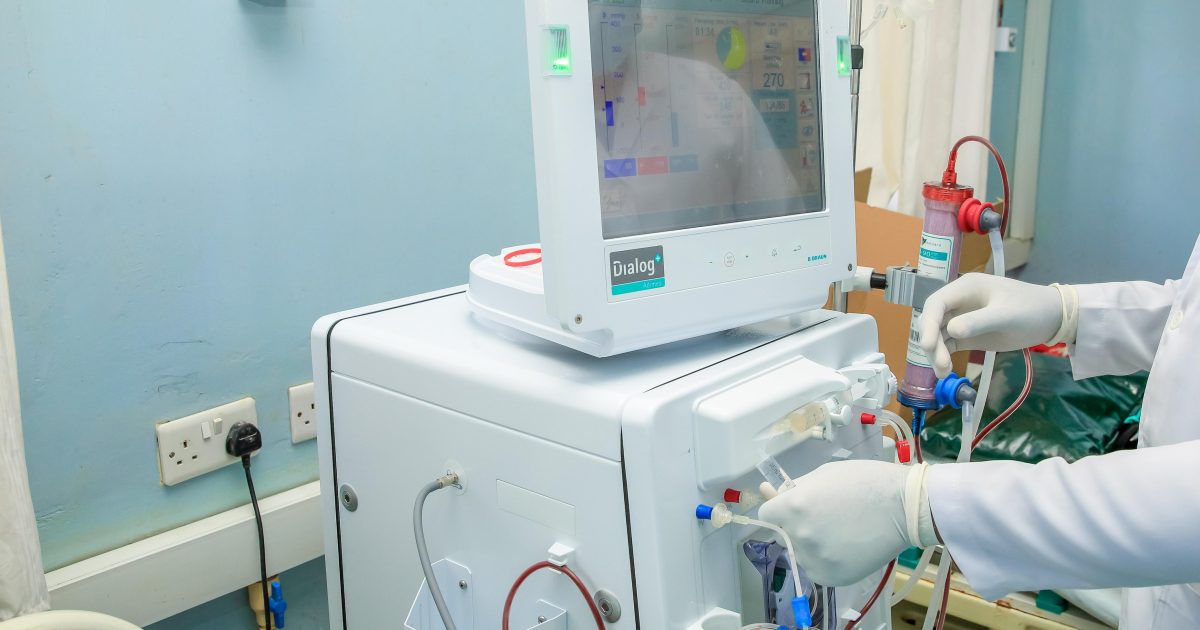
Kirinyaga County has finally secured additional dialysis machines to ease queues for patients with kidney-related ailments at the Kerugoya County Referral Hospital.
The procurement of the machines, under the National Equipment Support Program (NESP), raises the hospital’s operational machines to six, as the initial two functional equipment were overstretched by the ever rising demand for dialysis procedures at the referral facility.
The new development offers great relief for patients, who have been waiting for days for their turn to undergo dialysis, which compelled the county to procure more machines to cope with the demand.
According health officials, another consignment of six new dialysis machine is expected in coming weeks, which will further enrich the facility’s capacity.
The machines come as a major relief for patients who have been relying on subsidized dialysis services at the public hospital
The initiative is part of the transition from the Managed Equipment Service (MES) program, which had served the county for the last decade, to the new National Equipment Support Program (NESP), a new partnership between county governments and the national government for the supply of medical equipment.
The County Executive for Medical Services, Public Health and Sanitation, George Karoki, said the new machines were fully digital and come with advanced safety features.
“Once a dialysis session is complete, the machines automatically alert the medical team, unlike the previous manual systems. We can now serve more patients because of the increased capacity,” he said.
Karoki revealed that the renal unit had previously relied on two machines, serving just 10 patients and carrying out about 20 sessions per week.
“With the new equipment, the facility can now accommodate 30–40 patients, conduct 60 sessions weekly and handle close to 300 sessions every month,” he added.
The CEC added that the county is also awaiting delivery of an additional 6 machines for Kerugoya and at least five for each sub-county hospital to meet rising demand.
“The new dialysis machines are more advanced in terms of technology, they are able to self-clean, saving on time and efficiency.
They also have an integrated blood pressure machine and blood gas machine unlike the old ones and therefore we are able to monitor the patient’s condition as the dialysis services goes on,” he said.
The renal unit also provides nutritional counselling and meals after every session apart from educating patients on managing non-communicable diseases such as diabetes and hypertension, which are the leading causes of kidney failure.
Senior renal nurse, Racheal Nyaga, who has worked at the unit since 2017, said staff have already undergone training on how to use the new machines.
Nyaga advised patients to adopt healthier lifestyles through exercise, proper hydration and timely medical checkups, adding that patients seeking transplants were being referred to Nairobi for specialized services.
by Mutai Kipngetich