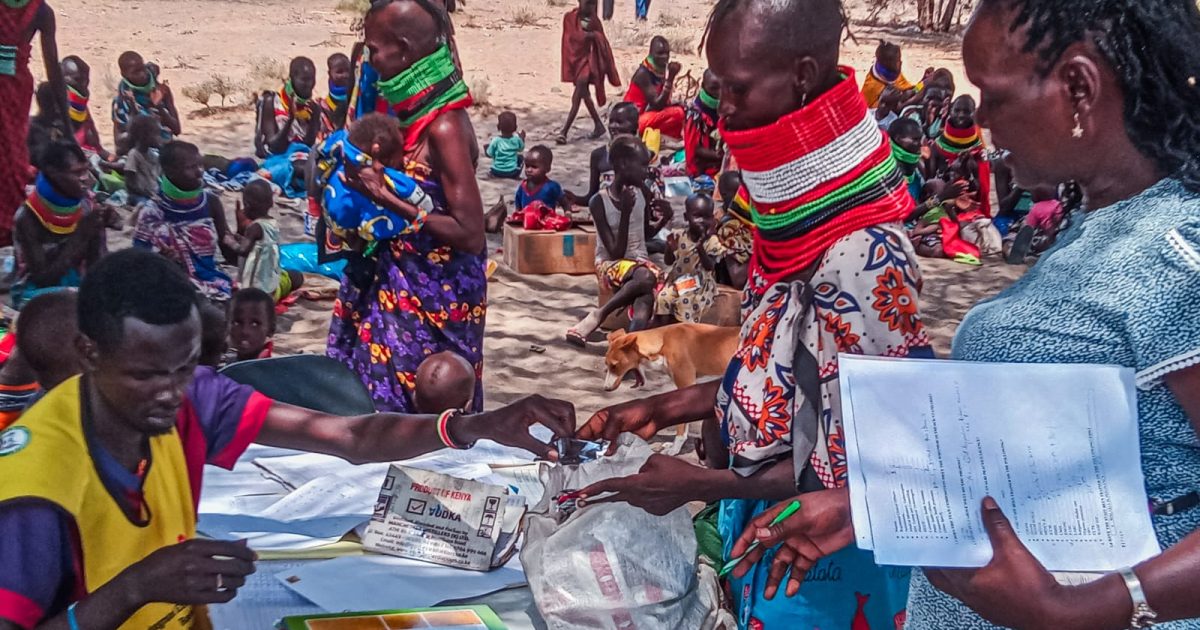
To promote equitable access and continuity of healthcare services, remote communities in Lokichar and Kalapata Wards in Turkana have received free integrated medical services for both humans and animals.
The outreach, led by the County Department of Health and Sanitation in collaboration with the International Rescue Committee (IRC), targeted hard-to-reach areas under the Integrated Emergency Drought Response Outreach (IEDRO) program in Turkana South.
The three-day exercise reached vulnerable populations in villages including Kang’ing’olemongin, Natorobei, Kakura (Napusmoru), Chokchok, Kakiria (Nakaalei), Nalamaru, and Kaaling’a (Katiir).
During the outreach, children were immunized, mothers received postnatal and antenatal care, and households were sensitized on health-seeking behaviors through Social and Behavioural Change Communication (SBCC) approaches. Nutritional supplements were also distributed to households with children under the age of five.
Deputy Director for Policy, Planning, Monitoring and Evaluation, and Partnership Coordination, Sarah Esinyen, assured residents of the County Government’s commitment to sustaining outreach activities.
“We have integrated our support with partners to ensure the seamless implementation of medical outreaches. The county has allocated resources for essential medical commodities to support health facilities, including those in remote areas,” she said.
County One Health Coordinator, Robert Rotich, acknowledged the crucial role of development partners in increasing health service uptake.
“The county is working towards scaling up and integrating outreach services to improve the coverage of both human and animal health services,” he stated.
Deputy Director for Veterinary Services, Dr. Erenius Nakadio, reported that livestock received vaccinations and treatments, while herders were engaged in discussions on livestock health challenges for better service targeting.
“We are empowering Community Health Promoters and Community Animal Disease Reporters to ensure that essential services reach the community effectively,” he said.
Dr. Nakadio also highlighted that, in collaboration with Turkana Pastoralist Development Organization (TUPADO), the county had successfully vaccinated and treated over 10,000 livestock in the past month.
IRC Nutrition Officer, Olivia Simiyu, noted that the outreach also addressed minor health issues among children, provided non-food items such as water purifiers and soap disinfectants, and supported ongoing Water, Sanitation, and Hygiene (WASH) efforts.
“We are closely working with the county WASH sector to promote environmental and personal hygiene as a key part of these health interventions,” she said.
Communities were further sensitized on WASH-related diseases such as Cholera, Typhoid, and Trachoma to help curb outbreaks caused by poor sanitation and water contamination.
Sub-County Medical Officer of Health, John Ng’asike, praised the community’s commitment to public health.
“Kalapata Ward has now been declared open defecation-free due to high latrine coverage and the adoption of handwashing practices. This reflects the success of sustained community sensitization,” he stated.
To improve future interventions, the monitoring team, along with partners, engaged community elders for feedback. The discussions emphasized the need for continued support in areas such as livestock restocking, cash transfers, and the control of Peste des Petits Ruminants (PPR), a recurring livestock disease in the region.
Additional services offered during the outreach included the prevention of mother-to-child transmission of infections, blood typing, random blood sugar testing, urinalysis, and psychosocial support focused on stress management.
The outreach team comprised members from the County and Sub-County Health Management Teams, Public Health Officers, Facility-in-Charges, Community Health Workers, Veterinary Officers, and staff from the Social Protection and Social Development departments.
By Peter Gitonga