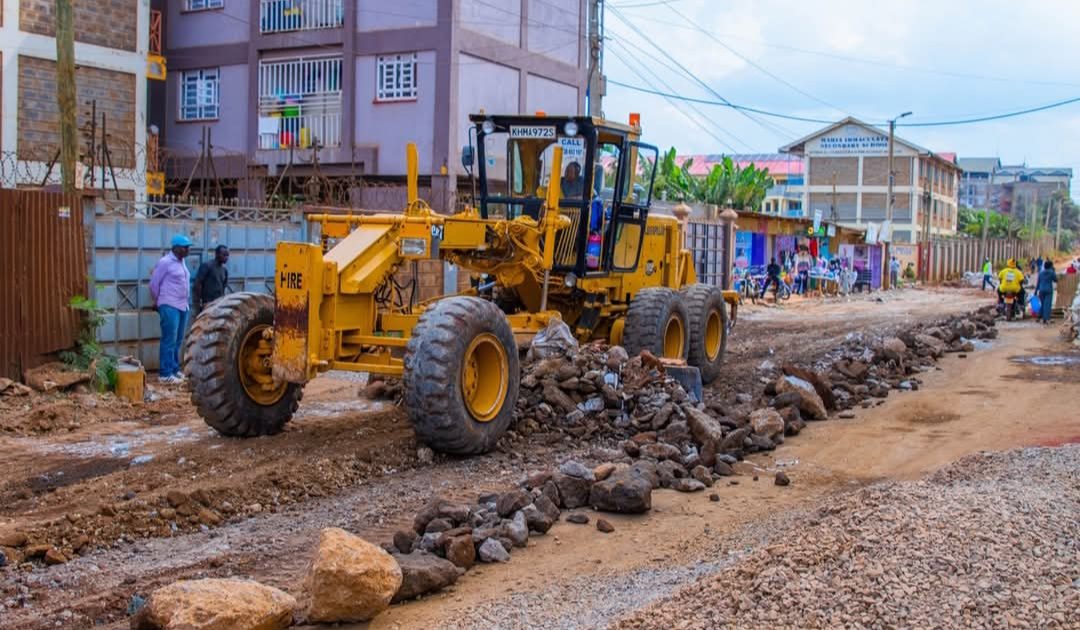
Residents of Kiamumbi can now look forward to better road conditions as grading, murraming, and compaction works continue along Church Road and Gachichio Road.
The project is one of the infrastructure investments designed to support economic activities, improve safety, and connect communities more efficiently.
Both roads were largely unpaved and poorly maintained. During dry seasons, dust was a major problem, affecting nearby homes and businesses.
In the rainy season, the same roads would become muddy and slippery, making them nearly impassable.
The project is in line with the county government’s effort to improve local infrastructure by repairing paved waterways and installing additional culverts to enhance drainage and extend the road’s lifespan.
From early 2024, the Kiambu County Government has ensured that 725 kilometres of access roads have been gravelled, and 1,687 kilometres have been graded across the 60 wards.
Peter Njoroge, a machine operator overseeing the grading process, said the road upgrade is being done to the highest possible standard to avoid recurring issues.
“We are not just fixing the surface; we are ensuring the base is well compacted, culverts are in the right places, and drainage is working. That is what will make the road last,” he said.
Mary Wanjiru, a local shopkeeper along Church Road, said the project has brought relief to many locals who have long grappled with impassable roads, especially during the rainy seasons.
“This road used to be a nightmare. When it rained, it became completely muddy and risky, especially for schoolchildren and boda boda riders. I am glad the county is finally taking action. This will really help our businesses and enhance our safety,” she said.
The project is expected to be completed in phases over the next few months, with residents optimistic that the improved infrastructure would boost business, reduce transport costs, and improve access to essential services such as schools and health facilities.
Local authorities are urging residents to be patient during the construction phase and to report any blocked drainage points or access concerns to the relevant departments.
By Victoria Muthoni