The County Government of Nakuru is encouraging residents to embrace use of alternative dispute resolution mechanisms to resolve long standing and historical land disputes which are on the rise.
Chief Officer of Lands and Physical Planning Ms Stella Mwaura said that Kenya’s land policy encourages the use of alternative dispute resolution (ADR) mechanisms to facilitate expeditious and affordable access to justice.
Ms. Mwaura voiced the County government’s commitment to fostering peaceful coexistence among all communities by addressing historical land disputes through dialogue and alternative Dispute Resolution (ADR) mechanisms.
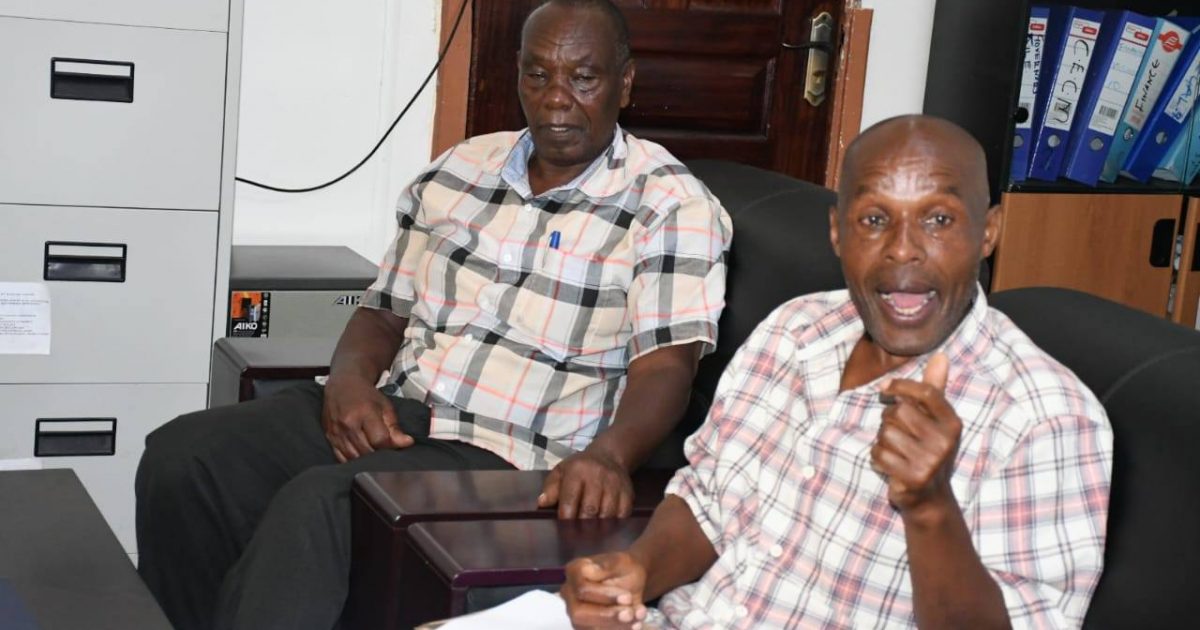
The chief officer spoke in her office at the County headquarters after a meeting with the leadership of the Africa Gospel Church (AGC) from Amalo Ward within Kuresoi South Sub-county to discuss a longstanding land ownership dispute.
During the meeting it emerged that in 2024, a separate entity came forward, laying claim to the same piece of land creating a land ownership dispute.
Ms. Mwaura indicated that the Constitution encourages communities to settle land disputes through recognized local community initiatives saying that when several parcels of land are locked up in litigation, it means they are not being used productively and consequently the country suffers economically.
The Chief Officer who was flanked by Head of Land Administration and Senior Planner Patrick Mwai disclosed that Governor Kihika’s administration was currently leveraging on Alternative Dispute Resolution (ADR) mechanisms to address long standing land disputes in all the 11 Sub-Counties, focusing on fostering communities’ cooperation.
She said the County was encouraging residents to utilize Alternative Dispute Resolution (ADR) mechanisms, such as mediation and arbitration, to resolve land disputes instead of solely relying on lengthy and expensive court proceedings.
“Alternative Dispute Resolution provides faster, more cost-effective solutions while preserving community relationships,” she elaborated.
Ms. Mwaura added that the department of Lands and Physical Planning will collaborate closely with local leaders from the region to address land disparities adding that the initiative will include resource allocation for land surveying and land titling, aimed at improving infrastructure and promoting urban development.
The efforts will play a crucial role in enhancing the county’s growth unlocking its socio-economic potential for sustainable development.
Naivasha, Njoro, Rongai, Gilgil, Bahati, Molo, Kuresoi South, Mai Mahiu and parts of Mau Narok have experienced disruptions of peace due to disagreements over land ownership disputes.
A new study by the County government has confirmed that residents were inclined to refer every small land matter that pops up to the courts for judicial determination, leading to numerous land cases in court that take long and give mixed results.
Official records indicate that nearly 52 percent of civil and criminal cases before law courts within the devolved unit revolved around land disputes, thus frustrating a joint National and County government titling programme.
Ms. Mwaura pointed out that it was unfortunate that resultant bitterness over land wrangles at times manifested itself through violence and murder adding that the they were fashioning out alternative options crafted to reduce complainant emotions, reduce process costs and time.
“Our aim is to have outcomes that will enjoy better support and ownership by the affected individuals and families, and are less likely to precipitate acrimony and violence afterwards”, added Ms. Mwaura.
The Judiciary embraced Alternative Dispute Resolution (ADR) mechanism to clear case backlog in the courts.
ADR refers to any means of settling disputes outside of the courtroom and is generally classified into at least four types including negotiation, conciliation, mediation and arbitration.
The 2010 Constitution provides for the use of alternative forms of dispute resolution mechanisms to enhance delivery of justice to all citizens.
In addition, the Constitution requires courts and tribunals to be guided by, among others, the principle of alternative dispute resolution where it includes reconciliation and traditional dispute resolution mechanism.
Ms Mwaura said mediation makes all parties go home happy, satisfied and restores relationships and is cost-effective, informal, flexible, private and easily accessible to parties.
She however challenged mediators to uphold confidentiality, avoid conflict of interest, be competent enough and be of integrity.
By Esther Mwangi and Mary Ochieng