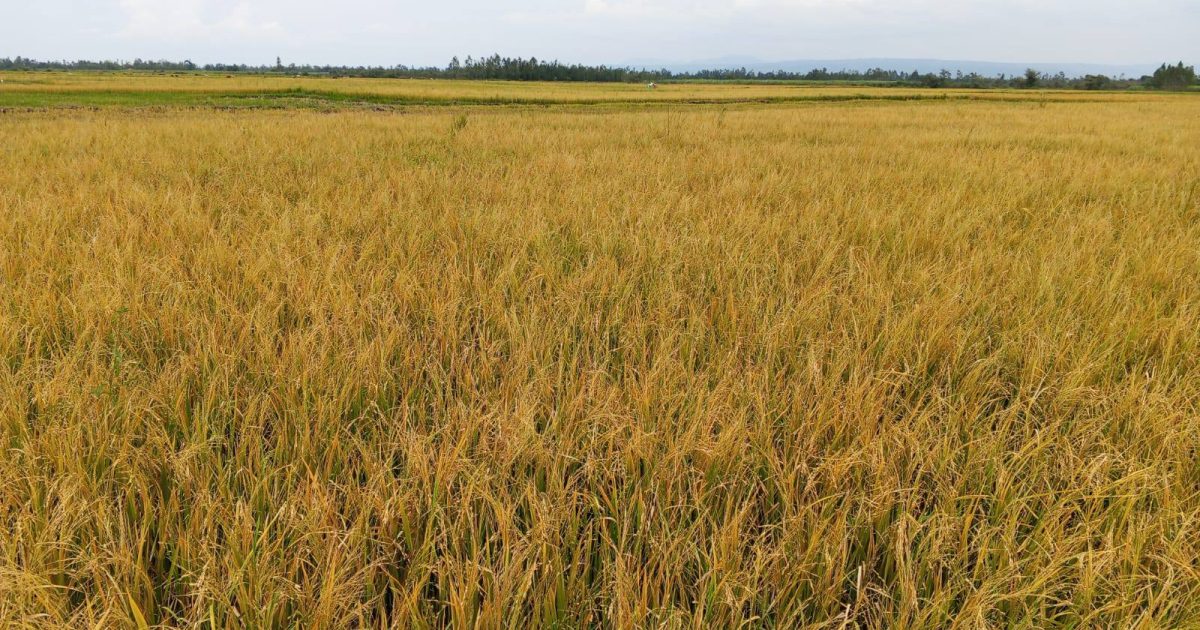
Rice farmers from the Kochieng Rice Irrigation Scheme in Kadibo Sub-County, Kisumu County, are appealing for urgent intervention from the county government and national disaster response agencies after a devastating hailstorm wiped out most of their rice crop.
The severe storm destroyed approximately 80% of the rice, which was at a critical ripening and maturing stage.
According to a preliminary assessment by the County Disaster Management team, the hailstorm affected about 148 acres of rice farms, leading to massive losses.
“This loss wiped out an expected yield of 4,448 bags of rice. While crops still at the milk and dough stages were not severely damaged by the physical impact, they were heavily stressed following the extreme weather,” reported the scheme’s secretary, Joshua Munga.
The affected area, located in Miguye village, Kochieng sub-location, Kochieng East location, within Kobura Ward, has left around 150 farming families grappling with significant losses and uncertainty about their future.
Lucas Ochieng Akumu, one of the affected farmers, is now calling on relevant government agencies to step in with support and relief.
“The storm was a natural disaster beyond our control, and we urgently need assistance to get back to farming,” Akumu said.
“Rice farming is an expensive venture. Tilling one acre costs about Sh4,600, and reaching crop maturity requires around Sh60,000. The losses we have incurred are devastating,” he added
He explained that rice farming is the main cash crop and source of livelihood for most households in the region.
“We plant rice to educate our children, transform our lives, and live with dignity. We are pleading with the national and county governments, as well as the Ministry of Agriculture, to help us recover from this loss,” he added.
Akumu further noted that many farmers take loans or sell livestock to finance rice farming, making the destruction even more crippling.
“When such disasters strike just as we are about to harvest, it’s heartbreaking. Many farmers could go bankrupt and be unable to farm rice again,” he said.
He added that farmers are now stranded, unsure of how to recover from the blow.
“This disaster has affected households, livelihoods, and our daily bread. Rice farming is our only source of income,” Akumu lamented.
Kochieng has 1,500 acres under rice farming besides other horticultural crops. It has the potential of producing rice on 2,500 acres.
By Robert Ojwang’