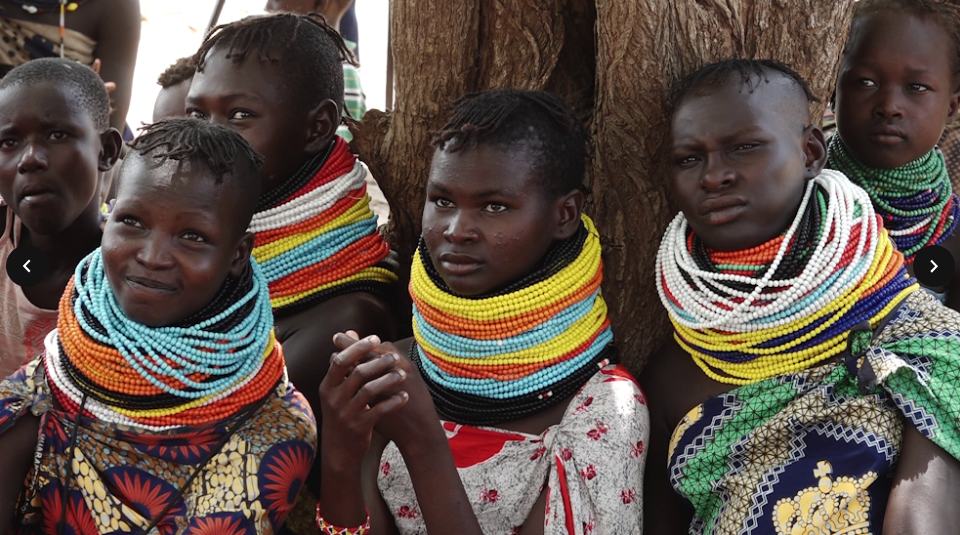
At least 40 girls aged 11-15 years in Loreng, Letea ward in Turkana West Sub County on Monday received menstrual hygiene kits from Plan International.
The donation included sanitary towels, undergarments, sanitizers, tissues, handwashing detergents, and body lotions, all meant to improve their hygiene.
The girls were also trained on how to use the sanitary towels, both reusable and disposable.
The girls could not hide their joy as they narrated how the support from Plan International had provided them with the necessary hygiene kits but also helped address stigma by openly talking about menstruation as a normal reproductive process.
The girls said they had been undergoing trauma during the menstruation period in a community that largely treats the subject as taboo. This could partly account for the high illiteracy levels and the discrimination of women and the girl child which relegates this subject to the periphery.
One of the beneficiaries, Lilian Napus, was particularly grateful for the provision of the sanitary towels.
“We can now use the sanitary towels comfortably because we have been trained on how to use and even safely dispose them off in a hygienic manner,” she said.
These activities form part of the climate proofing water sanitation and hygiene services programme implemented by Plan International that supports 86 women and girls on the move among pastoralist communities in the Letea ward.
Alice Eregae, who is in charge of community health services in the sub county, particularly lauded the provision of reusable sanitary towels saying they were cost effective as they are washed after use and take the girls longer durations unlike disposable ones.
She underscored the need for proper hygiene for girls saying they should change the towels at least three times in a day and observe proper hygiene.
“The girls used to isolate themselves from their families during their menstruation periods because they considered themselves unclean,” said Eregae.
She added that the girls who have been trained would also help teach their peers how to use the sanitary towels.
She called on the girls not to shy away from requesting for the towels during their period days especially from their parents including their fathers who were main breadwinners in most families in the community.
The men should not shy away from buying the sanitary towels for their daughters, she said.
Gender Officer at Plan International David Lotum said the intervention was meant to address stigma around menstruation, provide essential hygiene kits that are not adequate to the women and girls due to poverty, and raise public awareness on menstrual hygiene management.
“We are also building the confidence in the girls so that they can engage in their normal duties during their menstruation period. We are also engaging men because there is a feeling among most of them that buying sanitary towels for their daughters is not a priority,” Lotum added.
Plan International Sexual and Reproductive Health and Rights Advisor Pauline Njoroge said the organization is committed to promoting menstrual hygiene, addressing cultural norms and poor hygiene infrastructure.
“Our aim as an organization is to provide this information to the communities and interventions such as the girl on the move to ensure they have access to these products and sanitation facilities so that we can together reduce periodic poverty,” said Njoroge.
Loreng location chief Joachim Kamulenya said the parents are grateful to Plan International for the education of the children in ending stigma on menstruation and providing the essential hygiene kits.
“We particularly request for the reusable sanitary towels because they are long-lasting hence cost effective,” said Kamulenya.
He at the same time urged the organization to consider training the girls on life skills to improve their livelihoods ones they complete the primary and secondary school education.
Turkana West Public Health Officer Lumbasi Rapando also rooted for reusable sanitary towels saying they have helped address waste disposal challenges.
He noted that the community was initially opposed to the reusable sanitary towels but has now embraced them after sensitization.
Further, he said men who controled the budget in most homes were now involved in discussions on menstruation and hygiene.
He regretted that the silence on menstruation had caused many girls to stay away from school during the menstruation period.
By Peter Gitonga