A quiet transformation is unfolding in the suburbs of Nakuru City, where four informal settlements previously characterised by crime, poor sanitation, clogged drainage systems and dilapidated roads lie.
For decades the dwellings were also known as hot spots for waterborne diseases, including cholera and typhoid.
However, after many years of living in squalid conditions a new chapter is beckoning for the dwellers of the bustling informal settlements of Kwa-Murogi, London-Hilton and Lake View within Nakuru Town and the Karagita slums in Naivasha, where narrow pathways and limited services once defined daily life.
The Kenya Informal Settlements Improvement Project (KISIP 2) is reshaping communities, bringing hope, security and opportunity to hundreds of thousands of the residents, particularly in the renowned slums in Nakuru County.
The State Department for Housing and Urban Development under the World Bank KISIP 2 has channelled Sh1.5 billion towards the upgrade of the informal settlements, making remarkable strides by improving access to basic services, securing land tenure and strengthening institutional frameworks for slum upgrading in the devolved unit.
Alex Wachiuri, a resident of the Kwa-Murogi slums in the Nakuru town East constituency since 1974, described the area’s history as disheartening, with investors staying away as there were no amenities or infrastructure to support enterprises.
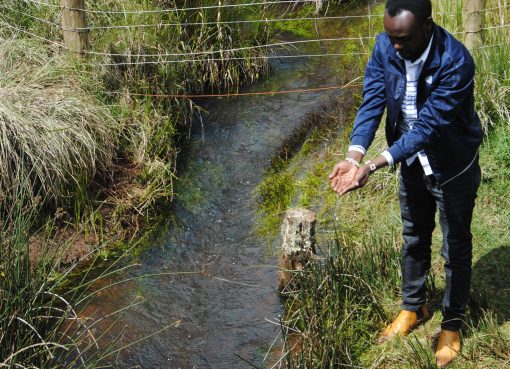
The resident further claimed that the sewer system was inadequate, with waste from toilets and latrines trickling into homes, roadsides, water sources, and marketplaces.
“This place not only reeked of illicit brew and waste, but it was also a hot spot for diseases. No one wanted to live here,” he said.
Wachiuri added that as the population ballooned, insecurity in the area was so widespread that residents protested and demanded the construction of a police station nearby.
However, since March this year, the 73-year-old former matatu driver has noted a positive change after the KISIP 2 project started to regenerate the slum, with private developers now starting to construct flats and business premises.
KISIP was initiated by the government in 2011, under the support of The World Bank, the Swedish International Development Cooperation Agency (Sida), and the Agence Française de Développement (AFD). The slum upgrade projects are expected to be concluded by 2027.
Kwa Murogi is in phase II of the Kisip upgrade, which includes construction of roads and footpaths, installation of high mast lighting and street lights, and improvement of water and sanitation.
Kisip is said to be constructing over two kilometres of road in the area and installing streetlights along known gang hideouts, main roads, and crime-prone spots.
Nakuru County Chief Officer for Housing and Urban Planning Kamau Kuria said on completion the project will be a game changer in the four low-income settlements that have suffered from bad road networks, acute shortages of water and poor sewerage and drainage systems.
Kuria said that the State under the World Bank-funded programme last year granted the County Government of Nakuru Sh500 million towards ongoing projects to improve access to basic services in the four settlements.
The initiative, besides slum upgrading, is also targeting improvement of drainage infrastructure, waste management, improvement of roads in the slums and installation of street lighting and high mast floodlights.
Kuria said the devolved unit’s administration, with development partners including the State Department for Housing and Urban Development and the World Bank, had also finalised designs towards upgrading the Kapkures and Kiratina slums in Nakuru municipality, the Mwisho wa Lami settlements in Njoro Sub-County and the Tayari low-income settlements at an additional cost of Sh800 million.
Speaking after he inspected the ongoing projects in the four settlements, Kuria said the initiative also entails the issuance of title deeds and the laying of sewerage lines and water connectivity, among others.
The Chief Officer assured the residents that both the KISIP National Project Coordination Team (NPCT) and the County Project Coordination Team (CPCT) were ensuring that the proper project scope was captured by the project consultants so as to ensure the beneficiaries get value for money.
He added that the County Government was also mapping out possible areas of extension of trunk infrastructure to the settlements to enable access while focusing on investment and socio-economic support for the dwellers.
Kuria, who doubles up as the CPCT Coordinator, noted that the team of experts from Nakuru Municipality, Environment, Social Services, Roads and Infrastructure, Land Physical Planning, Urban Development, and Supply Chain and Accounting personnel were ensuring that the project is a success.
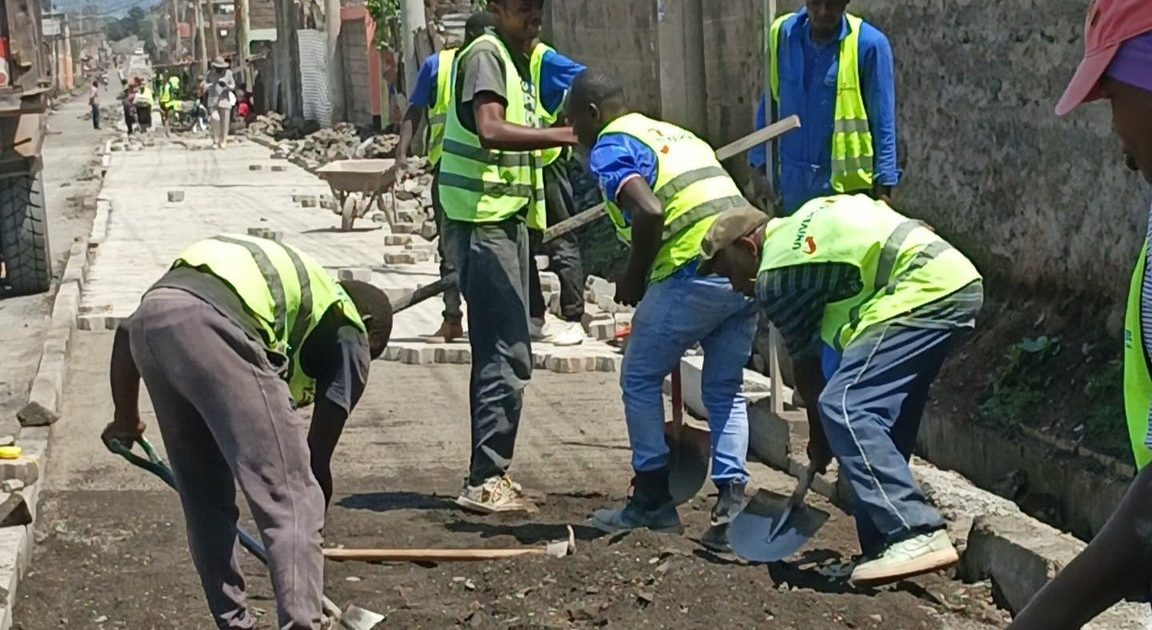
The Chief Officer indicated that infrastructure upgrade works along Machakos Road in Flamingo Ward, within Lakeview, were at 80 per cent complete, adding that the project involves Cabro laying and tarmacking and is designed to significantly enhance mobility and the overall urban environment.
“This special type of road within an informal settlement features a 3-metre-wide bitumen standard lane and an additional 3-metre-wide paved Cabro section, delivering a more durable and aesthetically appealing road structure,” explained the CECM.
He added that the project also includes the installation of stormwater drainage systems, street lighting, and high-mast floodlights, ensuring safety and resilience against flooding.
Kuria voiced the County government commitment to continue working with the national government in upgrading the settlements as a testament to Governor Kihika’s Urban Agenda, which he said focuses on revitalising urban areas and unlocking their socio-economic potential.
By improving infrastructure in informal settlements, Kuria said it will boost business activity, enhance accessibility and improve the quality of life for slum residents.
The first phase of KISIP saw Nakuru county receive a Sh429.7 million grant from the World Bank that was majorly channelled towards improving the drainage infrastructure, waste management and tarmacking of roads in 8 slums, as well as the installation of floodlights.
The slums that benefitted in the first phase included Kaptembwa, the biggest in Nakuru Town, with a population of over 120,000. Others were Kivumbini, Lake View, Kwa-Ronda, Flamingo, Kaloleni and Bondeni.
Kuria indicated that the upgrade was coming at a time when the County had started an ambitious plan to redesign Nakuru town as part of a master plan that seeks to improve its face and decongest the town.
He added that KISIP Phase I, implemented a few years ago, delivered civil works projects in Gilani, Kaptembwa, and Rhoda settlements in Nakuru Town West Sub-County as well as Karagita, Kamere, Kihoto and Kasarani in Naivasha Sub-County.
In consultation with the community, Mr. Kuria indicated that the County Project Coordination Team (CPCT) was supporting the planning, surveying and issuance of land documents for residents of these informal settlements to enable them to invest while strengthening the capacity of county officers to deliver on their mandates.
Phase I also delivered title deeds under the tenure of the security component in Tarabete, Keringet, Kasarani, Eastleigh, Kongasis, and Crater Lake, he elaborated.
KISIP2 is domiciled at the State Department for Housing and Urban Development and is implemented through participating county governments.
The County official was quick to say that KISIP-2 was a game changer in improving the general living conditions through access to basic services and land tenure security for thousands of residents living in informal settlements across Nakuru county.
The project, he added, had restored hope to the hopeless and given many a reason to dream again of living in sustainable communities within the urban areas of Nakuru.
He stated that the tarmacking of a 950-metre-long road and 6-metre carriageway in Lake View was 90 per cent complete, while work on a 1.2-kilometre road construction and 2.4-kilometre walkway improvement had kicked off in Kwa-Murogi slums.
Kuria indicated that they were also working on a 1.2-kilometre project and a 300-metre sewerage network in London Estate. He affirmed that the projects would be completed within the stipulated timelines.
According to the KISIP National Project Coordination Office, more than 400 informal settlement schemes in the country are set to benefit from the Sh31.7 billion multilateral donor funding to provide low-cost housing and general infrastructure improvement, among other crucial amenities.
The funding has been given out by the World Bank ($150 million, or Sh24.1 billion) and the French Development Agency (43 million Euros or Sh7.6 billion) and will address infrastructure, water, lighting and social inclusion in 33 counties.
The project further seeks to link beneficiaries to socio-economic opportunities and build the capacity of national and county governments to develop and implement slum upgrading and prevention policies and strategies.
A study by the State Department for Housing and Urban Development has identified 1,400 informal settlements in Kenya and the number is growing.
It indicated that 65 per cent of Kenyans reside in slums within urban areas where they can’t access basic services and amenities, are prone to rising cases of violence and crime, and pay a premium price to access services such as water and electricity.
By Esther Mwangi and Mary Ochieng