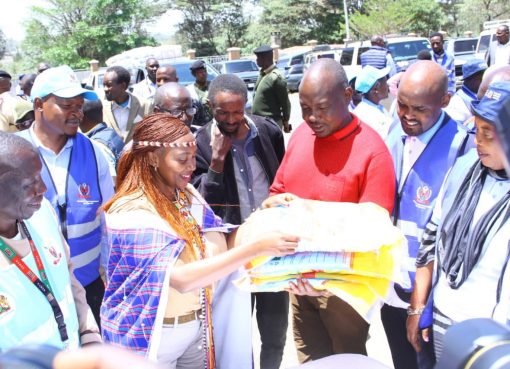
The government has called upon youth, women and registered business groups in Kericho County to take full advantage of the ongoing rollout of the Kenya Jobs and Economic Transformation (KJET) Project.
This is, a flagship Sh19 billion initiative supported by the World Bank and planned to span a five-year period ending in 2029.
Implemented under the State Department for Micro, Small and Medium Enterprises (MSMEs) Development, KJET project is structured around four main components including business and investment enabling reforms, MSME cluster competitiveness, green financing and climate resilience, and project monitoring and evaluation.
Speaking during the National Government Development County Implementation Coordination and Management Committee (NGD-CICMC) meeting held at the County Commissioner’s Boardroom, Kericho County Senior Enterprise Development Officer Michelle Aburilli said the project seeks to create and improve employment opportunities, attract private investment, and increase access to sustainable financing while boosting the productivity of small and medium enterprises through targeted support to organized clusters across the country.
She said Kericho County had been earmarked as a strategic beneficiary under Component 2, which focuses on enhancing competitiveness and productivity among MSME clusters operating within key value chains.
“The project is currently targeting enterprises involved in edible oils, textiles, dairy, and construction materials, which are considered high-impact value chains under the Bottom-Up Economic Transformation Agenda (BETA),” Aburilli said.
In Kericho, she said, the Micro and Small Enterprises Authority (MSEA) is leading the mobilization of cooperatives, associations, and cluster-based entities to register and apply for free Business Development Services (BDS) training through the official portal at https://kjet.msea.go.ke, ahead of the application deadline on June 30, 2025.
The Senior Enterprise Development Officer described the project as a transformative opportunity for local entrepreneurs and self-help groups that have long struggled to scale due to limited access to capital, training, and coordinated market support urging both formal and informal MSMEs to organize into viable clusters and align with the project’s value chain priorities to qualify for structured support under the initiative.
Aburilli emphasized that youth and women-led enterprises in particular stand to gain from the free capacity-building sessions, advisory services, and where applicable, co-investment financing for machinery and tools to enhance production.
She explained that MSEA is already conducting sensitization forums and offering hands-on support, including assistance with the online application process and preparation of supporting documentation, adding that applicants without digital access were also being supported to ensure inclusivity.
“Business clusters that qualify for the BDS component will undergo a five-day intensive training covering business planning, financial management, marketing, climate adaptation, and personal initiative.
These sessions are customized to reflect each cluster’s line of business and readiness for investment. The training is a prerequisite for advancing to the investment support stage, and only clusters that complete this phase will be eligible for additional funding opportunities under the project. She explained.
Aburilli pointed out that the KJET project offers tiered support to MSMEs based on their structure and level of investment readiness.
“Tier 1 clusters those with joint business models, a clear governance structure, and a demonstrated capacity to scale will receive co-investment support for equipment and technology, with the government contributing up to 70 percent of the cost and clusters required to raise the remaining 30 percent. Tier 2 clusters will receive basic BDS training with a pathway to graduate into Tier 1 upon demonstrating growth,” She explained.
In addition to business development and investment support, Aburilli assured Kericho-based enterprises that they will also be eligible to apply for green financing products under Component 3 of the project, which is being implemented by the Kenya Development Corporation (KDC) including a Green Fund for climate-smart investments and a Climate Disaster Credit Facility to cushion MSMEs from environmental shocks.
“To qualify, each applicant must be a registered cooperative, association, or cluster-based group that has been operational for at least two years, must be actively engaged in value addition within a priority value chain, and must have products already in the market.
Clusters must also demonstrate willingness to formalize operations and collaborate within a structured governance model. Applications that do not meet these minimum criteria will not be considered for the first round of support,” said Aburilli.
By Kibe Mburu