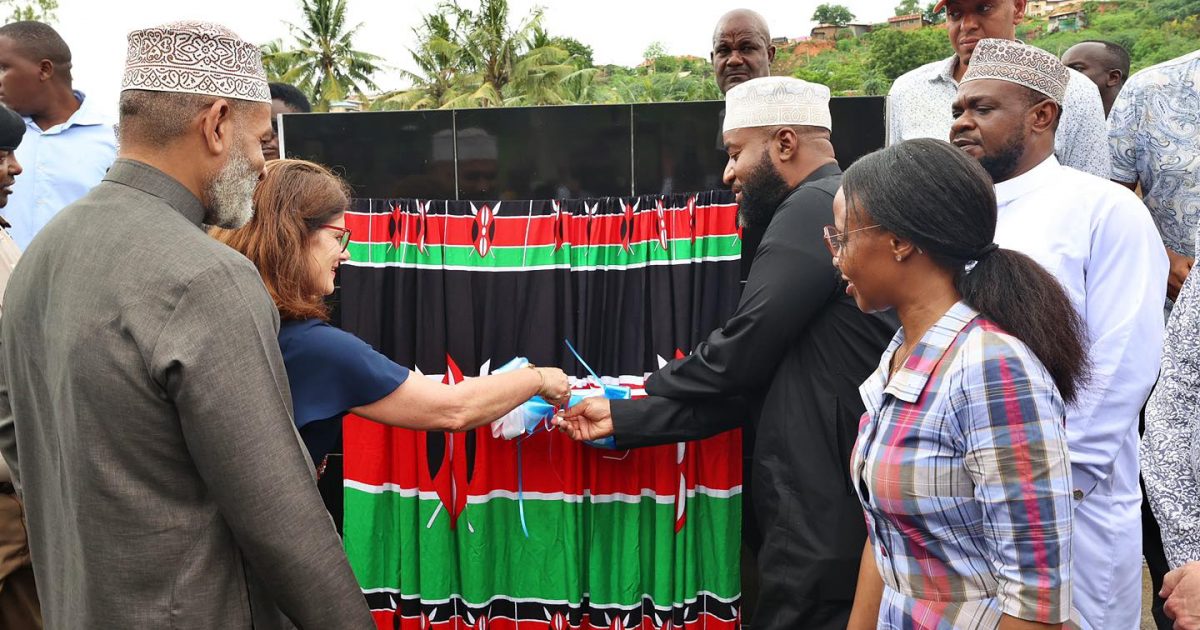
Mining, Blue Economy, and Maritime Affairs Cabinet Secretary Hassan Joho has launched the first of its kind sewage and wastewater treatment project to conserve the marine ecosystem in Mikindani.
The Sh40 million plant, funded by the European Union under the Go Blue Project, was implemented by UNEP and UN-Habitat in collaboration with the Kenya Marine and Fisheries Research Institute (KMFRI).
The innovative project aims to mitigate the sanitation crisis and safeguard the coastal ecosystem from pollution.
The wastewater treatment plant mimics natural water filtration processes. The treatment plant is poised to contribute significantly to the conservation of marine resources by stopping effluents from draining into the ocean, where they posed a big risk to marine life.
CS Joho says the constructed wetland is heralding a new era of sustainable water management, marine conservation, and climate resilience in the country.
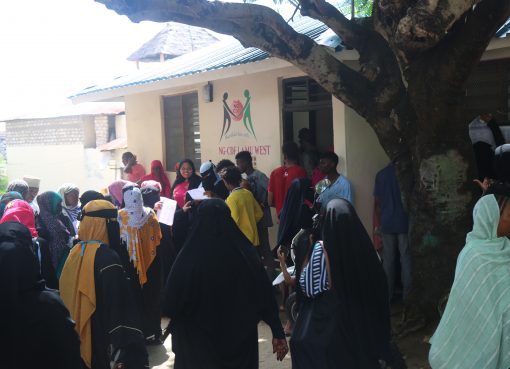
He said the Mikindani community has struggled with the adverse effects of untreated waste water for a long time due to limited coverage of the sewage system.
“The lack of an appropriate wastewater system causes massive pollution of the Tudor Creek, destruction of marine biodiversity, and contamination of water and soil, leading to serious health risks to the residents,” CS Joho stated.
He added that a solution needed to be found to safeguard the health of the residents and the Blue Economy.
He further expounded that around the world, progressive nations are turning wastewater into assets, and Kenya must follow suit.
He termed the project as timely and a game-changer, saying, “It will not only provide wastewater treatment but also support local farmers by providing clean water for irrigation. It will protect Tudor Creek and the Mikindani mangrove ecosystem from toxic effluents, reduce methane emissions, and safeguard public health.”
The CS said the intervention aligns with national and global commitments on the promotion of nutrition and food security.
“Without clean oceans, rivers, and lakes, our Blue Economy cannot thrive,” he said, reiterating the government’s commitment to strengthening policy, enforcing regulations, and coming up with innovative solutions to ensure the aquatic ecosystems remained healthy and productive.
He further lauded the KMFRI for implementing the project and UNEP and the EU for technical and funding, for the project.
EU Ambassador to Kenya Henriette Geiger urged the communities to preserve the project for prosperity, noting, “We cannot have climate change preservation-green transition—without blue. Blue and green go together. You cannot have protection of the environment without thinking about the protection of marine resources and the waters.”
France’s Ambassador to Kenya, Arnaud Suquet, said the initiative was a testament to what could be achieved when communities, government, and development partners come together with a shared vision of sustainable environmental management.
He pointed out that constructed wetlands were not just infrastructure, but they represented a commitment to ecological conservation, improved sanitation, and a healthier future for the communities.
“Today, we mark a new chapter, which embraces nature-based solutions to address these problems. The constructed wetland not only improves water quality and restores biodiversity but also serves as a model for future green infrastructure projects in Kenya,” the envoy said.
Governor Abdulswamad Nassir announced that the Mombasa Water Supply and Sanitation Company would oversee the wetland’s construction and management. He also revealed that 27 construction projects in the county have been halted due to non-compliance with sewerage requirements.
He revealed that most of the wastewater treatment plants are not functioning, but plans are underway to revamp them.
By Sadik Hassan