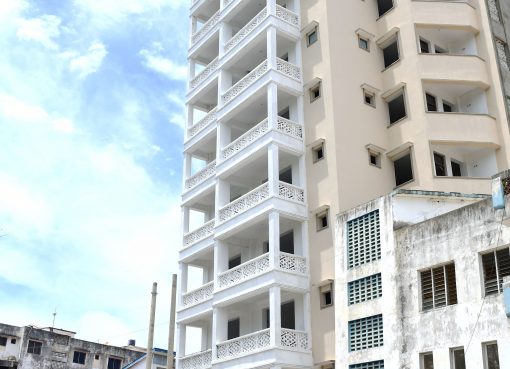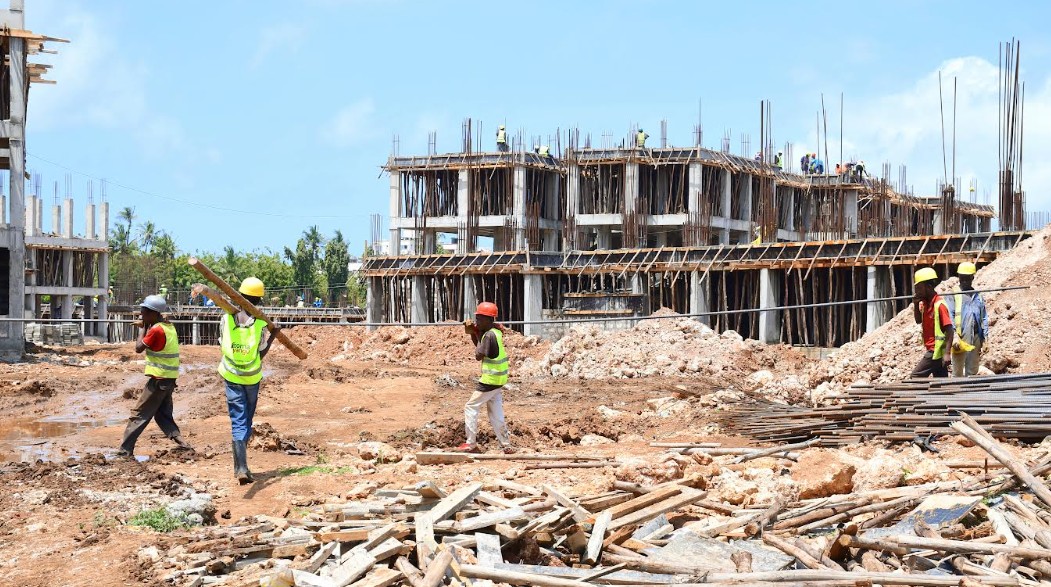
The construction of Sh7 billion 2000 housing units under the Affordable Housing Programme (AHP) is rapidly taking shape in Nyali, with construction now at a 20 per cent completion level.
The one-of-a-kind Multi-Use Development project is located on a 23-acre of land in the upmarket Nyali suburb.
The Nyali Affordable Housing Project commenced in mid-February 2025. It entails the construction of 14 residential blocks consisting of studio apartments, two-bedroom units, and three-bedroom units.
The project is poised to address the housing deficit in the tourist city of Mombasa. The 14 towering blocks will completely redefine the skyline of the area into a vertical city hub. At ground level, landscaped courtyards and pedestrian walkways will knit the blocks together.
In addition to the housing component, it has an Early Childhood Development institution, Primary, Junior Secondary schools, a market with 1000 stalls, a commercial building, a community centre, a club clubhouse and a wastewater treatment plant.
During a project assessment visit by the Government Delivery Unit and Coast Regional Director Sherry Litunya, the Project Architect Aggrey Maganga affirmed that the market component was expected to be completed in October 2026, while the housing project would be ready in February 2027.
“Works on site are already commencing. We have two contractors on this site. We have Vaghjiyani taking the housing project and Parklane construction handling the market and associated infrastructures,” stated Arch. Maganga.
“The project’s location is prime in Nyali. We are fronting the Mombasa-Malindi highway, which is currently under expansion, and the contractor is on site. We have a prime 400 metres of frontage on the road,” he added.
The project will have easy access into and out of the site, and they don’t foresee any transportation challenges despite more than 8000 residents and even more people who will visit the project amenities daily, he noted.
“We expect 1000 people to take the market stalls. The market itself should be able to handle up to 10,000 people a day. The schools have a total of about 40 classrooms from ECDE to the Junior Secondary School, that is, almost 2000 students at the site.”
The Project Architect further confirmed that they have surpassed the 30 per cent threshold in line with the Access to Government Procurement Opportunities (AGPO) programme, as most of the materials are locally sourced.
The project has employed over 3000 workers directly and indirectly. The ‘Juakali’ sector is heavily involved in the project. Security has been beefed up at the site with two Police officers stationed to patrol day and night to ensure the project continues unabated.
“We are planning for the constructors to be able to work 24 hours as soon as the work gets to a critical stage,” he said, adding that they have scaled up safety measures to ensure there are no fatalities and injuries.
By Sadik Hassan