Garissa High Court Presiding Judge Justice John Onyiego has cautioned Sheikhs and Imams against facilitating marriages for minor girls warning that tough legal action would be taken against any perpetrators once found.
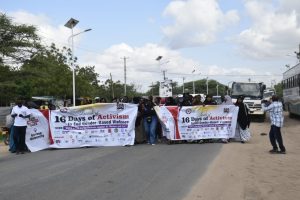
Justice Onyiego, at the launch of the 16 Days of Activism to end Gender-Based Violence, emphasized that cultural and religious practices contradicting morality will not be tolerated.
According to the Garissa Child Protection and Gender Technical working group, there has been increasing cases of sexual violence including defilement, early and forced marriages and Female Genital Mutilation.
While responding to the issues, the presiding judge called for a whole stakeholders approach to sensitize the communities against the harmful practices and report cases in real time and arrest perpetrators.
“You are prohibited from marrying a baby, young girl, or minor. While some interpretations of Islam allow marriage at 15, it has been communicated to religious leaders that the law takes precedence over religious practices regarding early marriage. Celebrating a marriage for someone under 18 will lead to arrest.” Onyiego said.
“I urge the Sheikhs and all involved to cease early marriages of girls under 18, as it constitutes an offense. We require swift police action to arrest offenders. It is vital for girls to attend school and pursue professional careers in fields like law and medicine, rather than being married off at a young age, which would hinder their potential,” he posed.
Meanwhile, the Judge warned elders sitting in Maslah sessions, an alternative Justice System (AJS) for the Muslim communities, against presiding over criminal cases such as murder, defilement and gender-based violence.
Onyiego noted that while the judiciary was keen to empower the Alternative Justice Systems as outlined in the 2010 Constitution, the AJS jurisdiction was limited and that the decisions they make outside their jurisdiction would not be binding.
“We encourage Maslah as a form of AJS but there is a category of cases they are prohibited from presiding over. Such cases are sexual-related offenses, murder cases, matters of terrorism, and others.
“We encourage Maslah for particular areas but those that they have been prohibited from, they would be committing an offense,” he said, adding, “We discourage them from such cases and anything they decide would not be binding. If an offender pays something in the Maslah, they will still be arrested and charged in the courts of law,” he added.
Currently, there are at least 100 active cases at the Garissa law courts on child marriages, defilement, sexual and gender based violence and FGM.
According to the Kenya Demographic and Health Survey 2022, 20 per cent of ever-married women aged between 15 and 29 have experienced physical, sexual or emotional violence from their most recent partner.
Some of the recommendations made by the Garissa gender working group include institutionalizing survivor – centered court procedures to ensure dignity, privacy and respect at all stages.
Others include in-camera hearing for SGBV, defilement and child abuse cases, fast tracking SGBV and defilement cases, establishment of child-friendly testimony spaces with age-appropriate furnishing and introduction of anonymous survivor feedback mechanisms.
By Erick Kyalo