In many rural communities in Kenya’s coastal region, the boy child is often favoured over the girl. But Esther Matole’s late father refused to be held back by traditions he considered retrogressive. He treated his nine sons and two daughters equally, without discrimination.
Before his death, Matole’s father left clear instructions on how his land was to be used. “What we now have is family land, and anyone among us can farm anywhere,” she says. “None of us interferes with crops planted by others.”
Gender inequality in agrifood systems remains a major barrier to achieving development goals linked to the elimination of hunger. According to The Status of Women in Agrifood Systems, a 2023 report by the Food and Agriculture Organization (FAO) of the United Nations, rural women continue to be significantly marginalized in access to land, agricultural resources, and markets, despite their central role in food production.
The report highlights that less than 15 per cent of agricultural landholders globally are women, and that men are three times more likely to own land than women. It further notes that even when women do have access to land, they often have smaller, less fertile plots or insecure tenure, preventing them from using land as collateral for credit or making long-term investments.
Moreover, customary laws and gender-biased inheritance practices continue to deny women equal land rights in many rural areas, particularly in Sub-Saharan Africa and South Asia.
Matole experienced firsthand how equality began at home. Now she strives to see that same spirit reflected in her community through her farming in a semi-arid region.
The Flexible Voluntary Contributions (FVC) Sub-programme in Kenya is one of FAO’s funding mechanisms that allows flexible support to agricultural and food security priorities. Unlike fixed donor funding, the FVC enables FAO to respond quickly and strategically to Kenya’s needs without being tied to a single project.
Another FAO-supported initiative, the Women’s Empowerment and Farmer Business School (WE-FBS), helps rural women farmers strengthen both their agricultural and business skills. The training is being implemented through the Tushauriane Tuimarishe KilimoBiashara programme.
Matole is enrolled under the Passion Group in Mjanaheri, Magarini sub-county, Kilifi County. A single mother of two grown sons, aged 32 and 29, she receives financial support from them for her farming ventures. She says she appreciates the guidance provided by FAO in transitioning to agribusiness.
“My family supports my farming endeavors,” she states. “My father’s belief in equality and inclusivity has shaped our family values, promoting unity and cooperation in our farming activities.”
“Since July 2025, I have gained valuable knowledge and skills through the Tushauriane Tuimarishe KilimoBiashara programme,” she says. “I used to lack confidence in my kitchen garden, but now I am grateful for the expertise I have gained.”
FAO emphasizes the importance of determination and the need to set aside some resources for farming ventures. Seeds, fertilizer and water are essential, and all require financial investment.
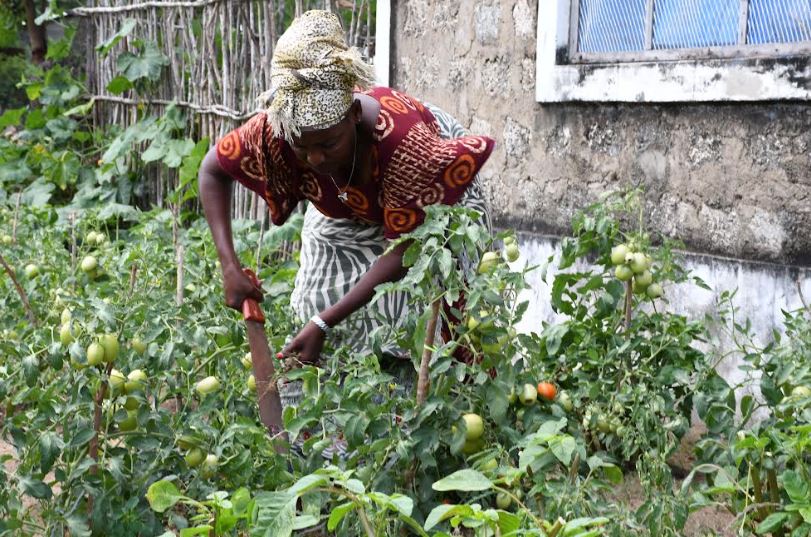
Thanks to her sons’ financial support, Matole has been enabled to expand her kitchen gardening activities. “I no longer buy vegetables since I grow them myself—managu (African nightshade), mchicha (amaranth), pumpkin and tomatoes, all of which bring me a profit,” she says.
Despite challenges such as heavy rains linked to climate change that sometimes destroy her crops, Matole’s family is impressed by her progress. Water scarcity and tomato infections are other obstacles she faces, but she remains steadfast. “I manage to sell my produce, such as maize, at a good price,” she discloses.
“I like the talking book sessions held every Friday from 11am to 1 or 2pm, where we discuss interesting and informative topics,” she says. The emphasis on gender roles in agriculture, she says, highlights the importance of involving all household members in agribusiness to achieve success.
FAO Social Policy Officer Huda Alsahi says gender inequalities remain among the biggest obstacles hindering women’s access to opportunities and markets.
“To create change, we need to plant the seeds of transformation in the minds of both women and men,” she says. Matole’s family has done exactly that.
A combined team of FAO officials from Kenya and Italy visited four sub-counties including Ganze, Magarini, Kilifi North and Kilifi South, from October 21 to 24, 2025, where the pilot Tushauriane Tuimarishe KilimoBiashara is being implemented.
FAO is working in collaboration with Pwani University, the Centre for Behaviour Change and Communication (CBCC) Africa, and Amplio Ghana to ensure the project’s success. FAO Governance and Social Inclusion Team Lead Husna Mbarak said FAO would be recognizing women farmers next year, 2026, the Year of Women Farmers. “That gives us a good boost in highlighting the contributions of Kilifi’s women,” she says.
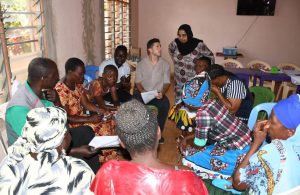
During the FAO team’s visit to the Farmer Field School (FFS) sessions, participants were divided into groups and given assignments. Animated discussions followed, with real-life experiences shared, farming challenges outlined and recommendations proposed. Each group made presentations summarizing what had been discussed.
By William Inganga