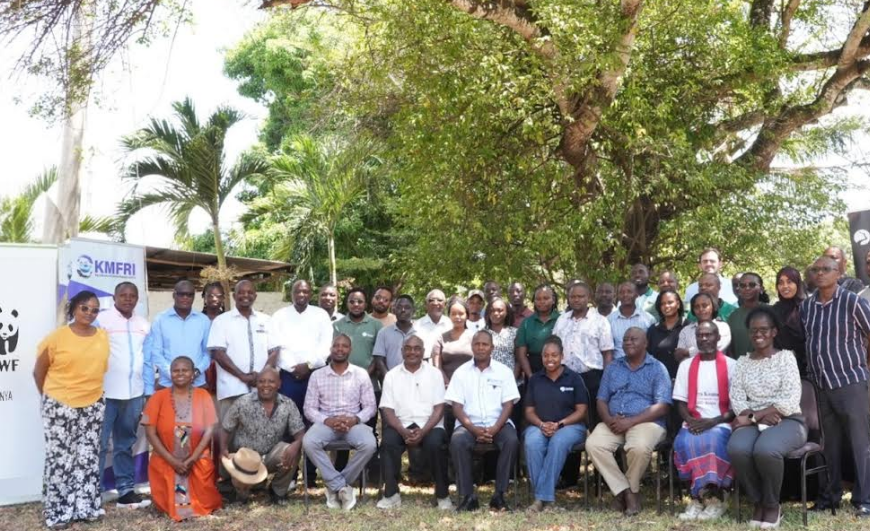
Environmental conservation stakeholders have met in Kilifi to deliberate on sustainable traditional approaches to environmental management, with a particular focus on wetlands.
Led by Kenya Fisheries and Marine Research Institute (KMFRI) Director General Dr. Paul Orina, the stakeholders said community sensitisation is critical to wetland conservation, noting that local residents are the primary custodians of these ecosystems.
“Communities live around wetlands and interact with them daily, so empowering them with the right knowledge is key to effective conservation,” Dr. Orina said.
“While climate change remains a major threat, human activities driven by limited awareness continue to accelerate wetland degradation,” he added.
“A lot of wetland destruction is caused by lack of adequate knowledge on conservation, not climate change alone,” he said.
Dr. Orina noted that involving communities through traditional conservation practices would enhance the adoption of both indigenous and modern environmental management methods.
“Community participation makes it easier to understand, accept and implement conservation strategies,” he added.
WWF Coastal Region Officer Mohammed Wakia called for full implementation of existing environmental policies alongside ongoing tree-planting initiatives.
“We already have policies in place, and what is needed now is commitment from all stakeholders to implement them effectively,” Wakia said.
His remarks were echoed by Kauma Council of Elders member Cakston Mwanyanje, who urged a review of some environmental policies to align them with emerging challenges linked to climate change.
“Some policies need to be amended to reflect the current environmental realities we are facing,” Mwanyanje said.
The elder also stressed the importance of sustained awareness campaigns targeting young people.
“Youth make up a large percentage of the population and must be actively involved in conservation efforts,” he added.
Participants at the forum underscored the vital role of indigenous and local knowledge systems in sustainable wetland management, citing long-standing cultural practices, values and community wisdom as essential to conservation and long-term environmental resilience.
By Stephen Mrira