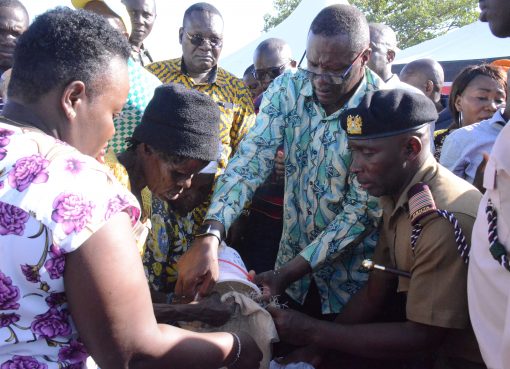
Chief of Staff and Head of Public Service Felix Koskei has affirmed the government’s commitment to the Public Private Partnership (PPP) framework in accelerating development in the country.
Koskei said that when the Kenya Kwanza administration took over power, it realized that the fiscal space was too tight to support accelerated development, hence the reason why government opted for the internationally accepted Public Private Partnerships.
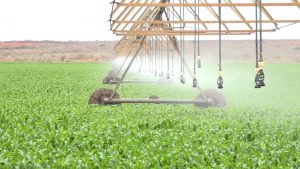
Speaking during a site tour of Galana-Kulalu Food Security project domiciled in Kilifi and Tana River Counties, the Chief of Staff lauded the progress, noting that critical infrastructure has been rolled out to support agricultural productivity through the PPP system.
“When this administration came to power, we realized that the fiscal space was so tight. The tax base was narrow. It was impossible to collect taxes and invest the same for huge, serious projects like this one,” he said.
Koskei said since the government started leveraging on PPP, the country had achieved tremendous progress, especially in road construction and huge agricultural projects such as the Galana/Kulalu Food Security Project, which he noted was progressing very well.
“There is good progress; the infrastructure shows not only the viability of the project, but also assures us of returns,” he told journalists.
The Chief of Staff was accompanied by the Principal Secretary, State Department for Irrigation, Ephantus Kimotho and the Chief Executive Officer of the National Irrigation Authority, Eng. Charles Muasya.
Koskei said three private partners are already on site, with one having planted about 700 acres of seed maize which is further projected to expand to 3,200 acres by October this year and 5,000 acres by February 2026.
The project aims to close the seed maize deficit that is currently addressed via imports from countries such as South Africa and the United States of America.
Among the milestones, Koskei highlighted is the construction of a 450,000 cubic-meter water reservoir and a new intake system designed to resolve persistent silting issues and ensure uninterrupted water supply to the expansive irrigation scheme, adding that all previously installed center pivots are now fully operational.
“The kind of infrastructure that we have, can comfortably support 12,000 acres. We also have plans to come up with a dam within the Tsavo East National Park. The designs have been done and shortly construction will start and that will help us open up 200,000 acres of land for agricultural use here,” he said.
He said the government had done a feasibility study which had shown that it is possible to bring water through a pipeline from the Grand High Dam to Galana “that will enable us to get adequate water, which combined with what we already have, will enable us to hit the one-million-acre production target.”
The Public Service Head said the government had also integrated researchers into the project to ensure that its strategies are guided by data, adding that the research outputs will be shared with local universities and other research institutions worldwide.
Aside from maize, the project will prioritize animal feed production and other high-demand crops.
Koskei called on investors to explore the region’s fertile soils and expansive land, encouraging a diversified agricultural base.
He also announced that two private investors were already working within the Bura Irrigation Scheme in Tana River County, where one is doing 40,000 acres of rice, while the other is cultivating 35,000 acres for sugarcane farming.
These investments target key food crop deficits, with sugar and rice shortfalls estimated at 500,000–600,000 and 700,000–800,000 metric tons respectively.
With traditional maize-growing regions facing land pressure due to population growth, Koskei said the Galana/Kulalu and Bura projects represent a strategic pivot in Kenya’s food security agenda.
“We are steadily moving toward self-reliance, and these partnerships are key to getting us there,” he affirmed.
By Emmanuel Masha