

The Government is implementing a raft of critical initiatives that will create opportunities for small-scale livestock keepers to tap into regional and global markets, and in turn help unlock their economic potential and sustainability of the country’s livestock industry.
The initiatives are also geared towards addressing the long-standing challenges faced by the livestock sub-sector including limited market access, inconsistent supply chains and vulnerability to effects of climate change.
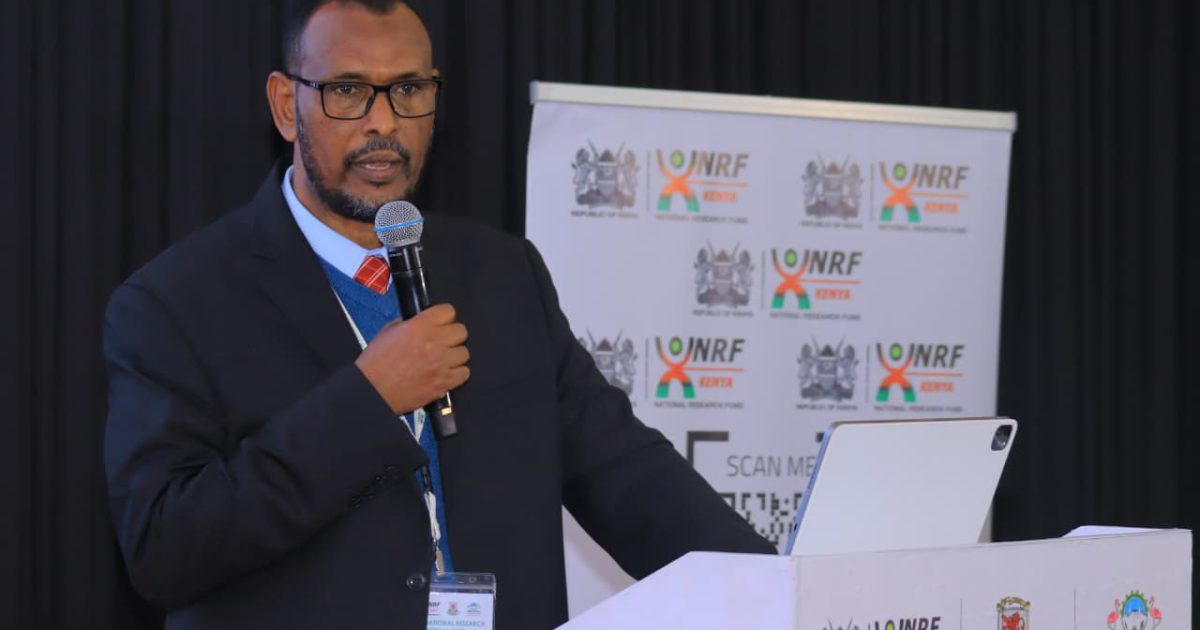
According an advisor at the Livestock and Rangeland Management in the Office of the President Professor Abdi Yakub Guliye, innovation was key to spurring growth in the sector that had numerous opportunities that remained untapped.
Professor Guliye said there was a need for devolved units and their non-state partners to complement the national government’s initiatives towards supporting the establishment of reliable markets for livestock and livestock products and creating an enabling environment to unlock the sector’s economic potential.
While stating that the government was prioritizing the promotion of key value chains, including beef, sheep, goats, indigenous poultry, honey, dairy, and leather, to enhance productivity and sustainability within the livestock sub-sector, the advisor stated that the promotion of feedlots across the country and the commercialization of livestock keeping were expected to improve livestock off-take for the market.
He said the government had put in place measures and was supporting programs to unlock avenues for the country’s livestock sub-sector development whose benefits included job creation, increased revenue generation, improved food and nutrition security and enhanced sustainable livelihoods.
Professor Guliye observed that innovation allows meat surplus and livestock products to be used to produce something else and called for increased support towards development of an ecosystem in the livestock sub sector where there is nothing that goes to waste.
The advisor made the remarks during a discussion forum by a panel of experts including policy makers, veterinary specialists, researchers, industry leaders, innovators and other stakeholders drawn from more than 20 counties to explore ways of improving the sub-sector.
The event themed ‘Enhancing livestock productivity through product diversification, commercialization and improved quality of services’ was held at Egerton University’s Njoro Main Campus.
Various speakers at the forum noted that Kenya’s livestock and livestock products were largely uncompetitive for reasons such as high prevalence of transboundary diseases and low quality of produce owing to underutilization of innovation, modern technologies and genetic advancements.
Professor Guliye hailed the government for supporting initiatives geared towards research, animal genetic improvement, investments in livestock disease control aimed at improving access to the regional and international markets and guaranteeing safety of the food of animal origin.
Commercialization, he noted, could boost productivity by integrating smallholder producers into dynamic markets, expanding access to technology, improving infrastructure, and strengthening institutional support for sustainable and inclusive growth.
The advisor pointed out that the livestock production system in Kenya faced a host of challenges, including droughts and market-sensitive diseases. These factors he noted contribute to the inconsistency in the supply of quality slaughter stock, denying livestock farmers access to lucrative market contracts.
“By strengthening the capacity of small holder farmers and enhancing their access to markets, we will empower livestock producers to capitalize on both domestic and international demand for livestock products,” he stated.
He added that efficient marketing systems for livestock and livestock products were essential to increasing livestock productivity and commercialization adding that there was need to bring together stakeholders from across all sectors to tackle the challenges head-on and develop solutions that would drive growth in the livestock sector.
According to official government statistics, the livestock sector plays a key role in Kenya’s economy, contributing approximately 12 per cent to the national Gross Domestic Product (GDP) and 42 per cent of the agricultural GDP.
Approximately 70 per cent of the ruminant livestock population is located in arid and semi-arid lands, which constitute about 80 per cent of the country’s land mass. These animals are primarily raised under a pastoral production system.
Professor Guliye emphasized the need to improve service delivery in the sub sector noting that extension and advisory services, ICT platforms, and mobile advisory systems could bridge information gaps and support farmers.
Access to credit, structured markets, and cooperatives, he said further enhance sales, incomes, and bargaining power.
“One of our core objectives is to enable small-scale livestock exporters to band together and form strong cooperatives, enhancing their ability to negotiate better prices, improve economies of scale, and gain access to secure payment systems,” he added.
He underscored the importance of stronger policy and institutional frameworks to support innovation, regulate service delivery, and drive investments in infrastructure and an enabling environment in unlocking the full potential of the livestock sector.
Data from the State Department for Livestock breaks down the livestock population in the country as 4 million heads of exotic dairy cattle, 16 million heads of indigenous cattle, 24 million heads of hair sheep, 34 million heads of indigenous goats, 4 million heads of camels, and 48 million indigenous poultry.
Experts at the forum indicated that with a market size of 1.2 billion people, in Africa, Kenyan livestock farmers have a huge opportunity to boost trade, increase competitiveness, and unlock new markets. This they said was possible through strengthening market systems, promoting financial inclusivity, and fostering collaborations.
Kenya’s strategic location was also cited as an opportunity that should be exploited to export high-quality livestock products and live animals to the Gulf countries. It also serves as an attractive stimulus for investors from the Middle East and other parts of the world.
Nakuru county Agriculture, Livestock, Fisheries and Veterinary Services Chief Officer Dr Michael Cheruiyot stated that to improve livelihoods, and unlock new markets, policies and regulations that promote agribusiness, quality assurance and safety standards in the livestock sector must be developed and implemented.
Dr Cheruiyot said sanitary and phytosanitary standards must be addressed in order to achieve international market health requirements adding that Indigenous breeds were recognized for their resilience and potential in niche markets.
“For our livestock sector to thrive, we must embrace innovation, diversify products, and strengthen disease control”, he added.
He was happy that the livestock sub-sector contributed to about 50 percent of the agricultural GDP in addition to employing 50 percent of the agricultural labour and also supporting over 60 percent of Kenyan households.
Dr. Cheruiyot stressed that the perennial livestock disease outbreaks in the country were a major setback to the livestock sub-sector as they threatened not only the health of millions of animals but also the livelihoods of farmers and the broader economy, and to avert this, he supported the national Government’s plan of rolling out a national livestock vaccination program.
He at the same time noted that strict health regulations and safety concerns had kept Kenyan livestock products from reaching their potential in these markets, and therefore the country must attain better standards if the recently signed trade agreements for livestock products have to hold.
The chief officer lamented that the concerns had created bottlenecks, stifling the country’s growth and the sector’s ability to unlock its economic promise.
“FMD and PPR are classified as ‘trade-sensitive’ transboundary animal diseases by the World Organization for Animal Health (WOAH); therefore, the level of Kenya’s prevention and control status of these diseases determines if Kenya’s livestock and livestock products can access international markets,” he reiterated.
He suggested that both levels of government should work together to align agricultural policies and strategies, ensuring consistency in their efforts to support the livestock sector adding that sharing technical expertise, financial resources, and project management tools between national and county governments could create synergy and avoid duplication.
By Esther Mwangi

