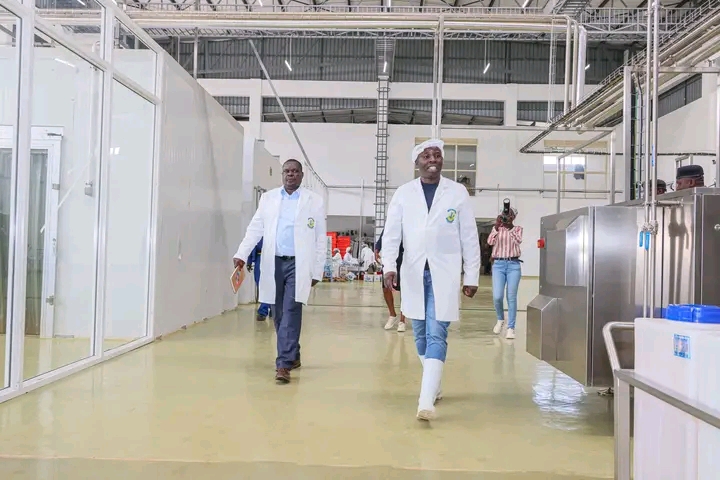
The Nandi County mega milk processing plant has sent a promising signal to the dairy farmers to embark on the once lucrative industry, which dominated the entire North Rift.
Gigantic Milk processor at Kabiyet is one of its kind that has not only breathed life to the sleepy market, but also awakened the dormant dairy farming subsector in the region.
It took Nandi County government over five years to complete and operationalise the facility which gobbled over Sh700million of taxpayer’s money, and is now belching a grey smoke of hope to the locals.
Paul Kerich, a dairy farmer, said that the facility is a great milestone to the value addition chain and it was expected to revitalise the dairy sub sector which has been plagued by production and market challenges for years.
“Dairy farming has been one of the neglected agricultural practices in the region and the unscrupulous traders have been purchasing milk at poor prices as farmers lacked alternatives. The facility will bring a turn-around to the abandoned dairy farming. The locals aspire for good prices and a conducive economic environment for milk production,” he said.
Nandi is considered to have progressive animal production in the North Rift Region with a population of over 21, 000 smallholder dairy farmers. Mosop, Chesumei, Emgwen, Nandi hills and Aldai Sub counties are among the areas nestling excellent dairy livestock for quality milk according to the County Department of Agriculture.
However, for over two decades, the cost of production and fluctuating milk prices has choked the dairy farming; the farmers have significantly abandoned dairy livestock and the locals majorly focused on subsistence dairy farming.
Hefty taxes initially imposed by the government on animal feeds was counterproductive to milk production in Kenya.
Further, the ripple effect further sent Kenya Creameries Company (KCC) to the sick bed owing to shortage of milk, corruption and management issues.
This opened up a leeway for exploitative private investors and traders that purchased farmers’ milk at low prices, thus making dairy unprofitable.
Though the county boasts the first milk processing plant in the region, a myriad of challenges stands on its way to success- insufficient extension services, shortage of milk and farming techniques are some of the stumbling blocks hindering the value chain goal.
Elvans Lelei, a dairy farmer in Mosop, said that lack of capacity building on animal husbandry is the major setback to achieving quality pedigree for dairy production in the community.
“We have had Artificial Insemination (AI) services and end up with undesired livestock in our farms. The subsidies’ AI in most cases produce more male calves than female, and this has slowed down the multiplication of the dairy livestock in the region,” revealed Lelei.
He noted that they lacked know-how to enhance animal production due to insufficient extensional services tailored for dairy farmers.
The milk factory is expected to process an estimated 200, 0000 liters per day which is way above the total production of milk in the region.
According to the County Department of Livestock, the majority of the local smallholders produce below 10 litres of milk and a total of close to 100, 000 litres of milk reach the market supplied to eateries and direct consumers.
Lelei said that the county would have to outsource more milk from neighbouring counties to sustain the processing facility.
“We also need financial incentives as farmers to spur the dairy economy in the region. This will include subsidies and revival of cooperative societies to consolidate milk production,” he explained.
The milk factory is under management by a consortium of local cooperative societies in the community that co-opted private stakeholders for capacity building to run the facility.
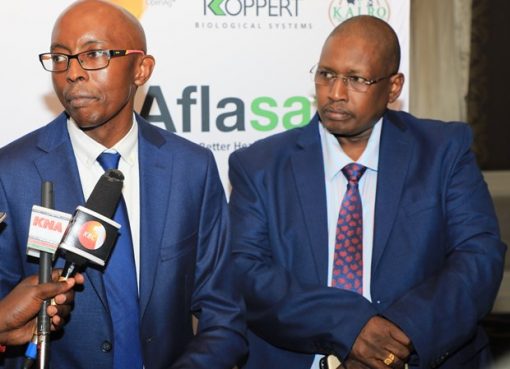
CEC for Agriculture Dr. Kiplimo Lagat said that over 43 cooperative societies have been revitalised for consolidation and consistent supply of milk.
“We are encountering teething problems but they will be resolved in the long run. We are looking forward to obtaining milk from our local farmers through their respective cooperative societies,” stated Dr. Kiplimo, claiming that more cooling plants would be provided for the farmers to prolong milk shelf-life in collection centers.
He said the county has also prioritised potential milk production in the county through support from National Agriculture Value Chain Development Project (NAVCDP) which has strengthened funding of milk farmers under Saccos and cooperative movement.
Despite the challenges facing dairy farmers, Lagat said the county has made significant strides to address those setbacks for instance recruitment and training of agriculture extension officers to help the farmers on best milk production practices, acquiring high milk heifer breeds and also construction and renovation of dips for disease management.
While addressing farmers during Ushiraka day at Kabiyet, Governor Stephen Sang termed the factory as a milestone his administration has achieved as far as value addition is concerned.
“We are looking forward to exporting milk by products to the international market. And this will boost earnings to our farmers and promotion of our agricultural commodities,” he stated.
By Geoffrey Satia