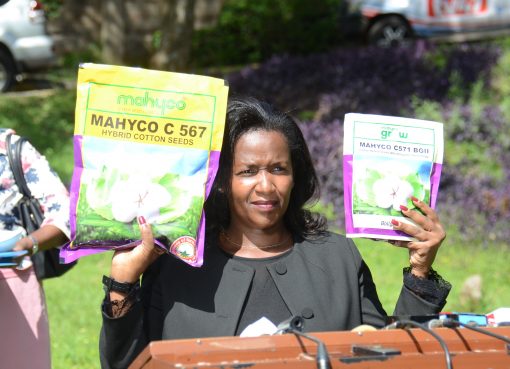
Once faced with declining yields, erratic weather patterns, and limited access to markets, smallholder farmers in Tindiret sub county are now witnessing a turnaround, thanks to a collaborative partnership between the county and a number of dedicated non-governmental organizations (NGOs) working in the area.
At the helm of this transformative shift is the Sub County Agricultural Office, headed by Ruth Chepkorir.
Passionate about empowering farmers and modernizing agriculture, the office has been instrumental in fostering partnerships that focus more on just distributing seeds or fertilizers.
“This partnership is not about handouts,” Chepkorir explained, “It is about empowering farmers with the knowledge, tools, and support systems they need to thrive, especially in the face of climate change.”
Together with NGOs such as the World Agroforestry Centre (ICRAF), One Acre Fund, ActionAid Kenya, and several local community-based organizations, the agricultural office has rolled out a series of ambitious programmes. They range from the promotion of climate-smart agriculture (CSA) to crop diversification and value addition, all tailored to the unique needs of farming communities in Tindiret.
One of the most impactful initiatives has been the introduction of climate-smart farming practices, where through farmer field schools and demonstration plots established across the sub county, local farmers are being trained on conservation tillage, agroforestry, intercropping and the use of drought-tolerant seed varieties.
These approaches not only enhance soil health and preserve water, but also increase productivity in unpredictable weather conditions. “Climate change is no longer a distant threat for our farmers , it is a daily reality,” said Josephine Lang’at, Programme Officer at ActionAid Kenya.
“By working closely with the Sub County Agricultural Office, we’ve been able to co-create solutions that are locally appropriate and driven by the farmers themselves. That ownership is key to sustainability,” she said.
For the World Agroforestry Centre, the focus has been on integrating trees into farmland to improve soil quality, enhance biodiversity and provide alternative sources of income.
“Agroforestry has huge potential in Tindiret, especially in areas, where soil erosion is a major problem,” said David Ochieng, field coordinator with ICRAF.
“Farmers who have embraced tree planting and soil conservation practices are already reporting better yields and more resilience during dry spells,” he said.
Another key focus of the partnership has been economic empowerment through value addition. With support from the agricultural office and NGO partners, several women and youth groups have been trained in processing and packaging agricultural products like sweet potatoes, bananas, and sunflower seeds.
Small-scale processing units have also been set up to allow these groups to move beyond subsistence farming into agribusiness.
“For years, we sold raw produce at throwaway prices,” shared Selina Chebet, a member of a women’s farming cooperative in Chemase.
“Now, we process and package our goods. We have even started supplying schools and local markets in Nandi Hills and Eldoret. It has changed our lives,” she said.
Partners like One Acre Fund have also played a critical role in making quality farm inputs accessible and affordable, while offering tailored agronomic advice through a network of field officers.
According to Faith Ruto, Regional Lead for One Acre Fund, “The success we are seeing in Tindiret is the result of aligning our efforts with the government’s extension services.
By complementing each other, we are reaching more farmers more effectively, and the outcomes are evident in the improved yields and income levels, she added.
The results speak volumes. According to data from the Sub County Agricultural Office, farmers who adopted climate-smart techniques saw an average 30 percent increase in maize yields, over the past two seasons.
Incomes have also risen significantly, especially among women and youth engaged in value-added enterprises. More young people are now venturing into agribusiness, a development Chepkorir is particularly proud of.
“There was a time when youth saw farming as the last resort,” she said, adding, “But with the skills and resources being made available through this partnership, they’re beginning to view agriculture as a real business opportunity.”
However, despite this notable progress, challenges remain including limited access to irrigation, post-harvest storage facilities and digital extension services that continue to affect smallholder productivity.
Nevertheless, all partners remain optimistic and committed. “This is a long-term journey,” said Josephine Lang’at of ActionAid.
“But we are encouraged by the results so far. The farmers are motivated, the collaboration is strong and there is political goodwill. That is a rare combination, and it gives us hope,” she said.
Meanwhile, as the sun sets over the green hills of Tindiret, the promise of a more food-secure, prosperous future grows ever brighter, nurtured by a partnership deeply rooted in trust, shared vision, and the resilience of the farmers who are leading the way.
by Sammy Mwibanda