The government is set to plant more than 40 million trees and rehabilitate rivers and wetlands at the Mau Forest, courtesy of the Mau Forest Complex Integrated Conservation and Livelihood Improvement Programme (MCF-ICLIP).
The Principal Secretary for Environment and Climate Change, Dr. Festus Ng’eno said the government had developed a ten-year plan through the Ministry of Environment, Climate Change and Forestry to restore the Mau Forest Complex.
He said the initiative was designed to transform the country’s largest water tower into a climate resilient ecosystem that delivers sustainable water, food and energy security while supporting thousands of green jobs.
The interventions, Ng’eno explained, will result in restoration of 33,138 hectares of forest by 2035, adding that the MCF-ICLIP plan was on course through weekly tree planting drives that have seen 160,000 seedlings planted in Eastern Mau in the past one month.
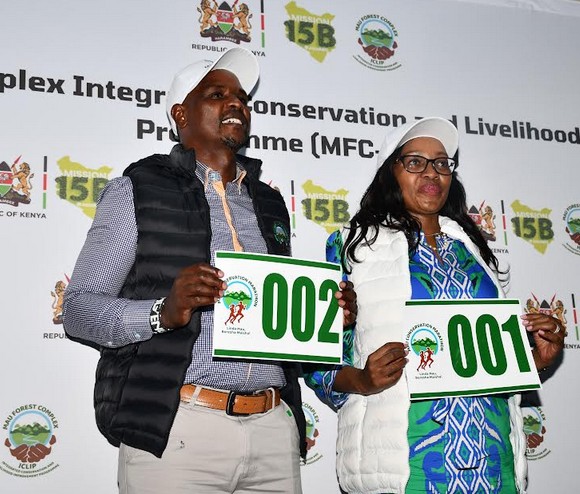
Speaking in Nakuru during the launch of the Mau Conservation Marathon, the Principal Secretary said the government was mobilizing resources to conserve the water tower through a multi-faceted approach that includes government funding, private-public partnerships, community involvement, and enforcement measures.
Operating under the clarion call “Linda Mau, Boresha Maisha” (Protect Mau, Improve Livelihoods), the MCF-ICLIP programme aims to tackle the forest’s mounting threats including illegal logging, unsustainable land use, encroachment, and climate change through an integrated, multi-stakeholder approach.
Ng’eno pointed out that securing the complex’s boundaries with fencing and providing alternative livelihoods for local communities, was part of the state’s restoration and conservation efforts, adding that the MCF-ICLIP programme was anchored on five core components including sustainable landscape management, community livelihood improvement, circular economy innovations, environmental education and research, and governance and resource mobilization.
The inaugural Mau Complex Marathon will be held on October 24, 2022 where President William Ruto is expected to officially inaugurate the MCF-ICLIP plan at Baringo Primary School, within Kuresoi North Sub-County in Nakuru.
2025 World Champion in Steeplechase Faith Cherotich has been named the Marathon’s brand ambassador.
Ng’eno stated that by holding the event in and around natural areas of the water tower, the Mau Complex Marathon is expected to foster a deeper connection between people and nature, reinforcing the importance of preserving Mau Complex for future generations.
The Principal Secretary further said the marathon will offer an important platform for Kenya to conserve the environment through fundraising for conservation efforts, promoting awareness of climate action, and through direct activities like tree planting.
The event, which will henceforth be held annually according to Dr. Ng’eno, is also expected to nurture talent by providing a platform for local runners to compete and gain recognition, which can improve livelihoods, while developing a pipeline of new athletic talent.
Ng’eno, who is also patron of the MCF-ICLIP disclosed that the initiative with an estimated cost of Sh21.5 billion targets the Eastern, Molo, Western, and South West Mau Forest complex Blocks and adjacent Farmlands covering 317,115 hectares.
He emphasized that the programme was not only a government project, but also a “whole-of-government and whole-of-society” effort, bringing together county governments, private sector players, development partners, civil society, local communities, and the media.
To support long-term financing and accountability, a Mau Water Fund and regular partners’ coordination forums will be established.
“Partnership is at the heart of MFC-ICLIP. We are combining government leadership, community participation, private sector investment, and development partner expertise. Together, we can turn the tide from degradation to restoration,” he noted.
The Principal Secretary noted that the Mau Forest Complex holds the highest economic value among Kenya’s forests, estimated at Sh 197 billion, attributed to its extensive resources and transboundary ecosystem services.
“Mau Forest Complex is a critical biodiversity hotspot, habitat to species of international conservation concern, and serves as the source of 12 major rivers – Sondu, Mara, Nyando, Yala, Ewaso Ng’iro, Molo, Njoro, Nderit, Makalia, Naishi, Mumberes and Nzoia.” the PS said.
He disclosed that the Mau Forest Complex supports the livelihoods of surrounding communities, sustains the ecological health of the region, and supports iconic ecosystems such as the Maasai Mara and Serengeti; renowned for their rich biodiversity and tourism value.
Similarly, the Mau Forest Complex also plays a vital role in sustaining Lake Natron, a key breeding site for Lesser Flamingos.
The Mau Forest Complex, covering approximately 403,000 Ha, is the largest Afro-montane Forest in East Africa and Kenya’s largest and most important Water Tower.
It comprises 22 forest blocks – 21 public forests managed by the Kenya Forest Service, and one community forest managed by Maasai Mau block.
At household level the program is expected to benefit more than 80,000 livelihoods through alternative livelihoods such as bee keeping, potato farming, bamboo growing and nature-based enterprises.
“Through this program we expect to provide solar, biogas and efficient stoves to 10,000 households and install solar and biogas lighting systems in 500 schools,” he said.
He noted that waste to energy initiatives will not only improve incomes but also create thousands of direct and indirect jobs, particularly for women and youth in forest adjacent areas.
On her part, Nakuru governor Susan Kihika said that despite its critical ecological and socioeconomic value, the Mau Forest Complex (MFC) faces severe degradation driven by human activities and climate change.
“Key threats include; illegal charcoal production, over-harvesting of wood fuel and timber, overgrazing, land use changes, forest fires, and poor farming practices,” the governor said.
Additionally, Kihika said pressures and effects such as population growth, riparian encroachment, water pollution, and unregulated water abstraction by commercial farms and industries had been straining the ecosystem.
She said that the programme will restore degraded landscapes and protect the Mau Forest Complex for enhanced ecosystem services, agricultural productivity and climate resilience.
It will also support nature-positive enterprises and agricultural value chains for improved livelihoods and promote a circular economy to spur green jobs.
In addition, Kihika said that the programme will promote environmental education and research to inform development and decision making in addition to strengthening policy, governance and institutional frameworks for sustainable community based natural resource management of the Mau Forest Complex.
She described the water tower as an ecological lifeline as it sustains households and farming, generates about 600 MW of hydropower, supports the tourism economy, and anchors regional and global ecosystems.
She said her administration was restoring degraded forests and wetlands in the devolved unit, aiming to reclaim 60,000 hectares by 2030 through public-private partnerships and community involvement.
“We are actively promoting sustainable practices such as agroforestry and encouraging economic empowerment through ventures such as ecotourism,” stated Kihika.
Njoro Member of Parliament Kathambi Chepkwony advocated for a stronger involvement of local communities in the Mau Forest conservation efforts.
She said this involves improving partnerships to ensure locals, who act as frontline defenders of forests, also benefit from initiatives like ecotourism, and sustainable income generation through programs such as seedling nurseries and bee-keeping projects.
The goal, the MP observed, is to empower and support local communities so they can become key allies in preserving natural resources for the future.
“Local communities around the Mau Forest complex should be involved in the MCF-ICLIP by being given job opportunities whenever they arise and for those with seedlings be given the first priority to supply them at a small fee towards the restoration drive,” she said.
Kathambi highlighted the need to empower communities to become more active partners in conservation through providing training and support, and ensuring they have a voice in management decisions.
On the other hand, Kuresoi North MP Alfred Mutai called for enhanced forest conservation initiatives to combat deforestation and illegal resource exploitation.
Key areas of focus, he added, include strengthening laws, increasing community involvement, and promoting reforestation and afforestation.
Mutai noted that these efforts will protect forests for their role in climate mitigation, water regulation, and biodiversity, as well as to support sustainable livelihoods.
The lawmaker said restoring the Mau is expected to guarantee energy stability, secure food systems and safeguard GDP growth.
Nationally the restoration of Mau is expected to secure steady flows of water into rivers including Mara, Sondu and Njoro, which feed Lake Victoria, Lake Nakuru and Rift Valley’s agricultural heartlands.
Tourism is another sector expected to benefit significantly. The Mau sustains Lake Nakuru National Park, which attracts nearly 300,000 visitors annually and the Maasai Mara ecosystem, which generates over Sh2.5 billion annually and supports thousands of local jobs.
by Esther Mwangi & Dennis Rasto