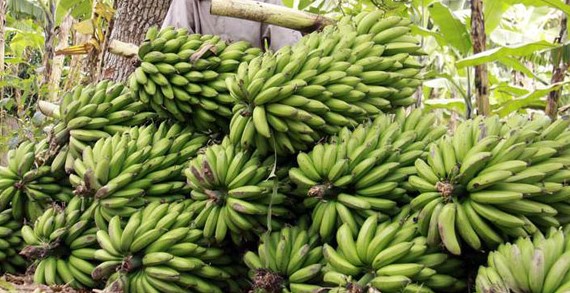
For a long time, banana farmers in Taveta watched their crops ripen on the stem, only to rot in their fields or be sold at throwaway prices to exploitative middlemen.
With no reliable markets, poor infrastructure, and limited access to quality seedlings, many abandoned their farms altogether, retreating into a cycle of poverty that seemed impossible to break.
Children dropped out of school, debts mounted, and the fertile lands in the region lay idle, a tragic waste of huge potential in a region blessed with ideal banana-growing conditions.
But today that story has changed dramatically.
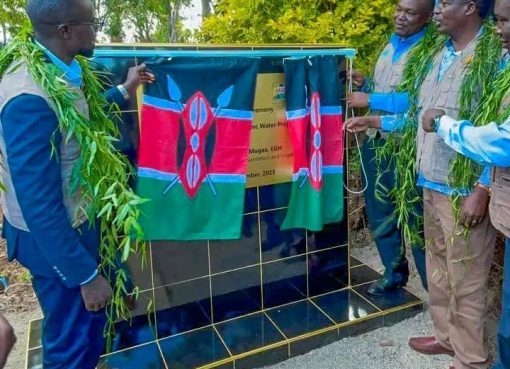
In a historic gathering in Taveta marking the close-out of the Danida Market Development Partnership (DMDP) programme, farmers, government officials, and development partners celebrated what can only be described as an agricultural revolution that has transformed the lives of over 2,000 smallholder farmers and positioned Taita Taveta as Kenya’s emerging banana powerhouse.
Rose Dawa, a banana farmer from Kitobo area, remembers the dark days all too well.
She narrated, “We had bananas, but no one to buy them.”
She recalled, “Even when we found buyers, they dictated the prices. We had no choice but to accept whatever they offered, no matter how little.”
For Rose and thousands like her, farming had become a gamble with the odds stacked against them. The lack of a structured market meant farmers were at the mercy of brokers who often paid peanuts or disappeared without paying, leaving families unable to meet basic needs.
The challenges extended beyond market access. Penina Mshabaha, a lead farmer in the project, explains that farmers were using traditional varieties that were susceptible to disease and produced low yields.
“We didn’t know about tissue culture seedlings,” she explains. “We would plant suckers from our old farms, and productivity kept declining year after year.”
Post-harvest losses were staggering, with farmers losing up to 32.4 metric tons of bananas annually due to poor handling, lack of proper harvesting techniques, and the absence of aggregation centres.
Infrastructure posed another massive hurdle. Roads were in deplorable condition, making it nearly impossible to transport fresh produce without bruising and damage. Electricity and water supplies were unreliable, discouraging investment in value addition or processing. For a crop as delicate as bananas, which require careful handling and quick access to market, these shortfalls were devastating.
It was against this backdrop that the Micro-Enterprise Support Programme Trust (MESPT), in partnership with Danish development agency (DANIDA) and commercial partners Orana A/S and Wanda Agriculture Group, launched the five-year DMDP programme in 2020.
The initiative’s goal was to transform the banana subsector in Taita Taveta County by embedding sustainability and green growth practices while creating income and employment opportunities.
The transformation began with access to quality planting material. Through partnerships with JKUAT Enterprises, Maua Mazuri, and local nurseries, the programme distributed 476,035 tissue culture seedlings to farmers, 96.6 percent of which were the high-yielding, disease-resistant Grand Nain variety.
Emmanuel Lomwatu, a nursery operator, credits the programme for changing his life. “MESPT connected me with the KEPHIS Horticultural Crops Directorate, which enabled me to produce certified seedlings,” he says. “Now I can supply over 10,000 seedlings to farmers.”
But seedlings alone were not enough. The programme introduced an innovative credit-based model that allowed farmers to access certified seedlings on credit and repay after harvest thereby removing the upfront cost barrier.
Over 2,167 farmers were trained on Good Agricultural Practices (GAP) and Climate-Smart Agriculture (CSA), with adoption rates rising from 57 percent at baseline to 82 percent by the program’s close.
The results were remarkable. Annual yields increased by 27 percent from approximately 18.59 metric tons per acre to 23.56 metric tons, while post-harvest losses dropped by 85 percent, from 32.4 metric tons to just 0.48 metric tons.
“This project has helped me sell my produce at better prices, support my children’s education, and achieve financial stability,” Dawa testified.
Household incomes grew significantly. Monthly household income rose by 35 percent from Ksh 22,925 to Ksh 30,858 while annual net income from banana sales increased by 62 percent from Ksh 137,750 to Ksh 223,136. Farmers who intercrop with beans, maize, and vegetables earned an additional 45 percent from their sales.
Perhaps the most historic milestone was the establishment of Africa’s first organic Banana cooperative. According to Mr. Niels Osterberg, Director of Orana A/S, the idea was inspired by MESPT CEO Rebecca Amukhoye when the project faced partnership hurdles.
“Rebecca suggested splitting the project into an organic part and a conventional part,” he recalls. “We wanted the organic side because global demand is higher for organic produce.”
Denmark, where Orana A/S has its headquarter, has the world’s highest per capita spending on organic food, making it a premium destination for Kenyan exports. The organic cluster in Taveta achieved full certification and has already supplied more than 28,000 tons of organic bananas under a premium export deal running until 2034.
“This region is the first of its kind to produce organic bananas in Kenya and Eastern and Central Africa. The farmers are happy with the premium prices they are receiving,” says Amukhoye.
The programme’s impact extended across the entire value chain. The Taita Taveta Banana Cooperative (TATABA), once constrained by low volumes, increased aggregation from 20 to 48 metric tons per week.
Vice Chair Rozina Mrutu explains that the cooperative now trains farmers, distributes seedlings, and conducts market surveys to ensure fair prices.
In total, 2,197 farmers were linked to commercial buyers, facilitating the aggregation and sale of 29,488 metric tons of bananas thereby meeting 97 percent of the project’s target. A total of 398 jobs were created as 79 decent jobs with social benefits and 319 full-time equivalent roles, primarily on farms. Women received 39 percent of the jobs, and youth 36 percent.
Governor, Andrew Mwadime lauded the project for tackling unemployment. “Youths finish school but don’t get employment, but through agriculture they can earn a living,” he said.
The programme also championed environmental sustainability. Farmers planted approximately 242,000 trees using agroforestry practices, contributing to Kenya’s 15-billion-tree initiative. 83 percent of farmers now use mulching, while 56 percent maintain compost pits that convert residues into organic manure.
Commercial partners Orana A/S and Wanda Agriculture Group invested over KSh. 502 million in circular economy innovations, including fiber extraction from banana trunks, composting, and eco-packaging, achieving 100 percent waste conversion at commercial farms. Ziada Solutions processes about 100 trunks daily into fiber, slurry, and banana flour.
On responsible business conduct, 2,036 farmers were trained on human rights, environmental protection, fair labor practices, and anti-corruption principles, hence reducing child labor, eliminating gender-based wage disparities, and curbing middlemen exploitation.
By Arnold Linga Masila