More than 51,000 small-scale farmers, mainly tea growers in Kirinyaga and Embu counties, are set to benefit from a six-month training programme by the Rainforest Alliance under the Mount Kenya Sustainable Landscape and Livelihoods (MUSULLI) Project.
Speaking in Kirinyaga, Rainforest Alliance Country Director Marion Ng’ang’a said the initiative, themed “Pesa Mfukoni” (Money in the pocket)” seeks to equip smallholder farmers with skills in agribusiness, diversification, human rights, and environmental conservation.
Ng’ang’a noted that over 20,000 small-scale farmers have already undergone training in partnership with eight tea factories in the region. She explained that the programme aims to reduce overdependence on tea and coffee by encouraging farmers to diversify.
“Our goal is to help farmers diversify income sources, embrace agribusiness management, and conserve the fragile ecosystem that sustains agriculture,” Ng’ang’a said.
The training covers four main areas: gender mainstreaming and human rights, diversification into alternative farming activities, agribusiness management and financial literacy, and home economics for improved food security and nutrition.
Ng’ang’a emphasized that one in five Africans still face hunger and urged farmers to adopt sustainable systems. She encouraged women and youth to take advantage of the programme and called on farmer groups to register legally to access grants, loans, and government support.
She further warned that without deliberate efforts in environmental conservation, tea and coffee could lose quality, with climate change already shrinking land under the two cash crops. She observed that in factories where graduations have taken place, over 70 percent of participants were women and youth, noting their untapped potential.
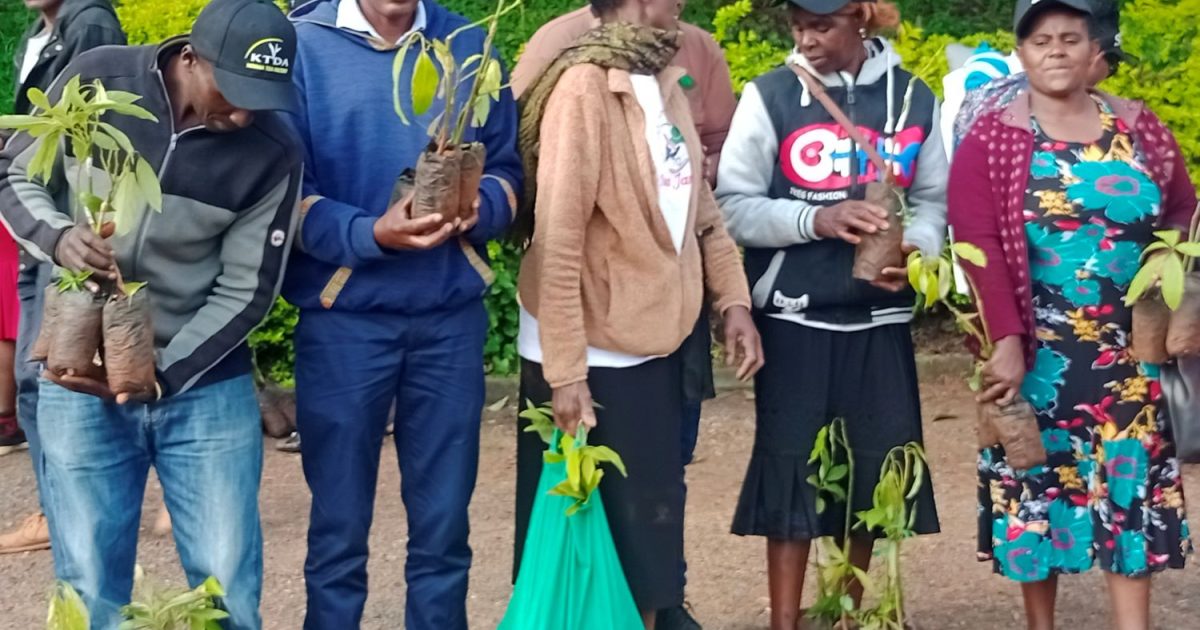
MUSULLI Project Officer Alan Kinuthia announced that each tea factory will receive a Sh1million revolving fund to support farmer-led projects. He said many factories have opted for avocado farming, while others are venturing into beekeeping and small-scale tea packaging enterprises.
“These interventions will not only create alternative income streams but also help farmers improve the quality of their tea while building resilience against changing weather patterns,” Kinuthia said.
For instance, Thumaita Tea Factory has taken up beekeeping, Kathangarii Tea Factory has invested in tea packaging machines, while Ndima Tea Factory and others have embraced Hass avocado farming.
“Here in Ndima, we have 28,000 Hass avocado seedlings, which will be distributed to farmers so they can diversify their sources of income,” he explained, adding that the seedlings are of the best quality and well-suited to the local environment. With the avocado industry growing rapidly, he said farmers would be linked to reliable markets and supported whenever necessary.
Ndima Tea Factory Vice Chairman, Muchiri Wachira, welcomed the programme, saying it will help small-scale farmers cut production costs through modern methods and the use of bio-chemicals instead of outdated practices.
Farmers also testified to the programme’s impact. Lilian Nyawira, a smallholder farmer from Ndima, said the training had enabled her to start small-scale activities alongside tea, giving her an additional source of income.
“We were taught how to save, invest, and diversify. This gives me financial security even when tea prices fall,” Nyawira said.
Ng’ang’a added that the project also seeks to build future generations of skilled farmers, urging families to embrace peace and unity to strengthen household development and reduce poverty.
The MUSULLI programme will continue training small-scale tea farmers across the Mt. Kenya region in line with efforts to strengthen agribusiness, improve livelihoods, and promote environmental conservation.
By David Wandeto