At least 9 teenage girls seek antenatal services in Vihiga County each day, with the government health integrated information system indicating that in January alone, at least 280 girls aged between 15-19 years sought first antenatal services in various health facilities in the county.
The figure is even higher for girls aged between 20 and 24 years who would ideally be in tertiary institutions pursuing different career paths.
Statistics indicate that at least 16 girls in this age bracket seek those services in a day.
It is worth noting that these figures are catalysed by gender-based violence as well as incest, among other vices, the county is grappling with.
The realization comes as the world marks ‘World Contraception Day’, on Friday, the 26th, an annual event dedicated to raising awareness on safe and effective family planning, particularly among adolescents.
Health officials say the crisis is deeply rooted in sexual violence, poverty, and lack of adequate sex education.
Charity Kawira, the reproductive health coordinator at Vihiga County Referral Hospital, said defilement and incest account for a significant percentage of the cases.
“Many of these pregnancies are not consensual. They result from abuse, but the cases often go unreported. Underreporting, coupled with weak policy enforcement, is worsening the situation,” she noted.
Kawira, however, stressed the importance of comprehensive sex education and improved access to contraceptives, calling for stronger community involvement.
“We need to teach young girls about contraception options, from abstinence and condoms to safe medical methods. Knowledge is protection. Without it, the cycle continues,” she said.
A pharmacy technician in Mbale town, who requested anonymity, revealed that emergency contraceptive pills are the most purchased form of contraception in local chemists, an indicator that many young people rely on them as a last-minute option rather than using regular and safer methods.
“Most of those who come for the morning-after pill are young women, some still in school uniforms. It shows there is limited awareness or willingness to use long-term contraceptives,” the technician revealed.
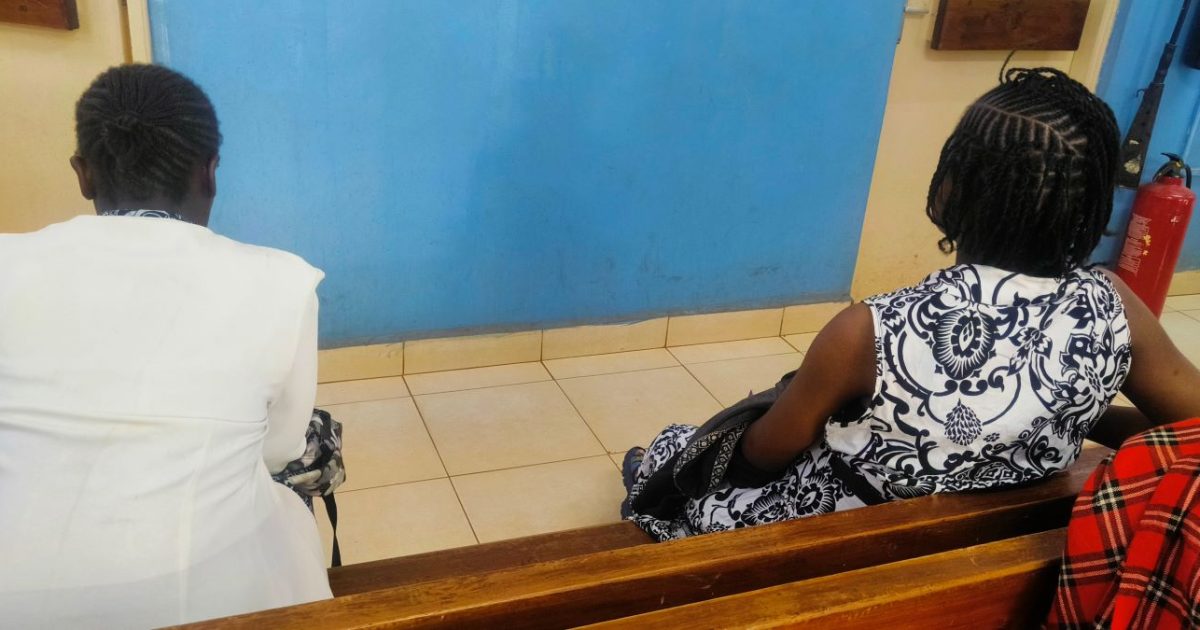
Jackline, not her real name, a mother of a 19-year-old girl, who I met at Vihiga County Referral Hospital seeking Antenatal Care, said she did not imagine that her young daughter, her first child, who is 8 months pregnant, is involved in interaction with boys; therefore, she did not have a chance to talk to her on matters of sexuality.
“I accepted the situation and now she is still in school and doing very well. She narrated.
It is clearly noted that over 90% of sexual assaults are not reported to the police, highlighting the magnitude of the underreporting problem.
There is a disconnect between survey data on sexual violence and reported crime data, suggesting that the majority of experienced sexual violence is not captured in official crime statistics.
Police statistics paint a sobering picture. Cpl. Catherine Nekesa Khaemba of Mbale Police Station disclosed that 156 cases of sexual offences were reported in 2024, while 66 cases have already been recorded this year. Sabatia Sub-County leads with 22 cases, followed by Hamisi with 19 and Luanda with 13.
“Defilement tops the list. We believe the numbers are even higher because many families prefer to settle cases at home instead of reporting to police,” Nekesa observed, urging parents to prioritize justice over secrecy.
Stakeholders say teenage pregnancy is not just a health issue but a social and economic time bomb. A girl who becomes a mother too soon is likely not to complete school and more likely to face poverty, hence become vulnerable to gender-based violence.
Leaders in the county have called for a multi-sectoral approach involving parents, teachers, policymakers, and faith institutions.
“This is not a fight that the government alone can win. We need parents to talk openly with their children, schools to provide guidance, and churches to break the silence on sexual health,” said Florence Sitawa, the Vihiga County Commissioner.
“Sensitize of the children starting from 8 years on matters of reproductive health and the community morals, Social responsibility be fully involved in making sure we handle this issue.” “She added
She discouraged parents from leaving the responsibility of taking care of the children with grandparents as they go to look for jobs.
County Director for Gender and Social Services, Aurther Lisimba, admitted that despite policy efforts, resource constraints continue to slow down the fight against teenage pregnancies.
“The department is operating on a budget that is far below what is required. This limits our ability to fully implement the Child and Welfare Protection Policy launched by Governor Wilber Ottichilo last year,” Lisimba said.
Another challenge he mentioned is the lack of a reporting mechanism for victims of rape. Rape and other sexual assaults are significantly underreported, with a vast majority of incidents never reported to the police due to factors like victim shame, fear of reprisal or judgment from the legal system or society, lack of social support, and a belief that the system will not provide justice or assistance.
These emotional and social barriers are considered “costs” that prevent victims from allocating the scarce resource of information about the crime.
He, however, said that children who are sexually abused have started coming out, something that should be encouraged, as reporting of these cases will help reduce the rate of teenage pregnancy.
He added that the county has nonetheless stepped-up interventions, including community advocacy campaigns, police collaborations, school-based sensitization, and partnerships with organizations such as SOFDI, Ujamaa Africa.
“We are using every available avenue, chiefs’ barazas, school clubs, and rural outreach programs. For instance, during feeding programs, our teams take the opportunity to talk to children about reproductive health and their rights,” Lisimba explained.
For girls who have already dropped out of school due to pregnancy, the county is offering a second chance through vocational training centers, where they can learn tailoring, hairdressing, electrical installation, and other skills.
Fifteen-year-old Nancy (not her real name) from Luanda Sub- County is one of the many faces behind the statistics. She became pregnant while in Form One after being defiled by a relative.
“I was scared and ashamed. I could not go back to school after giving birth. My parents were supportive, but life completely changed. Right now, I am training in hairdressing at a vocational center so that I can support my child,” she shared quietly.
Her story reflects the plight of many girls in Vihiga, where sexual violence and cultural silence fuel the teenage pregnancy crisis.
As the world gathers to mark World Contraception Day, Vihiga’s numbers serve as a reminder that even counties with lower rates are not immune, and need stronger investment to protect young people’s futures.
By Rose Wasike