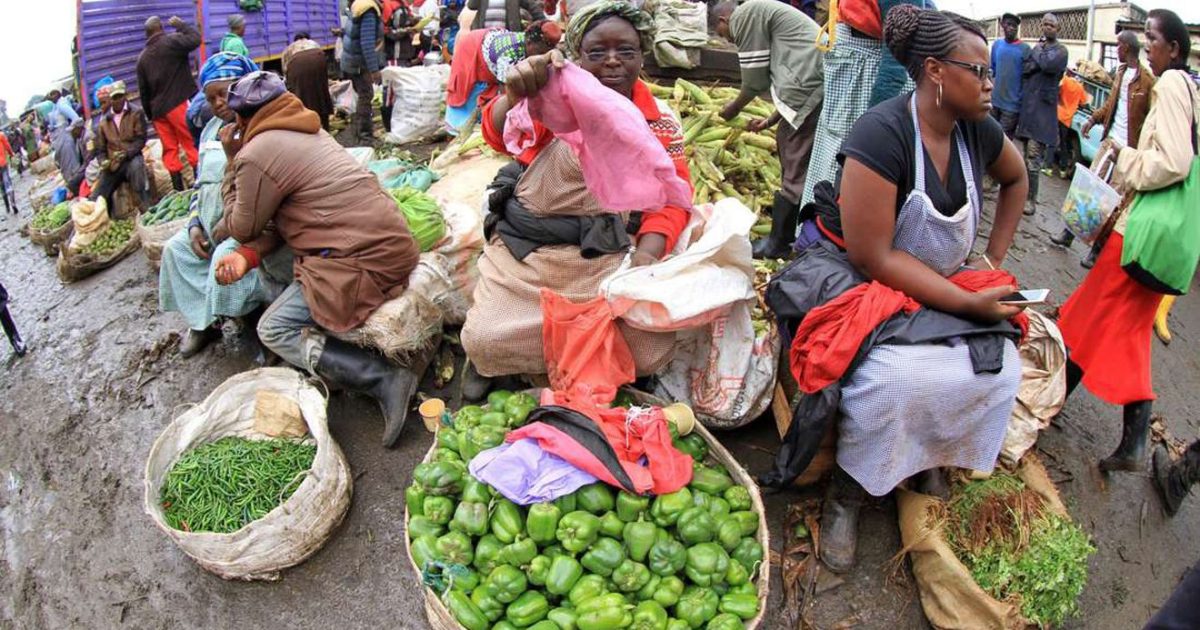
Micro and small traders at Maraba Market in Tinderet Sub-County, Nandi County, are calling on relevant authorities to improve the business environment, warning that persistent challenges related to infrastructure, basic facilities, and security continue to threaten their livelihoods and slow down local economic growth.
Maraba Market is a key trading hub serving Songhor-Soba Ward and neighboring areas, bringing together farmers, hawkers, and small-scale entrepreneurs from across the region.
On market days, the center is usually a hive of activity as traders sell fresh farm produce, cereals, vegetables, second-hand clothes, and household goods. However, behind the bustle lies a trading environment that many vendors describe as increasingly difficult to operate in.
According to traders, poor infrastructure remains one of the biggest obstacles. The market lacks proper drainage, leaving large sections muddy and inaccessible during the rainy season. “When it rains, customers avoid the market because it becomes impassable,” said Peter Kiprotich, a cereal trader who has operated at Maraba for over a decade. “We lose business not because we don’t have goods, but because people cannot comfortably reach our stalls.”
Access roads leading into the market are also in poor condition, increasing transport costs for traders who rely on motorcycles and small vehicles to ferry goods. Vegetable vendors say the situation is particularly challenging for perishable produce. “Sometimes tomatoes and greens get damaged before we sell them because there are no proper shelters,” explained Mary Chebet, a vegetable trader. “We are exposed to the sun and rain, and that affects both the quality of our goods and our income.”
Traders also raised concerns over the lack of basic facilities, especially water, sanitation, and waste management. Food vendors say the shortage of clean water and functional toilets poses serious health risks.
“We handle food that people take home to their families, yet there is no reliable water source here,” said Jane Cherono, who sells cooked food at the market. “This is not just a business issue; it is a public health concern.”
Security remains another major worry, particularly for traders who operate early in the morning or late into the evening. The market has limited lighting and no proper fencing, making it vulnerable to theft and vandalism. “We fear closing late because the area is dark and insecure,” said Samuel Kiplagat, a secondhand clothes dealer. “Some traders have lost goods at night, so many of us choose to carry everything home, which is costly and tiring.”
Despite these challenges, traders acknowledge recent efforts by the government to improve the situation, including the ongoing construction of a Sh50 million modern market at the trading center under the Economic Stimulus Programme. The project is expected to provide improved stalls, electricity, water, sanitation facilities, and storage spaces once completed.
The Sub County Director of Trade, Joseph Sang, said the county government is committed to improving trading conditions across the subcounty. “The Maraba modern market is a major investment aimed at empowering small traders and farmers,” he said. “Once completed, it will provide a dignified and secure environment for business, reduce post-harvest losses, and enhance hygiene standards.”
However, traders argue that while the long-term project is welcome, immediate solutions are still needed to ease their daily struggles. They are urging the county government to address interim needs such as temporary shelters, improved drainage, street lighting, and increased security patrols.
Local leaders have echoed the traders’ concerns. Songhor-Soba Ward MCA, Philip Langat, said the market plays a critical role in the local economy and deserves priority attention. “Maraba Market supports hundreds of families,” he said. “As leaders, we must ensure that traders operate in a safe, clean, and accessible environment while we wait for the modern facility to be completed.”
Community members say improving the market will have far-reaching benefits beyond the traders themselves. “When the market is doing well, farmers get better prices and the whole community benefits,” noted village elder Daniel Koech. “Young people can find work, and money circulates within the area.”
As construction of the modern market continues, traders at Maraba remain hopeful that their voices will be heard and that practical steps will be taken to improve their working conditions. For many, a well-functioning market represents more than a place of trade; it is the backbone of livelihoods and a vital engine for economic development in the sub-county.
By Sammy Mwibanda