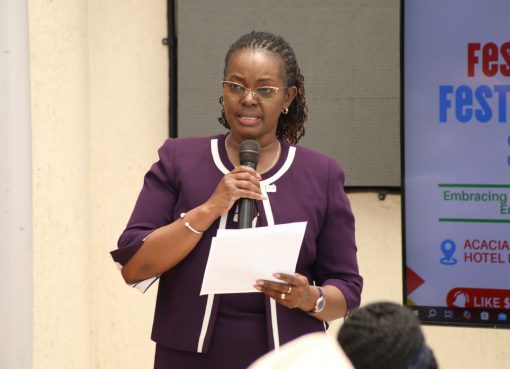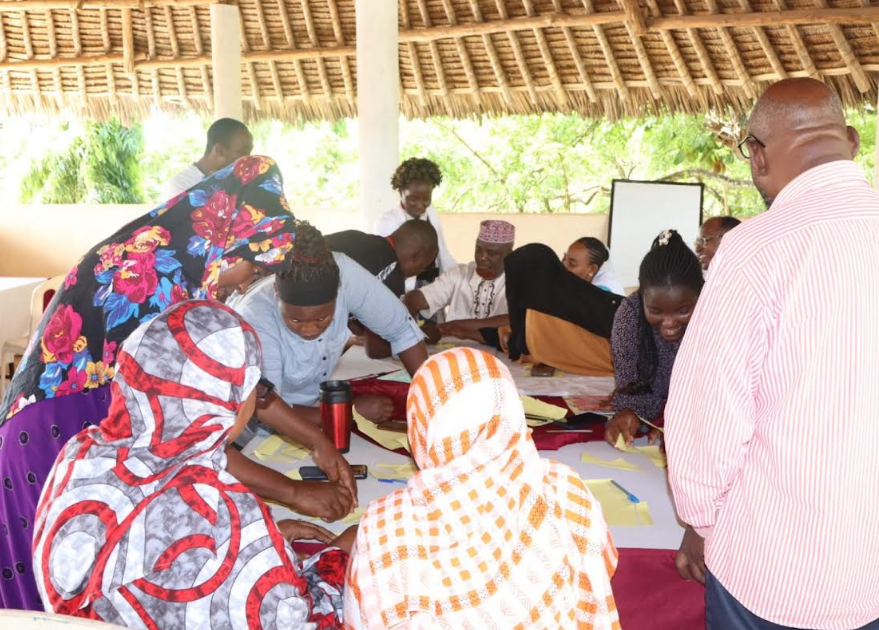
Kwale County religious leaders and community trainers have completed a three-day Training of Trainers (ToTs) programme aimed at promoting Freedom of Religion and Belief (FoRB) and strengthening peaceful coexistence among communities.
The training brought together Muslim and Christian leaders, who are expected to spearhead community sensitisation efforts across the county.
Speaking at the close of the training, FoRB Project Officer for Isiolo and Kwale counties, Bishop David Nzioka, said participants were now equipped with skills to promote religious tolerance and cohesion at the grassroots.
“We believe the trained ToTs now have the capacity to cascade the freedom of religion and belief agenda across Kwale County,” said Nzioka.
He noted that the training was informed by past experiences of religious and tribal conflicts in the county.
“The three days of training will help the ToTs sensitise communities on freedom of religion and belief while promoting cohesion and peaceful coexistence,” he added.
Nzioka said the project also addressed cases where religion had been misused to justify extremist activities.
“Freedom of religion has not been taken away, but it must be exercised responsibly so that it promotes peace and harmony,” he said.
The programme is part of the Swahili Coast Freedom of Religion and Belief Project being implemented in Kwale and Isiolo counties in Kenya, as well as Tunduru District in Tanzania.
Project Manager Emmanuel Pendo Kahaso said the initiative focuses on educating religious leaders on human rights and legal frameworks governing freedom of religion.
“Freedom of religion and belief is protected under the Constitution of Kenya and international human rights law,” said Kahaso.
He explained that international law guarantees every individual the right to believe, not to believe, or to change their belief without discrimination.
Article 18 of the Universal Declaration of Human Rights guarantees freedom of thought, conscience, and religion, while the International Covenant on Civil and Political Rights protects the right to practise religion peacefully without infringing on the rights of others.
Kahaso added that the training emphasised that freedom of religion should not be used to violate women’s rights.
One of the trained ToTs, Immaculate Mungai, said the sessions enhanced participants’ understanding of women’s rights within religious and social contexts.
“We learnt that women have equal rights in the community and in matters of religion. Freedom of religion should protect women, not harm them,” said Mungai.
Veteran Church leader Bishop David Kiragu said the project was already contributing to reduced hostility among religious groups in the county.
“We have experienced tension caused by religious and ethnic differences, which affected social relations and business. This training is helping us engage communities better,” he said.
Muslim cleric Sheikh Amani Hamisi said the programme had strengthened interfaith understanding.
“I learnt that we could respect each other’s beliefs and live together peacefully while protecting freedom of religion and belief,” he said.
Pastor Esther Kamau noted that the training had helped religious leaders rethink their approach to interfaith engagement.
“We now understand the importance of respecting and promoting freedom of religion and belief,” she said.
The project, which began in 2025, will be implemented over six years in phases. Trained ToTs are expected to conduct community sensitisation activities in Lungalunga, Msambweni, Matuga, and Kinango sub-counties.
The Swahili Coast Freedom of Religion and Belief Project is funded by IAS Denmark International through the Free Pentecostal Fellowship in Kenya (FPFK) under the Protection, Respect and Promotion of Freedom of Religion and Belief in the Swahili Coast Regional Programme.
By Chari Suche