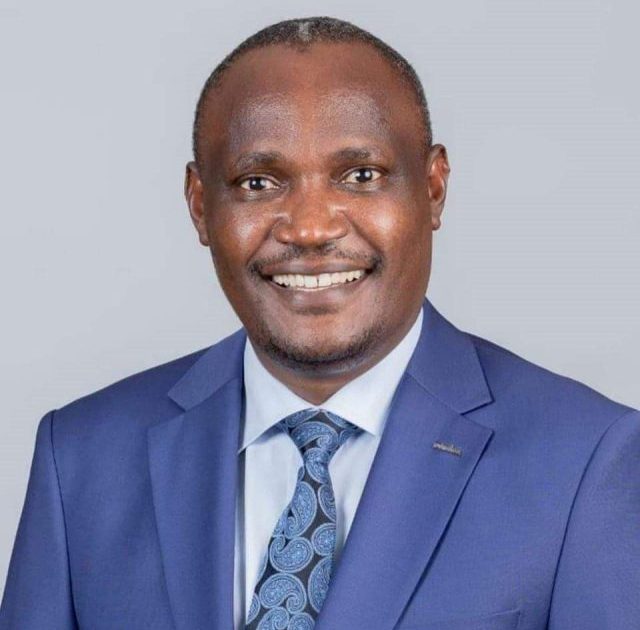
The government is committed to undertaking both revenue and expenditure reforms, National Treasury and Economic Planning Cabinet Secretary John Mbadi said.
On revenue, the government is undertaking reforms in tax policy and revenue administration geared towards expanding the tax base and improving tax compliance, he added.
On expenditure, the CS said the focus will be on re-rationalization, reprioritization, and enhancing transparency and accountability in public spending.
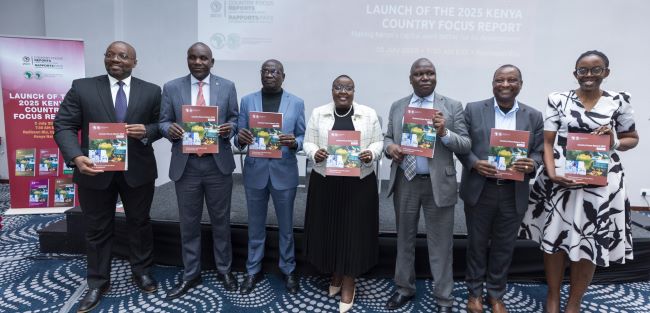
In a speech read on his behalf by Kenrick Ayot, Senior Deputy Director, Treasury, during the African Development Bank Group (AfDB) launch of its Kenya Country Focus Report (CFR), the CS said all this will be done through automation and digitization of the Kenya Revenue Authority (KRA).
“The government will continue implementing growth-oriented fiscal consolidation plans designed towards slowing down the growth of public debt while protecting service delivery to citizens”, he noted
The AfDB report under the theme Making Kenya’s Capital Work Better for Its Development” outlines the global financial architecture as a significant barrier to Kenya’s development financing goals.
It estimates that Kenya will require USD 12 billion annually by 2030 and USD 2 billion annually by 2063 to close its financing gap and fast-track structural transformation.
CS Mbadi noted that the rising demand for increased public spending, which could lead to higher debt or the need to raise taxes, requires careful consideration and balanced decision-making given the current public concerns.
He, however, explained that the fiscal deficit is projected to decline from 5.3 percent of GDP last year to 4.8 percent in this financial year, 2025/2026, and 2.7 percent in the financial year 2028/2029, supported by continued efforts in enhancing domestic revenue mobilization and rationalizing expenditure.
Mbadi thanked the AfDB for supporting Kenya, noting that through partnership and collaboration with the bank, Kenya is reimagining what capital means for development.
“Beyond critical infrastructure, this partnership supports human development and governance reforms that lay the groundworkfor future generations with results evident across sectors such as energy, infrastructure, water security, education, and public sector reforms,” the CS said.
The government, he added, is keen on adopting recommendations from the report, particularly on tax policy reforms to enhance domestic revenue mobilization.
“These include reducing and containing public expenditure, introducing e-procurement systems, transitioning to cash basis accounting, and further digitizing and automating tax collection,” said CS,
Mbadi called for reforms to the global financial system, including adjustments to the debt and concessional finance frameworks, as well as more equitable participation in international financial decision-making.
George Kararach, Lead Economist at the African Development Bank, who represented the Director General for the East Africa region, Dr. Alex Mubiru, said that although the report acknowledges the resilience of Kenya’s economy, which grew by 4.6 percent in 2024, challenges still remain.
“Poverty and youth unemployment persist. Investment is subdued. Kenya’s tax-to-GDP ratio remains at 13%, well below the African average, and more importantly, the country continues to face a financing gap of USD 12.5 billion by 2030 to meet its development ambitions,” he noted.
Kararach said that the report urges all to see capital not just as money, but as capacity to build roads and schools, digitize tax systems, educate a new generation of Kenyans, invest in resilience, and create jobs.
Kenya’s natural capital, from forests to geothermal energy, he noted, is vast yet underexploited, while its human capital, youthful and dynamic, is brimming with potential yet constrained by skills mismatches and access to quality health and education.
“Kenya’s financial capital is also anchored in one of Africa’s most innovative fintech sectors but remains uneven in its reach to Micro, Small, and Medium Enterprises (MSME) and rural areas, and thus to unlock Kenya’s capital for development, we must all work differently,” he added.
Kenya is expected to deepen its domestic resource mobilization efforts as the country faces a widening financial gap projected to reach sh1.618 billion annually by 2030. The 2025 Budget Policy Statement outlines a deficit of KSh 831 billion and identifies several key strategies to bridge it.
These strategies include implementing the Medium-Term Revenue Strategy aimed at raising tax revenues to 20% of GDP, strengthening tax administration through improved compliance and reduced leakages, and digitizing revenue collection through an Integrated Tax Management System.
Kenya’s current tax-to-GDP ratio stands at just 13%, significantly below its estimated potential of 27%. The report recommends deepening the domestic financial market, mobilizing private capital, and leveraging natural resource rents as complementary funding strategies.
AfDB publishes each year for all its 54 regional member countries a Country Focus Report (CFR). The 54 CFRs are more granular and more country-specific versions.
In addition to evaluating macroeconomic performance, the 2025 editions of the CFRs feature a timely and strategic theme relating to the better use of African countries capital resources for their development.
By Wangari Ndirangu