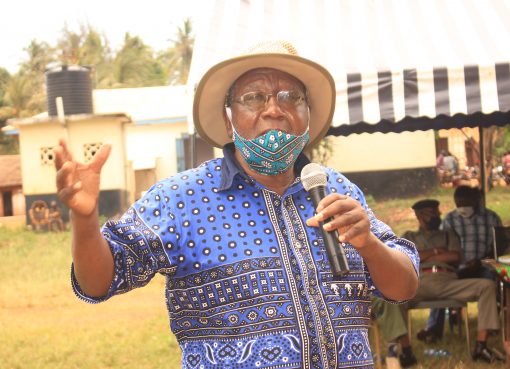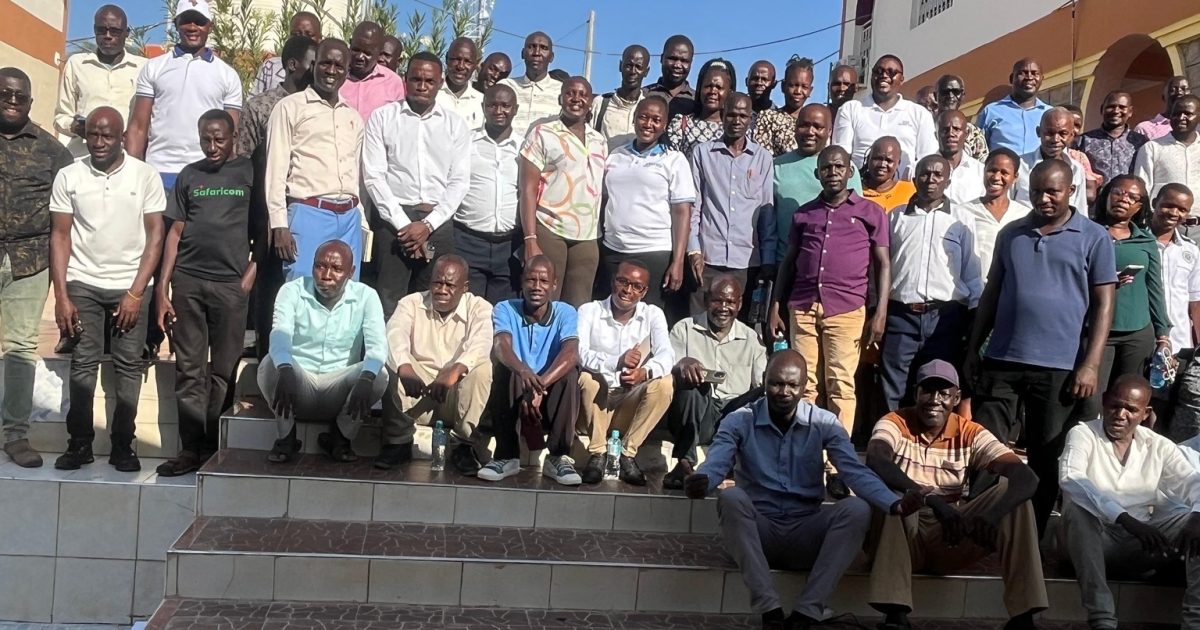
The new Food Systems Resilience Project in Turkana has reintroduced the 4-K Club Model to schools in the county, following a two-day training of institution heads and patrons in Lodwar.
The Project, funded by the World Bank and implemented by the Ministry of Agriculture and Livestock Development and the County’s Department of Agriculture in collaboration with other stakeholders, is expected to equip learners with practical hands-on skills in farming, food production and environmental conservation through the 4-K activities.
The 4-K, which stands for “Kuungana, Kufanya na Kusaidia Kenya” which translates “To Unite, To Work, To Help Kenya”, was active in schools in early 1990s, however, the clubs were phased out due to curriculum changes.
The current plan is to renew, rebrand, and revive it in all public and private primary and junior schools.
In his opening remarks, the County Project Coordinator, Victor Lochee, said the FSRP primarily targets counties largely inhabited by pastoralist communities facing escalating environmental stressors such as recurrent droughts, overgrazing and ecosystem degradation.
“Of significance in this project, the schools are encouraged to establish model farms and gardens, where students learn about crop production, livestock rearing and other agricultural activities.
The reintroduction of the 4-K Club initiative, provides a holistic approach of positive youth development at school, home and the community.
Therefore, it empowers children with agricultural and life skills in food and nutrition security, better health, and higher standards of living.
A participant in the training, Grace Noel, in charge of Loitanit Primary and Junior School, Kibish Sub-county noted that the 4-K Club approach in Kibish will address challenges in food shortage, as learners will apply the acquired knowledge and skills to increase agricultural production.
Additionally, she said, it will enable learners to develop leadership skills, team work and responsibility through managing model farm projects in schools.
One of the trainees, Joseph Emoit, heading Lomello Mixed Primary School in Suguta Valley said the reintroduction of the Club to schools was a good idea.
He asked the national and county coordination teams to fully support the implementation of the model in schools to strategically change the negative perception of the youth towards agriculture in the locality.
Nelson Erait, the head of Kang’atotha Comprehensive School, Turkana Central said, he is convinced beyond any doubt that the club’s re-establishment in schools is a noble idea whose time has come.
Erait said the approach aligns well with the current pathways like Agrinutrition, STEM, environmental conservation among others, that learners are studying in Competent Based Education (CBE).
Even after school, with the skills acquired, learners will continue producing food for good, he added.
The Monitoring and Evaluation Officer in the State Department of Agriculture, Silas Kenyatta, observed that there was much support from the Turkana county leadership in regards to the implementation of the new model, after conducting a sensitization forum with both national and county senior leadership team.
Moving forward, the trainer confirmed after going back to schools, ToTs will form school garden committees, who will oversee operations of the model garden.
In addition, noted Kenyatta, there were already county agripreneurs and extension officers who are ready to offer technical support, once the project takes off.
The FSRP has transitioned from Emergency Locust Response Project (ELRP) after five years of rigorous interventions in the county.
FSRP’s implementation strategy will be to support 30 schools already identified for sustainability of the 4K Clubs.
The exercise is designed to loop in the Ministry of Education, County Department of Agriculture and community around the target institutions as key stakeholders.
Others present included the County Project Institution Officer, Josephine Emase, the County Project Extension Officer Caroline Asekon, as well as Ishmail Olusine and Debra Chepkemei from the state Department for Agriculture.
By Peter Gitonga