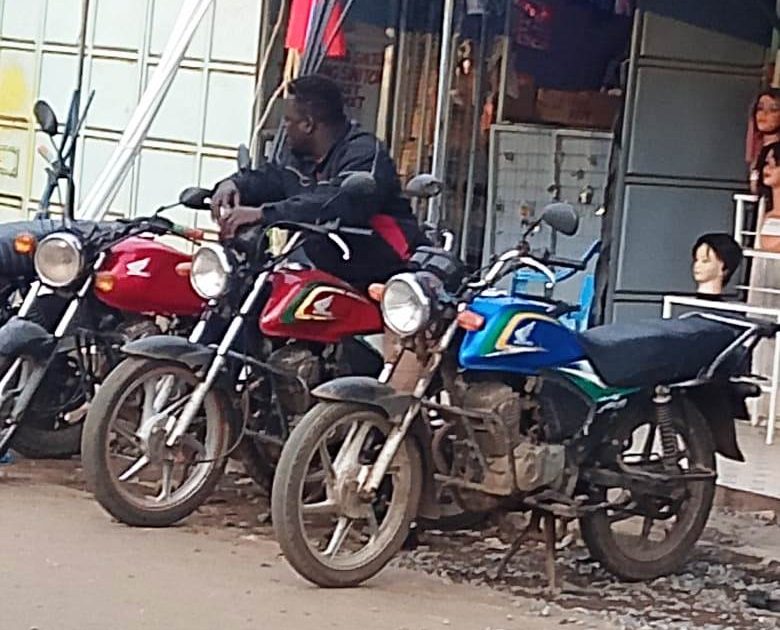
They roar down the dusty roads of Kisumu, glide through the crowded streets of Nairobi, and hum steadily along the rural paths of every part of the country.
To most Kenyans, the sound of a motorcycle engine is more than background noise; it’s the rhythm of survival, especially in the informal sector of the economy.
The Boda boda industry has become one of the most visible and influential symbols of Kenya’s informal economy, shaping livelihoods and mobility across every corner of the country. The name Boda boda was derived from English word: border since their earlier operations began with bicycles which operated on the border of Busia and Uganda.
During President Daniel Arap Moi’s era, the Boda boda trade remained largely informal. Few regulations existed, and motorcycles were rare and expensive. It wasn’t until 2003, under President Mwai Kibaki, that the industry began to truly take shape.
Kibaki’s government reduced taxes on motorcycles below 250cc in 2008, a move that was aimed at creating self-employment for Kenya’s growing youth population, through making the motorcycles cheaper.
That single policy shift changed everything. Suddenly, motorcycles became affordable, accessible, and widespread. Thousands of unemployed young men, many of them school leavers joined the sector to eke out a living.
As of February 2018, the National Transport and Safety Authority (NTSA) reported nearly 1.4 million registered motorcycles, a figure which has grown significantly since. More recent data estimates that around 2.5 million motorcycles are registered in total, with 1.8 million actively in use.
The Sector is a major employer, providing livelihoods for over one million people directly and raking in nearly Sh.700Billion annually which is approximately 3.4 per cent of the country`s Gross Domestic Product (GDP).
From rural mothers rushing to hospital, to students catching early morning classes, to small traders transporting goods, Boda bodas have become the backbone of everyday life. They have a reach where other public transport systems have no reach and they operate even in the remotest corners of the country.
Many people prefer motorcycles as a mode of transport because they offer a fast means to get around in cities, towns, and rural areas, they are efficient in navigating around traffic jam delays and are available day and night. Thus, Boda-Boda motorcycles play a vital role in Kenya’s economy by offering affordable and convenient services to citizens and organizations.
Boda boda providers in Kenya also offer diverse services beyond passenger transport, including goods delivery, financial services such as loans and savings platforms, logistics and courier services, roadside assistance, and electric bike sales and battery swapping, alongside ride-hailing via apps. They also facilitate driver training and operate as a vital part of the broader transport and logistics ecosystem.
In Kisumu, we meet Francis Ouma, 35 a soft-spoken man who has been in Boda boda business for ten years. His reason for joining the business was simple: lack of an income.
“I joined this sector because I needed to provide for my family,” he says. “A normal day starts ta 6:00am and ends at 7:00pm, when I drop my last customer to their destination,”
He makes Sh. 1,000 to Sh.2,000 per day and this helps him to meet the daily needs of his family. Like many other riders, Ouma’s workday is unpredictable and with challenges. “Sometimes a client asks me to take them somewhere, tells me to wait, then disappears without paying,” he explains, shaking his head. “Other times, you carry someone, and you don’t even know if they are criminals or not,” he narrates.
Despite the challenges, Ouma still tries to maintain safety. He owns helmets for himself and passengers, although many don’t use it.
One issue he wishes the government would address is the high insurance cost for Boda boda riders. “Insurance is too expensive for us,” he laments. “The government should reduce it so that riders can afford it easily,”
Yet behind the daily hustle, there’s a man with dreams; he desires to save enough to get himself a place to settle his family and also start a business of selling motor- vehicle and motor- cycle spare parts.
For all its benefits and successes, the industry faces deep-rooted challenges. Safety remains a major concern. According to data from the National Transport and Safety Authority (NTSA), Boda boda riders account for a significant portion of road accident fatalities annually. Many lack proper training, protective gear, or valid licenses.
In 2024 data from NTSA shows that at least 1,200 Boda boda riders were killed, up from 900 the previous year. That year, according to NTSA, a total of 4,748 people died on Kenyan roads, 424 more than in 2023. On average, 13 people died every day in 2024 due to road crashes.
The number of nonfatal injuries increased by 0.6 per cent, while the injury rate increased by 19 per cent from 2022 to 2023.
The rise in motorcycle crash injuries has been attributed to excessive speeding, overloading for quick financial returns, riding under the influence of alcohol, the poor quality of roads, and improper passing of other vehicles.
In addition, most motorcycle riders disregard traffic rules, others lack the appropriate riding competencies, and seldom wear helmets. Motorcycle crash injuries exert additional pressure on the Kenyan health system, which is poorly equipped to provide the needed health care services.
Hospital morbidity statistics in Kenya show that injuries from motorcycle crashes account for two to three per cent of all hospital visits, 22-64 per cent of trauma admissions, and 50 to 52 per cent of surgical interventions
Motorcycle helmets are known to reduce the risk of death and head injury among motorcycle users in crashes, but their use in Kenya has been dismal.
Consequently, in 2012, advocacy by local nongovernmental organizations and civil organizations led legislators in Kenya to amend the Traffic Bill that reinforced the mandate of helmet use and other safety measures, among all motorcyclists and their passenger.
There’s also the issue of crime and mistrust. Some passengers have fallen victim to rogue riders, a situation Francis Ouma know too well.
Over the years, Boda boda riders have developed a complicated relationship with law enforcement. Many riders view police as both regulators and adversaries, given frequent clashes over licenses, traffic violations and alleged harassment.
Politically, the Boda boda sector has also become a powerful voting bloc. With its large youth base, politicians often court riders during election seasons, promising reforms and benefits that rarely materialize.
But in a bid to address the devastating toll of road accidents in Kenya, the Ministry of Roads and Transport through the National Transport and Safety Authority (NTSA) in 2024 officially launched the National Road Safety Action Plan 2024-2028.
This initiative aims to curtail the alarming rate of road accidents, which not only shatter families and devastate communities, but also pose a significant economic burden on the nation.
It is estimated that road carnage costs Kenya’s economy a staggering Sh450 billion annually. The brunt of this burden falls disproportionately on trauma victims and their families, while hospitals and emergency services also bear the strain.
The NTSA and National Police Service, have also come-up with regulations to tame the rot in the Boda boda sector by ensuring that all operators in the country are registered and given a certain number to identify them. They are also required to comply with all the requirements of the Traffic Act and be a member of a registered motor-cycle group.
It’s not easy to achieve all these in a sector that is to thriving on lawlessness but strides are being made to achieve compliance, all in a bid to improve road safety, better security, and reduction in road carnage.
The boda boda story is ultimately a story of resilience of young men and women who refused to be idle, who turned two wheels into a tool for survival. It reflects Kenya’s ingenuity, grit, and unyielding hope in the face of economic struggle.
by Mabel Keya – Shikuku & Laura Ndege