Journalists in Eldoret, Uasin Gishu County, have undergone a two-day training on Digital Media Literacy and Cybersecurity to equip them with vital skills and knowledge that promote professionalism, accuracy and digital safety in the modern media landscape.
The training, held from Wednesday, November 5 to Thursday, November 6, was organised by Internews in collaboration with KenSafeSpace and other partners, with funding support from the European Union (EU).
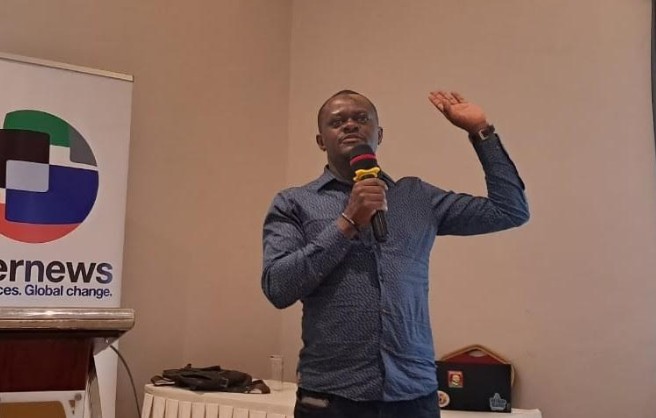
Speaking during the workshop, which also brought together journalism students from Moi University, Abraham Mariita, the Project Director at Internews, an international media development organisation dedicated to empowering local media globally, emphasised the importance of digital media literacy among media practitioners.
Mariita noted that journalists today face the immense challenge of information disorder, characterised by the widespread sharing of false, misleading or malicious content that pollutes the information environment.
He elaborated on the three main categories of information disorder: misinformation, which refers to false information shared without intent to cause harm; disinformation, which is false information deliberately spread to cause damage; and malinformation, which is genuine information shared with the intent to cause harm.
Mariita cautioned that journalists themselves are not immune to falling into these traps if they are not vigilant, noting that the spread of such disorder through social media platforms continues to influence public opinion and undermine democratic processes.
He stressed the need for media professionals to use online verification tools to critically analyse information from multiple sources to identify misinformation and protect themselves from digital threats.
During the training, participants were introduced to a range of fact-checking and verification tools, including the InVID verification plugin for videos, Google Earth for location verification, Citizen Evidence Lab, TinEye and Google Image for reverse image searches, and Photo Forensics for analysing image metadata and error levels.
Media Council of Kenya (MCK) Regional Coordinator Joseph Mecha lauded the initiative, describing digital literacy as the cornerstone of responsible social media use.
He reaffirmed the Council’s commitment to upholding professionalism, freedom of expression, and access to credible information.
“The media plays a crucial role in shaping public perception, fostering civic engagement, and promoting understanding, particularly in times of uncertainty,” said Mecha.
“As the country heads toward the elections, such training will empower journalists to share verified information and counter misinformation that could lead to public tension if unchecked.”
Participants were also sensitised on digital security, learning how to prevent and mitigate online attacks such as identity theft, loss of social media accounts, and extortion scams targeting journalists and their close contacts.
A key topic of discussion was the emerging threat of Artificial Intelligence (AI), including the potential for AI-generated misinformation and the risk of human jobs being displaced in technology-driven spaces.
Cybersecurity expert Eric Masinde explained that journalists are frequent targets of digital attacks due to their online presence and the sensitive nature of their work.
“Journalists are often attacked because of the stories they cover, the sources they engage, or even the technological capacity of their governments,” he observed.
Since journalism today relies heavily on digital tools, platforms, and data, it is vital to address cybersecurity concerns to protect the integrity and privacy of both data and journalists.”
Masinde outlined the three major categories of cyber threats journalists face: technical threats such as phishing, hacking, malware, ransomware, and unauthorised data access;
Social threats like hate speech, misinformation, disinformation, online harassment, sextortion, unethical use of AI, and online gender-based violence; and financial threats, including fraud and scamming.
He urged journalists to embrace secure communication practices, such as using encryption tools, Virtual Private Networks (VPNs), and secure messaging platforms, to safeguard sensitive information, protect their sources, and maintain data integrity.
“Cybersecurity is not optional in journalism,” Masinde emphasised. It is essential to protect sensitive information, ensure the safety of journalists, and preserve public trust in the media.”
On his part, Uasin Gishu Journalists Association Chairperson James Gitaka commended Internews and its partners for organising the training, noting that it came at a crucial time as the country gears up for elections.
Gitaka underscored the importance of fact-checking and digital safety, saying the skills acquired would enhance journalists’ ability to report accurately and responsibly.
“This training will sharpen reporters’ skills in verifying information before publication, thereby strengthening public confidence in the media and curbing the rapid spread of false information online,” he said.
He encouraged journalists to uphold ethical reporting standards and leverage technology responsibly to combat misinformation and promote credible journalism that serves the public interest.
By Ekuwam Sylvester