In a move that reflects the evolving role of county governments under Kenya’s devolved system, Uasin Gishu County has taken an active role in accelerating rural electricity connectivity, traditionally a function of the national government.
Through a program dubbed ‘Stima Mashinani’, the county is implementing an electrification initiative aimed at bridging the connectivity gap in underserved areas.
This effort, launched in 2024, follows a memorandum of understanding with the Rural Electrification and Renewable Energy Corporation (REREC), which established a Sh 60 million matching fund, half contributed by the county government and the other half by REREC.
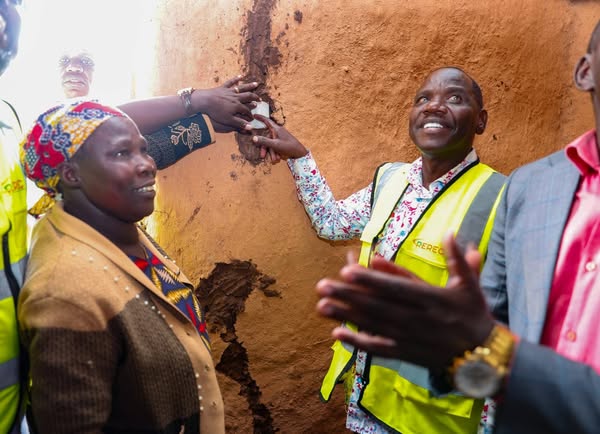
The result, according to county officials, is that more than 6,000 residents in six target areas have so far been connected to the national grid in the program’s first phase.
The areas covered include Kapchemaget in Turbo, Lelmokwo in Kesses, Siliboi/Saito in Ainabkoi, Mobet in Soy, Kabiyet in Moiben, and Kaptien (Squota) in Kapseret sub-counties.
For many residents, the project has already started making a difference in their lives.
Salina Sego, a mother of three school-going children, shared her joy: “This is a blessing. My children can now study without challenges,” she said excitedly. With electricity, Salina plans to start a poultry business and enhance her farming using irrigation through water pumping.
Residents of Kapchemaget village describe the change as significant. “We have relied on kerosene lanterns for years. Now my children can study at night, and I don’t have to walk long distances to charge my phone,” said Grace Chesang, a mother of five and beneficiary of the project.
“We feel more secure with the presence of electricity and business people no longer close shop early,” she added.
Another resident, Mary Mutai, noted that before the connection, she had depended on a small solar panel mounted on her iron-sheet roof. While helpful, the system was often unreliable, especially during the rainy seasons.
“I have removed the solar panel now. Electricity is more stable and safer for my family,” she said.
The county government says the initiative was informed by repeated community requests during public engagements.
Although power distribution remains under the national government, Uasin Gishu opted to co-fund the rollout to meet local needs faster. The extended mandate of REREC has enabled this.
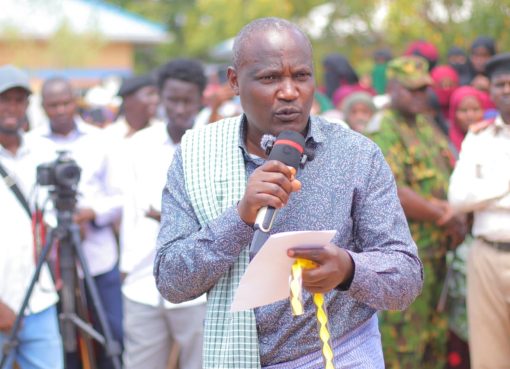
“In almost every village forum we attended, residents brought up the issue of electricity. It was clear this was a priority for them,” said Governor Jonathan Bii Chelilim.
The Governor lauded the ‘Stima Mashinani’ initiative, which he said will be integrated with the ‘Angaza Mashinani’ program by the county to enhance security and promote a vibrant 24-hour economy in both rural and urban areas.
Eng. Jonah Koskei, REREC’s regional manager, expressed confidence in the project’s successful implementation and delivering lasting benefits to the people of Uasin Gishu.
Access to electricity, particularly in rural areas, has long been a developmental concern in Kenya. While the national electrification rate has improved in recent years, many rural households remain unconnected due to the high cost of infrastructure rollout and the sparsity of settlements.
Experts say initiatives like ‘Stima Mashinani’ could provide a new model for how county governments can complement national efforts in critical service delivery areas.
“Devolution was designed to be responsive. Where there are gaps, counties are increasingly stepping in to accelerate service delivery,” said Dr Sarah Langat, a public policy analyst based in Eldoret.
“Electricity is an enabler for education, health, security, and local enterprise. The social returns are high,” she added.
The county aims to increase household electricity connectivity from the current 65 per cent to above 95 per cent, according to the Governor.
He said the initiative will continue in phases through continued collaboration with national agencies such as REREC.
Meanwhile, in Kapchemaget and other newly connected villages, the change is tangible. Children are reading under electric lights. Phones are being charged at home. And for many, evening hours are no longer governed by the limits of kerosene or fading daylight.
“It’s a small thing to some, but for us, it’s a big change,” said Mary Mutai. “We feel part of the larger world now and we are grateful to the Governor for living up to his pre-election promise.”
‘Stima Mashinani’ in Uasin Gishu has seen over 6,000 individuals connected in the first phase and the second phase is on course, the initiative will boost efforts to achieve universal access to electricity as underscored in Kenya Vision 2030 by promoting the rural electricity access rate, which is lower in arid and semi-arid areas and informal settlements.
Kenya’s national electricity access rate was approximately 76 per cent in 2023 according to data from Kenya Power and REREC. This figure represents a significant increase from previous years, with a focus on both grid and off-grid solutions. The government, along with agencies like Kenya Power and REREC, has been actively working to expand access to electricity, particularly in rural areas.
Kenya’s Vision 2030 development plan highlights the goal of achieving universal access to electricity by 2030. This ambitious purpose aims to ensure that all Kenyans, regardless of location, have access to reliable and affordable electricity.
The plan involves expanding the electricity grid, promoting off-grid solutions like solar power, and increasing the use of renewable energy sources.
By Ekuwam Sylvester