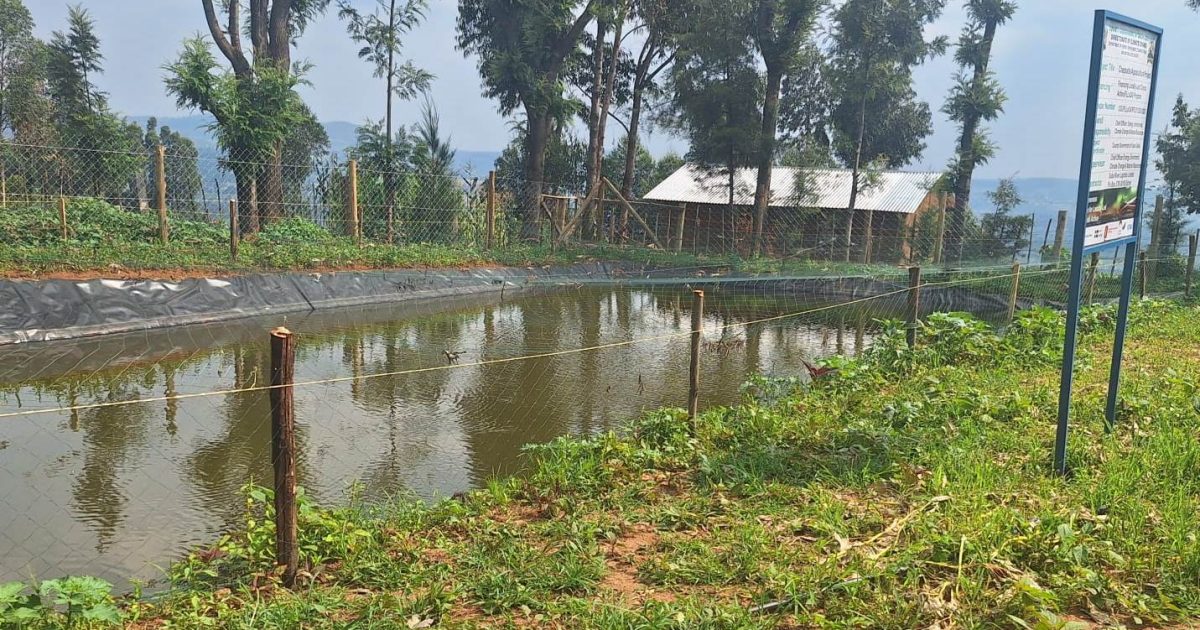
In a bid to boost nutrition and livelihoods for the people of Uasin Gishu, over 2,000 fingerlings have been stocked under the Chepsaita aquaculture project in Ngenyilel Ward, Turbo Sub-County.
The initiative, supported under the Financing Locally-Led Climate Action (FLLoCA) programme, aims to enhance food security, generate income and promote climate-smart solutions.
Leading a progress inspection of the project on Wednesday, Uasin Gishu County Executive Committee Member (CECM) for Environment, Natural Resources, Energy and Water, Anthony Sitienei, described the initiative as a game-changer for the Chepsaita residents commending the project’s role in transforming local livelihoods and strengthening food systems.
“It is not only a source of income but also a sustainable nutritional solution, especially for children and mothers,” he noted. “As a county, we are committed to investing in green and transformative solutions that empower communities and build climate resilience.”
Busienei stressed that the FLLoCA programme presents a valuable opportunity to scale up climate adaptation projects that directly benefit local communities and build long-term resilience against the impacts of climate change.
“We are working closely with communities to ensure their voices are heard and their needs prioritized,” he added, emphasizing the county’s commitment to inclusive and sustainable development.
Accompanied by Climate Change Unit Officer Meshark Amai, Sub-County Water Engineer Ms. Tabitha Kipnyango, Eng. Boaz Korellach and Ward Administrator Ms. Sheila Menjo, the team lauded the progress of the aquaculture project, which is part of a broader county strategy to integrate climate-smart agriculture into rural development.
On his part, Meshark Amai emphasized the importance of community participation in the success of the project highlighting that the involvement of local residents has been instrumental in driving progress and ensuring sustainability.
“The Chepsaita aquaculture project is a reflection of what happens when communities take ownership. The impact is visible and we believe that with proper support, we can replicate this success in other parts of Turbo,” he noted.
The stocked fish are expected to benefit local households through both consumption and sale, particularly among vulnerable groups.
The delegation also toured other areas to assess potential water infrastructure projects, identifying Chepkemel Dam and Kunguna River in Turbo Sub-County as viable sites for water harvesting and distribution.
By Fredrick Maritim