With numerous current challenges facing the education sector, most school managers have been forced to be innovative in order to keep their institutions afloat and remain competitive.
With delayed capitation and lack of adequate resources to implement the new Competency-Based Education (CBE) curriculum, most schools are going out of their way to improvise so that their learners can get the best out of the available meagre resources and come out as all-round citizens.

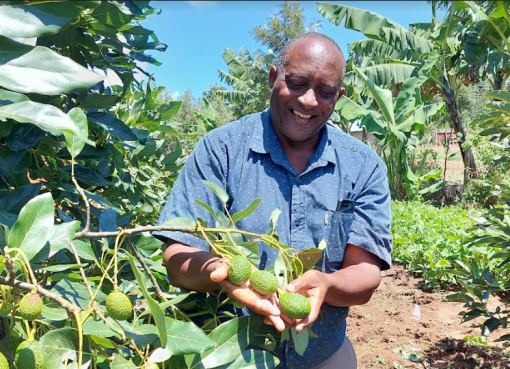
At St. Annes Sega Primary School in Ugenya sub-county, Siaya County, the school administration has opted for permaculture as one of the solutions to the perennial hiccups they have been facing.
Through permaculture, the school has slowly been replacing flower beds that line the pathways and other spaces in the compound with vegetables, fruits and other edible plants so as to cut down on the feeding cost.
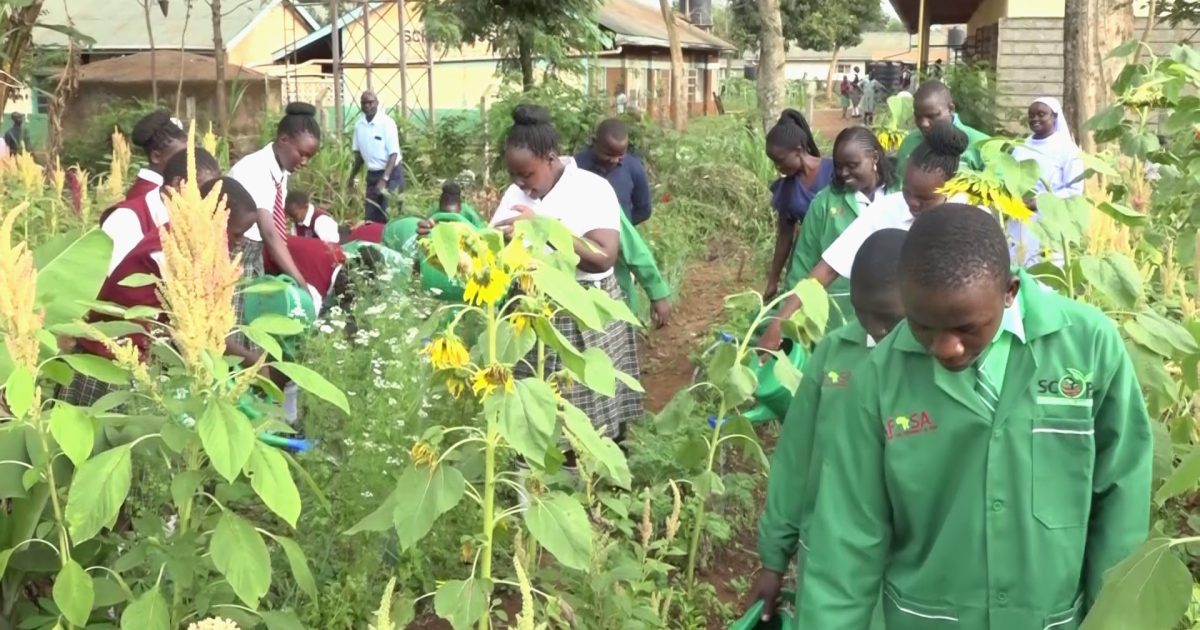
According to the school headteacher, Sister Mildred Akinyi, not only have they managed to reduce the amount of money they spend on feeding the pupils, but they have also offered practical lessons to the students, who are an integral part of the programme.
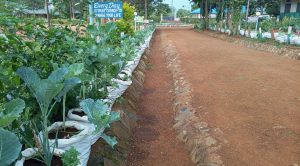
Consequently, a visit to the school reveals neatly arranged bags with different varieties of vegetables and other plants that dot the walkways right from the gate.
Here, a variety of vegetables, including legumes, tubers and fruit trees, has systematically been replacing flowers and unwanted weeds and shrubs.
According to Sr. Akinyi, she learnt of the concept during a visit to one of the schools in the neighbouring Ugunja sub-county and developed interest.
Upon inquiry, she was referred to a non-governmental organisation, the Schools and Colleges Permaculture (SCOPE) programme that came in handy to support them through capacity building of both teachers, parents and the surrounding community.
She says that the programme integrates well with the new CBE curriculum, where learning is more practical than theoretical.
The head teacher says that since they started the programme in the middle of the second term, when students were breaking for mid-term, they have been able to make some savings.
“Whenever we have a surplus, we harvest and sell to local vegetable vendors and the money we get is pumped into other areas with shortages,” says sister Akinyi.
She says that with the perennial delays of government funding, the new venture has really helped a lot, adding that the programme was sustainable and ensures that the students always have a balanced diet.
The head teacher says that the replacement of flowers with vegetables was good, as it contributes more to human growth.
Apart from supporting the dietary needs of the school community, Sr. Akinyi says that permaculture has also helped the institution deal with pests and unwanted insects through natural control.
“In our classrooms, mosquitoes are no longer a menace. They have been repelled by several plants that we have in our programme,” she said.
On the challenges that the school encounters, she cited a lack of enough farmyard manure, given that they have only one cow and a calf. This means that they have to occasionally buy manure from outside to sustain the programme.
A member of staff at St. Annes Sega Primary school. Pasak Okeyo says that the programme has been of great help to learners, who fully participate in producing what they eat.
“We no longer have scarcity when it comes to vegetables. They get all the vitamins and carbohydrates from the plants we grow here,” he said.
For pupils like Harriet Nicole and Janelle Akinyi, the programme has been an eye-opener.
“It has not only helped to improve our diet,” says Akinyi, adding, “I have also learnt that it does not matter the size of land. You can plant a lot of things through integrated farming.”
On her part, Nicole says that the programme has helped keep the school environment clean and healthy through the planting and maintenance of different plants.
Meanwhile, the entire school community has heaped praises on SCOPE that supported them to venture into permaculture, while calling on other learning institutions to join the programme.
By Philip Onyango