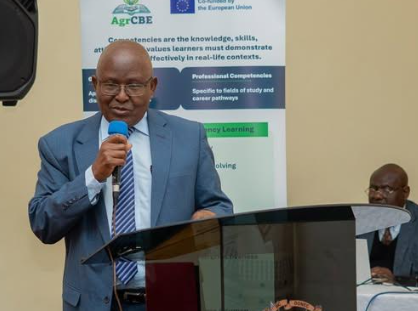
Universities in Kenya have been urged to align their programs with the Competency-Based Curriculum (CBC) that requires a shift towards a more skills-focused approach to learning to make their graduates more competitive in local and global job markets.
This call to action comes as CBC education, which is a strategic response to a dynamic skills-driven global market, is being implemented across all levels of education, including universities.
Egerton University Vice Chancellor Professor Isaac Kibwage argued that the global job market was increasingly undergoing transformation that was being driven by advancements in technology, automation, and evolving employer expectations and emphasized the need for universities integrating CBC education into their learning programs.
Professor Kibwage said in this dynamic landscape, skill-based education had emerged as a game-changer, bridging the gap between theoretical learning and practical application.
“The traditional degree-focused education, once seen as the hallmark of employability, is no longer sufficient to meet the demands of industries which are undergoing rapid disruption”, the Don added.
While delivering his presentation to over 160 faculty members at Egerton University’s Amphitheatre during a transformative training on Competency-Based Education (CBE), the Vice Chancellor however acknowledged the complex realities facing the education sector starting from financial limitations to resistance to change by late adopters.
He regretted that universities that fail to adapt to CBC may find their graduates less competitive in the job market and their programs less relevant to national needs and may face challenges in securing funding or attracting students.
The VC observed that by embracing CBC universities will significantly contribute to national development and educational reforms adding that the focus world over had shifted towards equipping individuals with tangible, market-relevant skills that prepare them for immediate employment and long-term adaptability.
“In essence, the CBC is a proactive step towards aligning Kenya’s education system with the evolving needs of the global economy, ensuring that its graduates are equipped with the skills and competencies necessary to succeed in a dynamic and competitive world, “he explained.
According to the Global Talent Index 2024, 78 percent of employers now prioritize skills over academic qualifications in their hiring decisions. This paradigm shift is especially pronounced in sectors like technology, healthcare, and digital marketing, where specialized competencies outpace the value of generalized knowledge.
With critical thinking at the core of Competency Based Education (CBE), the Vice Chancellor emphasized that this shift was not just a policy trend, but a strategic response to a dynamic, skills-driven global market.
The VC further explained that the goal of the new system was to produce job-ready graduates who do not just memorize but master practical, market-relevant competencies. Skill-based education, he added was not just a solution to employability challenges but also a pathway for sustainable economic growth.
“We must start producing graduates with the skills required for the 21st-century job market by emphasising practical skills and competencies,” Professor Kibwage stated.
The Vice Chancellor pledged that Egerton University would continue taking deliberate steps to be at the forefront of higher education transformation adding that Faculty members were not just attending training, but were being empowered to rethink content delivery, embrace outcome-based assessment, and nurture innovation and independent thinking in learners.
In addition to technical skills, Professor Kibwage stated that skills-based education also emphasizes the development of soft skills, such as critical thinking, communication, leadership, problem-solving, and teamwork. These skills, he added, are critical for success in virtually any career but are often neglected in traditional education systems.
According to the Don, the fast pace of technological change meant that industries were constantly evolving, and therefore the skills required to succeed in them were changing as well, as compared to traditional education systems, which he said often followed rigid curricula and struggles to keep up with the changes.
He said by embracing CBC, universities could prepare graduates better for the future and contribute to a more dynamic and responsive higher education landscape adding that Skills-based education was more flexible and adaptive and allowed for continuous learning and upgrading of skills, ensuring that students remained relevant in a constantly shifting job market.
Education experts have indicated that this adaptability is particularly valuable in industries like IT, digital marketing, and engineering, where new tools, platforms, and techniques are regularly introduced. The experts maintain that by fostering lifelong learning, skills-based education empowers individuals to adapt to new challenges and opportunities throughout their careers.
Professor Kibwage said by fostering critical thinking and problem-solving skills, CBC encourages innovation and creativity, which are highly valued in a competitive global market.
“A more competitive workforce can attract investments, boost exports, and improve the overall quality of life for citizens,” stated the don.
The CBC implementation has faced challenges, including teacher training, resource allocation, and ensuring equitable access to quality education. However, the commitment to ongoing reforms and the involvement of stakeholders like the Presidential Working Party on Education Reforms (PWPER) demonstrate the government’s dedication to addressing these challenges.
By continuously evaluating and refining the CBC, educationists hold that Kenya can maximize its potential to create a skilled and adaptable workforce ready to meet the demands of a dynamic global market.
By Esther Mwangi and Esther Otieno