An Egerton University student has innovated an award-winning project that uses house fly maggots to manage organic waste and produce cheap and nutritious feeds for fish, poultry and pigs.
Phillip Nyange is the brains behind the innovation dubbed “Turning Waste into Wealth by Rearing Housefly Maggots,” which he terms as a game-changer in the environment conservation and animal feeds sectors.
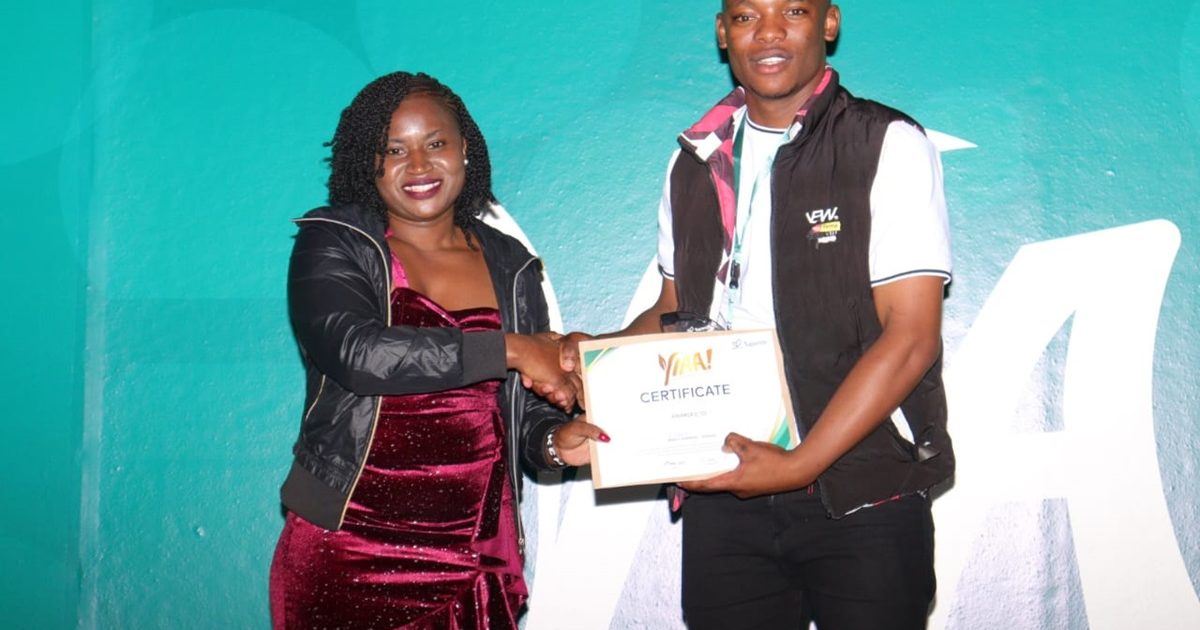
The student emerged the national winner in the insect-rearing category in this year’s edition of “Youth in Agriculture Awards (YIAA).
The innovation was evaluated on its creativity, feasibility, environmental impact, and cost-efficiency with the innovator said to receive coaching towards commercializing his project to make sure it stands to benefit him.
The project, according to the Bachelor of Science in Animal Science student, aims at bringing a huge relief to farmers who have in the past been relying on expensive feeds, which leave them with small profit margins from their ventures.
The innovation which comes at a time when most urban centers in the country are grappling with waste management challenges, will make use of house flies which for centuries have been recognized as filth-associated organisms and public nuisances with most people dismissing them as dirty insects which transmit diseases to humans.
According to Nyange, use of housefly maggots to produce feed is cost-effective and offers the farmer a chance to enjoy relatively bigger profit margins.
He explained that the maggot- produced feeds are high in nutrient value because insects have over 60 per cent of proteins and fat contents as compared to conventional feeds in the market which would only have about 10 percent of proteins.
“Housefly larvae are a promising source of protein for animal feed, particularly in regions with limited resources. The larvae can be raised efficiently on readily available organic waste materials. This process can help reduce reliance on traditional, more expensive protein sources and contribute to a more sustainable food system,” notes the innovator.
The innovator emphasized the need for more innovation saying that we are living in an era where we can no longer rely solely on conventional crop farming due to Climate change that has resulted to land degradation, and unpredictable weather patterns.
The process, according to the innovator begins with trapping adult house flies that are kept in enclosed glass containers for mating and egg production.
He went on to say that they place pieces of small cartons inside the containers for the flies to lay their eggs on after which the cartons are transferred to buckets with substrate material to grow into larvae.
He further explained that organic waste like cow dung, chicken manure, sheep manure, coagulated blood, or a combination of these serves as the substrate for housefly larvae.
After the eggs hatch into maggots (larvae) which feed on the waste material and grow rapidly, they are harvested before they get into pupae stage and then into adulthood (grown flies).
For harvesting and processing, Nyange said the maggots are separated from the waste through sieving and placed in direct sunlight for at least two days to die and dry up. When they are fully dried, they are then taken to a grinding machine and ground into powder form.
Nyange says this powder, which is high in protein and fats is then ready to be mixed with maize grains and others to get complete balanced diet feeds for either fish, poultry or pigs, with the final products being either in the form of powder, cake or pellet.
The waste residue is transformed into compost, contributing to soil health and sustainable farming practices.
According to Nyange, the inspiration behind the project came from pressing global concerns. With the world’s population expected to reach 10 billion by 2050, sustainable food systems are more critical than ever.
The innovator explained that animal production had unique strengths unlike crop farming, as it adapts to urban spaces and harsh climates through intensive systems, but nutrition especially protein, he added had remained the costliest component where insects now offers a viable solution.
He notes that the method offers a cost-effective way to produce high-protein animal feed by converting waste into a valuable resource.
Protein content in animal feeds accounts for between 60 – 70 per cent of the total cost. So, if a farmer can get this cheaply from insects, it means the cost of the feeds goes down,” says Nyange.
Nyange is now seeking to scale his project and deepen his contribution to the livestock sector. He expressed his willingness to engage in collaborative work, employment, or apprenticeship opportunities.
“My dream is to bridge the gap between theory and practice in animal production and offer real solutions that are affordable, scalable, and environmentally responsible,” he added.
By Esther Mwangi