A contractor from Vihiga County has captured widespread admiration for transforming a rocky hill into a striking example of eco-conscious and cost-effective architecture.
Mr. Idi Baraka, a seasoned builder and resident of Mbale town, has defied conventional construction norms by designing and constructing his personal residence around the natural rock formations of his rural home in Matsigulu village.
Rather than excavating or blasting the stony ground, Mr. Baraka embraced it—integrating the rock seamlessly into the home’s structure.
“The ground here is full of heavy stones. Instead of removing them, I used them to build on,” he said.
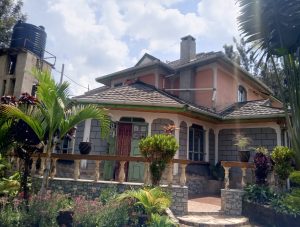
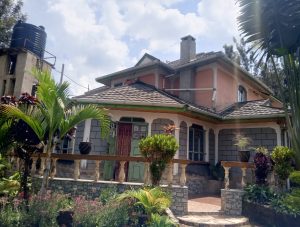
The result is a unique storey house anchored directly on a massive stone foundation, with portions of the rock visibly protruding into the interior. In the living room, a large boulder peeks through the walls and the floor—forming a natural centrepiece that blends organic texture with modern design sensibilities.
To achieve this, Mr. Baraka laid iron rods directly on the exposed rock, added crushed stones to create an even base, and cast a concrete slab before building upward.
The method significantly reduced the need for extensive excavation and complex planning, thus cutting construction costs while maximising structural stability.
“As a contractor, I wanted my own house to reflect creativity and harmony with nature,” he said, adding, “Working with the rock instead of removing it helped me save on materials and labour while achieving a truly unique design.”
Residents and visitors alike have hailed the project as a construction marvel. They have also praised the design, citing it as a potential model for sustainable building in hilly and rocky terrains.
“This is the kind of local innovation that does not only showcase environmental responsibility but also demonstrates how indigenous knowledge can inform practical and affordable construction solutions,” a resident said.
Beyond its architectural appeal, Mr. Baraka’s home is fast becoming a hub for informal learning. Aspiring builders in the area are visiting the site to observe his methods—turning the house into a classroom for hands-on skills development.
Mr. Barakas suggests such grassroots innovations could influence future housing policies, especially in rural regions where rocky or uneven landscapes are common.
As Vihiga County pushes for sustainable development and increased use of local expertise, Mr. Baraka’s home stands as a bold testament to the possibilities of working with rather than against nature.
By Rose Wasike and Welter Tiema