Vulnerable children in Rachuonyo Sub-County, Homabay County, have decried a myriad of challenges they face, including molestation, abuse of child rights and child labour.
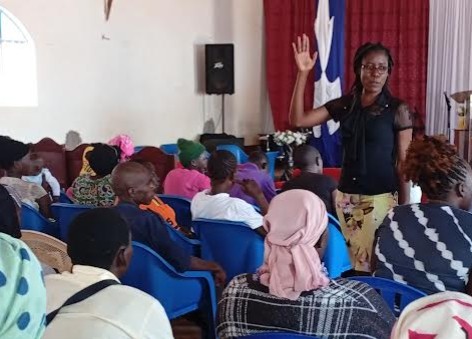
Against this backdrop, the Redeemed Gospel Church in Oyugis town, in the Sub County in partnership with Compassion International, started a programme to train the caregivers on the importance of child protection.
According to the Programme Director, Betsy Kapere, the programme which began in 2018 with 200 beneficiaries aged between three and eight years, now supports 354 boys and girls, offering spiritual, social, cognitive, and physical development to the children and empowering caregivers in their upbringing.
Addressing the press at the church premises, Kapere noted that the vision of the programme is to release children from poverty in ‘Jesus’ name’, focusing on holistic development that includes education, protection, and caregiver empowerment.
Kapere added that within Homa Bay County, Compassion International partners with 16 projects based in different denominations, from Kendu Bay to Mfangano Island, assisting vulnerable children and youth up to the age of 22.
“The initiative mainly supports orphans, children from single-parent homes, or those whose guardians are unable to provide for them,” she said.
Beneficiaries, she said, are supported through schooling and healthcare until the age of 18, and later equipped with skills to live independently by age 22.
The church overseer, Rev. Vitalis Oduor, who is also the incoming bishop for the Nyanza South Region, said the training helps caregivers better understand and guide their children.
Rev. Oduor explained that as the programme continues to expand, the church’s mission remains steadfast to ensure that no child in Rachuonyo suffers in silence and that every young person grows up safe, confident, and hopeful about the future.
One caregiver, Rosanne Shamby, said the programme has brought both empowerment and hope.
She said she learnt practical skills such as soap making, yoghurt production, and mat weaving.
She explained that her child had also gained photography skills which are assisting to generate income now that he’s a grown-up.
Children who spoke on condition of anonymity said the programme had created a safe space for them to speak out and learn how to protect themselves.
They said they had learnt to deal with their challenges, including how to report abuse, where to seek help, and how to deal with abuse.
They added that the initiative also addresses challenges faced by the boy child, many of whom are pushed into child labour or petty crime due to poverty.
By Sophia Matoya and Jane Naitore