Vulnerable people from informal settlements around Ngong in Kajiado North have received relief food mainly rice and beans
As a cosmopolitan area, Ngong attracts people from different backgrounds, leading to the formation of informal settlements and increased demand for resources like food.
While the town benefits from its proximity to Nairobi and agricultural activities in Kajiado County, issues such as urban poverty, rising food prices, and climate-related disruptions contribute to hunger among vulnerable populations.
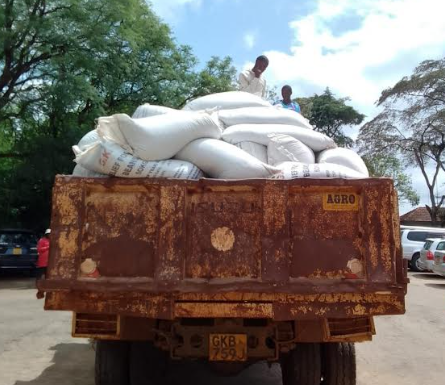
Speaking on the exercise, Sylvia Achola, the Assistant County Commissioner of Kajiado North, said that they received 300 bags of rice and 260 bags of beans from the government to help the surrounding communities alleviate hunger.
“Food is usually distributed to people living with disabilities, critical clinical care units, hospitals, and religious institutions that have welfare, but the majority goes to the locations in Kajiado North,” said Achola.
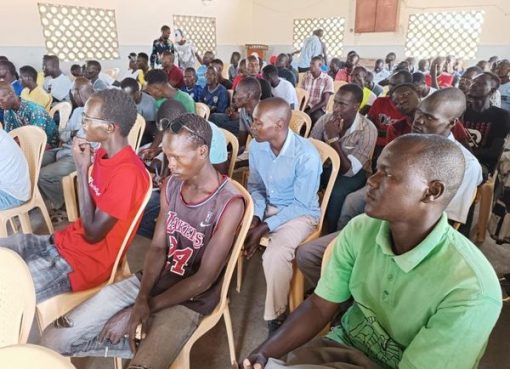
During the relief food distribution at the Chiefs office in Ngong, residents of Umoja and Gichagi villages turned up in numbers, hoping to receive food.
Jecintah Nafula, a resident of Gichagi village, expressed her gratitude for the donation, saying that what she received will be able to feed her family, albeit for a few days.
However, she urged the government to increase the amount of food given due to a lot of hardship they are experiencing. “The economy is bad, and there are no jobs.”
In contrast to what Nafula said, Rose Mueni, a 70-year-old from Umoja village, said that the food was not enough and would not manage to feed the many families who are struggling to make ends meet.
“Right now, there is a lot of hunger. The economy has gone down. Some of us are very pressed in our houses. We don’t have enough food. This 1kg of rice and 1 kg of beans we receive is not enough,” said Mueni.
Despite the great turnout of people, not everyone received food. Some left with downcast faces, dwindling hopes, and empty bags.
Such people could be heard complaining bitterly about the unfairness of the situation as a woman in her fifties could be seen sweeping the fallen grains to take home.
“This is unfair because the people who were served ahead of us first got two kgs of both rice and beans, while the people who came last got one kg of rice or beans,” complained a resident from Gichagi village.
When asked about the situation, George Kimemia, the chief of Ngong location, said that the food was very little and could not sustain everyone.
“Ensuring that the relief food is sufficient for everyone remains a major challenge. The number of people that turn out for food is much higher than what the food can sustain,” said Kimemia.
Kimemia also urged the government to increase the amount of food given to the locations, saying the number of dependents keeps on rising.
The government and local organisations are working to improve food security through various initiatives. Community-based programmes, such as those by Jukumu Letu, are also supporting programmes on food security through social enterprises and nutrition programmes.
There have been efforts like the Relief, Reconstruction, and Development Organization (RRDO) Food Security Initiative that focus on strengthening livelihoods by integrating disaster risk reduction, nutrition, and sustainable farming practices.
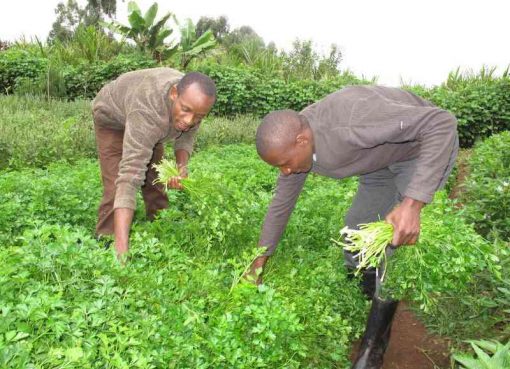
Collaborative efforts between the government and NGOs also help in distributing food aid, advancing agricultural techniques, and supporting vulnerable groups in the community while advocating and encouraging urban farming to enhance self-sufficiency and reduction of overreliance on external sources.
By Lizzie Auma