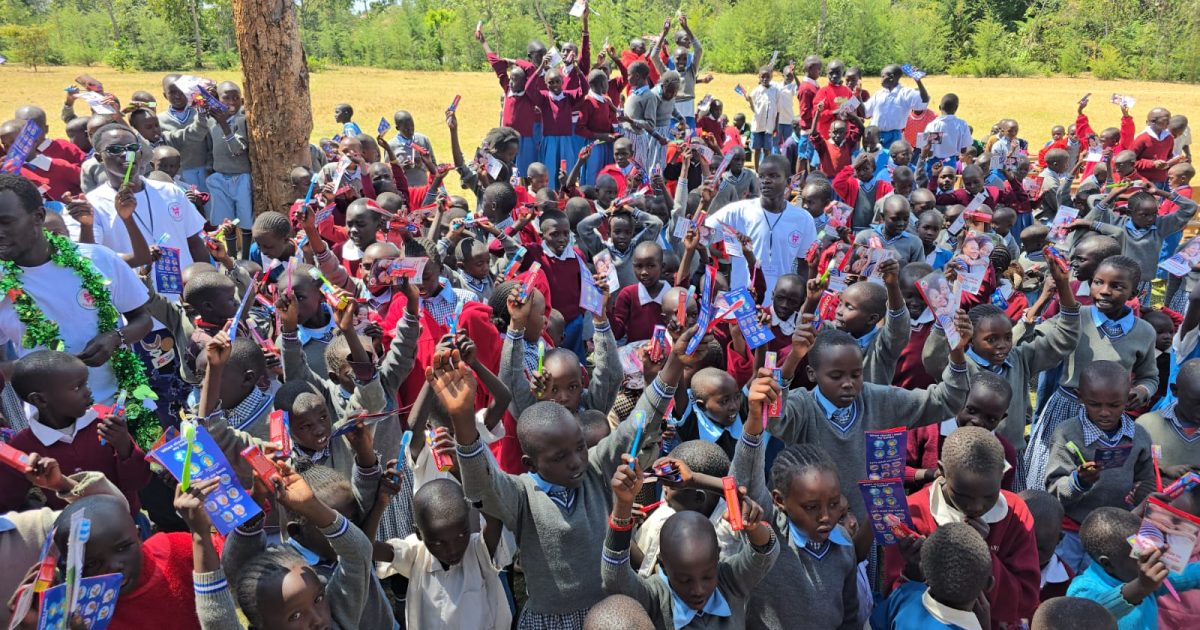
More than 300 children at Kakpaw primary school in West Pokot county have benefited from an oral-health outreach programme, aimed at improving dental hygiene and building lifelong healthy habits in the region deemed as marginalized.
The programme dubbed Oral Health Mashinani, is being implemented by a youth-led community-based organization and focuses on preventing oral diseases among school-going children by instilling good oral-hygiene habits at an early age.
Kakpaw primary school, located deep in the interior of West Pokot, was selected for the initiative due to its location and limited access to basic health information.
The school is largely unknown and difficult to reach, a factor that often leaves learners and their families excluded from essential services.
Speaking during the programme, the group CEO Christine Semekal said the initiative was designed to reach children in the most underserved areas and empower them with practical knowledge that can prevent common oral-health conditions.
“This school was chosen because it is truly in need. Many people cannot access it easily, and the children here deserve the same opportunities as those elsewhere,” she said.
The outreach focused on teaching proper brushing techniques, guiding families on diet choices that promote oral health, and correcting common misconceptions around daily dental care. Mothers were trained on appropriate oral-health practices and encouraged to reinforce healthy habits at home.
Dr. Naomi Kendagor, who was the chief guest during the event emphasized that while many people brush their teeth daily, incorrect techniques often reduce the effectiveness of the practice.
“Brushing alone is not enough. How you brush matters, and using the right tools makes a big difference,” she noted.
Children were encouraged to remember and apply what they learned both at school and at home, with parents playing a key role in reinforcing the habits. Organizers stressed that parental reminders and dietary choices significantly influence children’s oral-health outcomes.
The programme also highlighted that most oral-health conditions are preventable when communities are equipped with the correct information and tools. As part of the initiative, new toothbrushes were distributed to learners, with the team announcing plans to continue supplying proper dental-care tools in future engagements.
The outreach was carried out through partnerships that provided oral-health equipment and resources, with organizers emphasizing that collaboration remains essential to expanding the programme’s reach and impact.
To ensure sustainability, follow-up resources have been shared with the community, and practical oral-health sessions for both adults and children are planned. The long-term goal is to establish a strong oral-health foundation among children and promote lasting behavior change within households.
Organizers expressed optimism, noting that the children were highly receptive to the lessons and eager to adopt correct oral-care practices. “With the right information, support from parents and access to proper tools, these children can grow up healthier and more confident,” they said.
Some of the parents who attended the session praised the programme, as a timely and noble initiative, noting that it had opened their eyes to the importance of proper oral hygiene.
They pledged to reinforce the lessons at home by guiding their children on correct brushing practices and making healthier dietary choices to support good oral health.
By Parklea Ivor