The World Health Organization (WHO) has called on governments and partners to rapidly expand access to new WHO-approved tools, including Lenacapavir (LEN), to help drive down infections.
The agency also warned that cuts in foreign aid are disrupting essential health services, urging urgent action to maintain treatment and prevention efforts.
Despite dramatic funding setbacks, the global HIV response has gained remarkable momentum in 2025 with the introduction and WHO approval of twice-yearly injectable lenacapavir for HIV prevention.
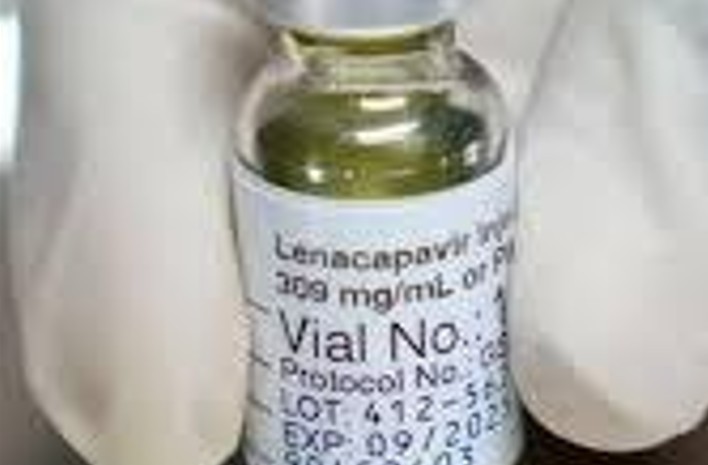
LEN, a highly effective, long-acting alternative to oral pills and other options, is a transformative intervention for people who face challenges with regular adherence and stigma in accessing health care.
WHO released in July this year new guidelines recommending the use of LEN as an additional pre-exposure prophylaxis (PrEP) option for HIV prevention.
Dr. Tedros Adhanom Ghebreyesus, WHO Director-General, said that countries are facing significant challenges, with cuts to international funding and prevention stalling.
Sharp and sudden reductions in international funding this year led to disruptions in HIV prevention, treatment, and testing services, with essential community-led programmes, including PrEP and harm reduction initiatives for people who inject drugs, being scaled back or shut down entirely in some countries.
“We have significant opportunities with exciting new tools with the potential to change the trajectory of the HIV epidemic. Expanding access to those tools for people at risk of HIV everywhere must be priority number one for all governments and partners,” Tedros said.
He added that World AIDS Day, which was commemorated on December 1st under the theme “Overcoming disruption, transforming the AIDS response”, calls for a dual-track approach of solidarity and investment in innovations to protect and empower communities most at risk.
After decades of progress, the HIV response stands at a crossroads, and in 2024, HIV prevention efforts stagnated, with 1.3 million new infections, disproportionately impacting key and vulnerable populations.
While the full scale of the impact of foreign aid cuts is still being assessed, access to PrEP is believed to have declined dramatically, and the AIDS Vaccine Advocacy Coalition estimates that, as of October 2025, 2.5 million people who used PrEP in 2024 lost access to their medications in 2025 due solely to donor funding cuts.
Such disruptions, according to WHO, could have far-reaching consequences for the global HIV response, jeopardising efforts to end AIDS by 2030.
Dr. Tereza Kasaeva, Director of WHO’s Department for HIV, TB, Hepatitis, and STIs, said, “We are entering a new era of powerful innovations in HIV prevention and treatment. By pairing these advances with decisive action, supporting communities, and removing structural barriers, we can ensure that key and vulnerable populations have full access to life-saving services,” Dr Kasaeva added.
WHO prequalified LEN for HIV prevention on 6th October 2025, followed by national regulatory approvals that will increase access in South Africa (on 27 October), Zimbabwe (27 November), and Zambia (4 November).
LEN has also been prequalified by the World Health Organization (WHO), and Kenya is one of the early-adopter countries selected for its rollout, with availability expected in early 2026.
Kenya’s Ministry of Health, through the National AIDS and STI Control Programme (NASCOP), is currently finalising national guidelines and preparing for its introduction.
WHO emphasises that ending the AIDS epidemic depends on a fully integrated, evidence-based, and rights-driven approach under the umbrella of primary health care and that it will continue working with partners and leaders to put those most affected at the centre of the HIV response.
WHO says that by strengthening health systems, increasing domestic investment, and protecting human rights, countries can safeguard gains and ensure no one is left behind.
By Wangari Ndirangu