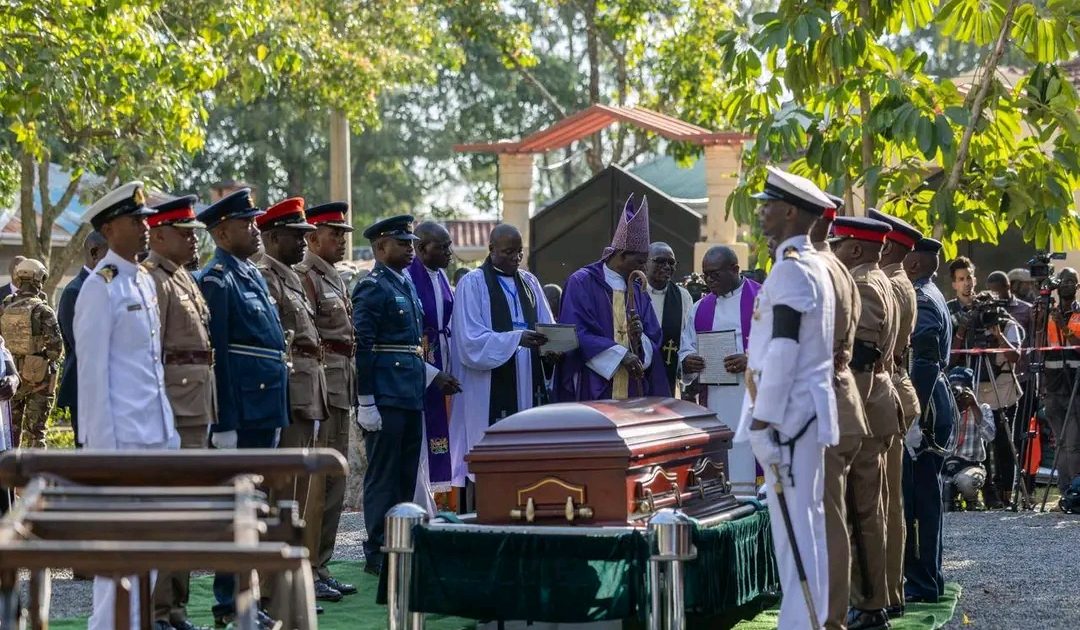
Funerals festivities in Luo Land may take a noticeable turn in the near future owing to the lesson learnt from the late Raila Odinga’s funeral arrangements and the final burial at his father’s home in Kang’o Kajaramogi in Bondo recently.
The 72-hour burial accorded to the Orange Democratic Movement (ODM) Party leader by the State as per his will has enticed many of the members of the Luo community who now mull at copying the short funeral time-frame in a bid to save resources, many a time wasted in feeding mourners.
If adopted by the community, the agreed limited period within which bodies are supposed to be interred means that bereaved families will only worry about putting in place the necessary burial kits such as coffins, transport and clearing the mortuary bills and ignore raising funds for feeding mourners.
The urge for scheduling more time in order to craft weeks or months of preparing well for throwing good parties for mourners and guests will automatically wane hence many people will never again have the urge to attend funerals unnecessarily, according to Mr Tobias Okenge, a retired teacher in Migori County.
Mr. Okenge explains that it is a tradition to prepare too much food in Luo funerals, which often prompts many members of the community to attend funerals that are not of their relatives or people they Know, or of those with whom they have no attachment in life.
Mr Collins Oloo, a cattle trader from Awendo sub-county supports the short period burials, which he says will greatly alleviate unnecessary spending among the Luos.
Citing the Corona Virus time in Kenya, Mr Oloo notes the period presented a time when burials of Luo community members became very cheap, as both the National and County governments pooled their muscles against any move by the local people to slaughter animals and throw parties to guests during funerals in the name of giving their loved ones the best of their last respects.
The two levels of governments came out gun blazing against the age-old tradition of mass feasting at funerals among the Luo people, partly blaming the whole treat for the huge surge of coronavirus rate in the region during the period.
Discipline in resource spending was earned during this period when huge gatherings were banned and families prevented from slaughtering animals to feed mourners and to entertain guests during burials of their loved ones.
The other things the administration enforced in the area in regards to funerals were banning disco matanga, shutting all mortuaries in the region and ensuring that bodies were buried within three days after death.
The National Government administration officers, that is, Chiefs and their assistants were assigned to attend all funerals in their respective areas to ensure that only 100 persons attended and bodies are lowered to the grave as fast as possible.
But calls to limit burial time in this region this time have elicited diverse opinions from the local people.According to Mr Bernard Okello, a residence of Uriri village, the 72-hour time would interfere with the Luo community’s tradition of giving the dead a good send off. “It beats logic that my relatives and friends will come all the way from Kisumu, Siaya or Nairobi to come and condole with me and then leave my home without eating something. People must be fed well at funerals to make even the dead happy,” he stressed.
His line of argument is highly supported by Mrs Lorna Anyango who runs a catering business in Awendo. Anyango says that since time immemorial Luos have been known for giving the best treat to their guests who visit their homes and, in that regard, cannot leave them go back empty stomach. “We are not damn mean to leave our guests who come to mourn with us or attend our weddings go back to their places unfed like that,” he said during an interview.
But Mrs Pascal Auma Ondoro supports the 72-hour funerals saying besides attracting huge crowds, delayed funerals have become so expensive with extra costs that are unnecessary, eating dearly into families’ wealth.
She says during the late 60s and 70s, it was the bereaved families that were being fed by outsiders as opposed to today when they are supposed to expensively host their guests some of who are just neighbours.
“If my community can agree to abandon elaborate funeral ceremonies, then this can be the better gift to give our departed political hero Raila Odinga. I know it will also unbuckle families from the yoke of unnecessary expenses on funerals,” she stressed during a short interview with her recently.
A few months to his death, Raila had complained about the elaborate mourning and extra-ordinary feasting in Luo funerals. He had started a campaign to stop all these and called upon the Luo Council of elders to see how these elaborate burials can be made cheap.
True as it is mentioned by many non-Luo members, a burial ceremony of a Luo community member is always exaggerated through an elaborate ‘feeding madness.’
It is in a Luo funeral where several eatery tents are erected and all manner of high-class foods are served. Fried chicken to fried fish, boiled and fried English potatoes to Nyama Choma will be served freely with sodas and bottled water to all mourners without discrimination whether you’re from a neighbouring home or from the far-flung villages and towns.
The cost of these foods is always overwhelming to families but some are raised through harambees and from the limited wealth within families.
The fun of eating in funerals has been the order of the day in the region and many a time has been believed to be the major attraction for the multitude of mourners trooping to homes where funerals are being conducted.
A stop of these ‘village hotels’, many people believe, will see funeral attended by very few people, particularly relatives and neighbours unlike currently where throngs of people attend under the pretext of bidding farewell to the deceased.
By George Agimba