Youth leaders across the country have raised alarm over budget cuts and the withdrawal of funding from international partners, saying this remains the biggest challenge to climate change-led initiatives.
They warned that without adequate financing, critical mitigation and adaptation measures risk being slowed down, exposing communities to the escalating impacts of climate change.
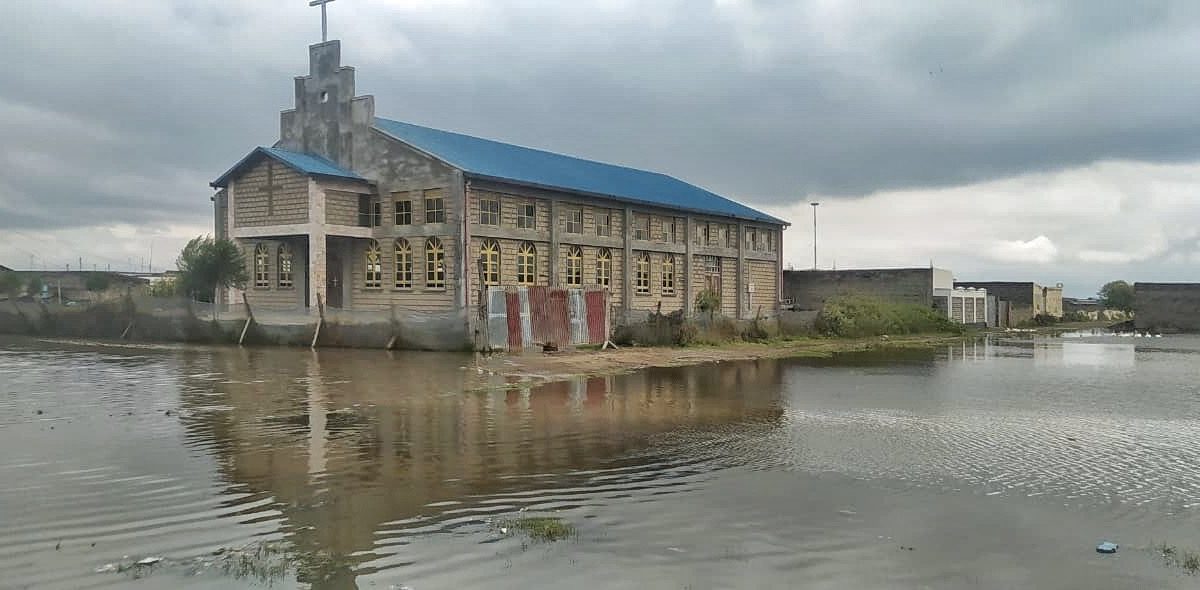
Concerns have grown amid increasing climate shocks, including unpredictable rainfall, flash floods, rising temperatures, and prolonged droughts that have devastated arid and semi-arid regions (ASALs).
Notably, the United States administration under President Donald Trump downplayed the climate agenda, cutting billions of shillings previously allocated to global climate initiatives, dismissing climate change as a “hoax.” The withdrawal of support has significantly impacted developing nations like Kenya, which depend heavily on international funding to implement resilience programs.
Lucy Ngandu from the Arid Lands Information Network (ALIN) said the lack of budgetary allocation continues to hinder adaptation efforts. She emphasized the need for direct and increased climate financing, especially for community-led initiatives designed to help vulnerable populations withstand the effects of climate change.
Kenya has committed itself to several international and national climate goals. Under its Nationally Determined Contributions (NDCs), the country has pledged to cut greenhouse gas (GHG) emissions by 32% by 2030. This commitment includes planting 15 billion trees, advancing electric mobility, and expanding renewable energy sources.
Currently, Kenya sources nearly 90% of its power from clean energy, namely geothermal, wind, and solar, with a target of achieving a 100% clean energy grid by 2030. The National Climate Change Action Plan (NCCAP) 2023–2027 also outlines strategies in energy, agriculture, water, transport, and forestry to strengthen resilience.
President William Ruto has been vocal in pushing for climate justice and reforms in global financing frameworks, arguing that developing countries must have easier access to funds. However, despite Kenya estimating that it needs over US $60 billion to meet its climate goals by 2030, less than 20% of this amount has been mobilized.
The Paris Agreement’s annual US $100 billion pledge by developed nations has also fallen short, with less than US $90 billion mobilized in 2023. Only a fraction of these funds reaches grassroots and youth-led initiatives, sparking frustration among activists and climate-vulnerable nations.
Ahead of the upcoming COP30 summit in Brazil this November, Ngandu called for greater youth inclusion in decision-making processes. She noted that young people bring innovation, energy, and indigenous knowledge critical for community-based solutions. She also urged investment in capacity building, particularly in carbon credit markets, an emerging frontier with economic potential for local communities.
Sheila Anyango from Youth Senate Kenya stressed that climate change affects young people’s livelihoods, education, and future prospects, adding that youth must be placed at the forefront of climate action. She called for adequate and accessible funding mechanisms to support youth-driven initiatives and ensure long-term community resilience.
Rodgers Ngoo, the Coast Region youth speaker, highlighted how climate change has intensified human-wildlife conflicts, with both people and animals competing for shrinking resources. He urged African leaders to unite in demanding accountability from the global north while elevating youth voices on the international stage.
His sentiments were echoed by Gladys Kiplangat from Baringo, who said climate change is already a lived reality in pastoralist communities where families face displacement, food insecurity, and loss of livestock. She emphasized the need for youth representation in policymaking and at international forums like COP30, pointing out that many young people possess valuable indigenous knowledge that can shape sustainable solutions.
As the world prepares for COP30 in Brazil, Kenya’s youth are sending a clear message: climate action must be inclusive, adequately funded, and grounded in justice. Without this, they warn, the future of communities most vulnerable to climate change remains at risk.
By Erastus Gichohi and Mercy Mwende