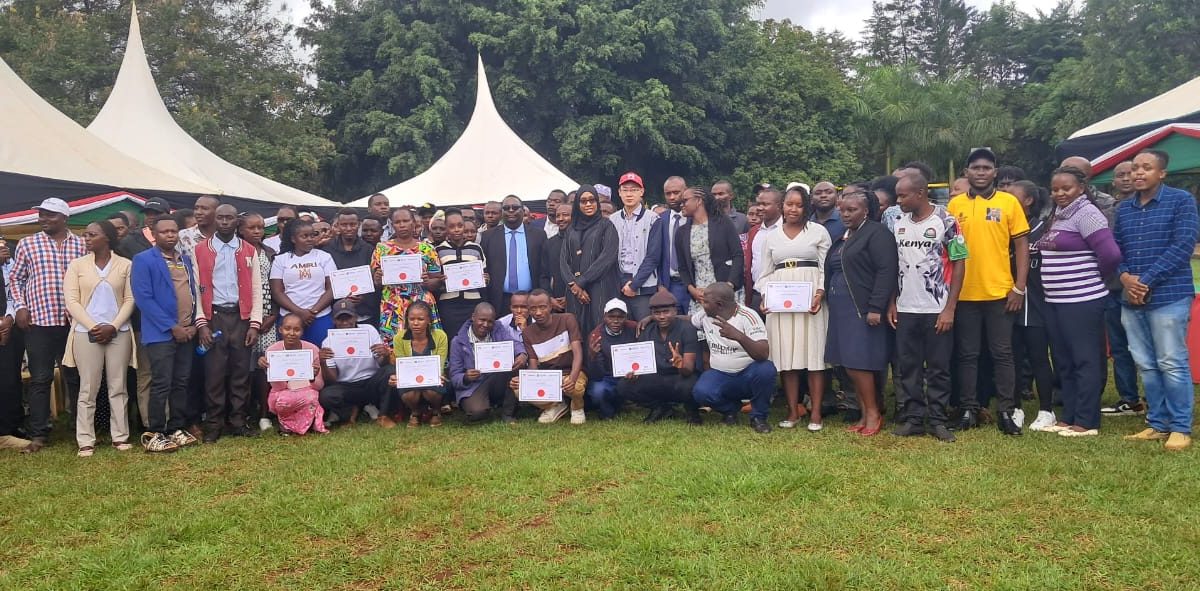
More than 300 youths graduated from the Huawei DigiTruck programme in Chuka, Tharaka-Nithi County, in a significant boost to Kenya’s efforts to bridge the digital divide and equip young people with market-ready skills.
The training, delivered through a mobile digital classroom, is part of a partnership between Huawei Technologies Kenya and the Government of Kenya, targeting underserved communities with hands-on instruction in basic software applications, internet use and digital tools for entrepreneurship and employment.
The graduation, held at Chuka DCC Grounds, was presided over by Hillars Olemoke , Director in the Department of Fisheries and Blue Economy, who represented Principal Secretary Betsy Njagi.
He said the initiative is aligned with government efforts to empower youth through digital literacy and innovation.
Mr. Olemoke noted that digital skills are increasingly critical in unlocking opportunities across sectors such as banking, security and the global online job market.
“This is the era of digital literacy. Young people can leverage these skills to access global opportunities and create their own employment,” he said.
He urged the graduates to apply the skills learnt responsibly and effectively, adding that the government has established digital hubs to support continuous learning and innovation.
He further revealed that, in collaboration with partners, plans are underway to equip the hubs with laptops and other resources to ensure sustainability of the programme.
“The government is committed to supporting the youth. We will continue working with partners to ensure these skills translate into meaningful opportunities,” he added.
Huawei Kenya Public Affairs Director, Yuta Leng, said the DigiTruck initiative aims to enhance digital inclusion nationwide, with plans to expand training to all 47 counties.
She noted that more graduations are expected, including one in Kisumu later this year, as the programme scales up its reach.
“We are committed to leaving no one behind in this digital era by equipping young people with essential skills for innovation, productivity and competitiveness,” she said.
A beneficiary of the programme, Allan Munene, said the training had equipped him s practical digital skills that will enable him to pursue new opportunities and improve his livelihood’s.
He encouraged fellow youth to take advantage of such initiatives, noting that digital skills are increasingly vital in today’s job market.
by Dickson Mwiti