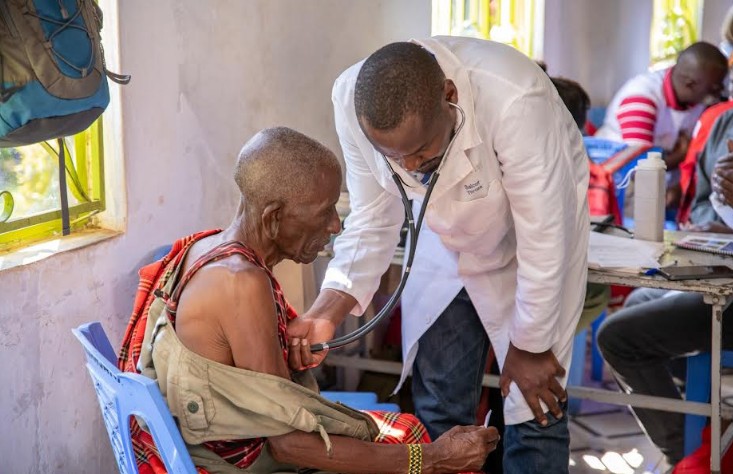
More than 1,000 residents of Olbili village in Kajiado South have received free medical treatment during a 12-day medical outreach camp aimed at addressing healthcare gaps in remote areas.
The initiative was spearheaded by the County Government in collaboration with Amref Health Africa, Entepesi Kenya, Hands for Health Foundation, Rocky Vista University (USA), and Kilimanjaro Mission Hospital.
The medical camp offered a wide range of services, including eye surgeries such as cataract extractions and tumour removals, nutritional support, psychological counselling, cervical cancer screening, general consultations, laboratory services, and dental checkups.
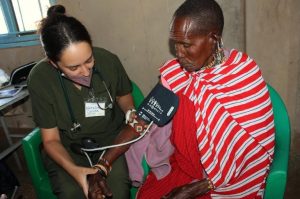
Residents also benefited from family planning services, HIV testing and counselling, and treatments for both minor and critical conditions, including flu, heart disease, genetic disorders, and cancer.
Dr Brandson Hall from Rocky Vista University noted the broad range of ailments presented by patients, from common colds and flu to more serious and life-threatening cases like cancer, heart conditions, and genetic issues.
Jackson Yapas, a clinical officer, highlighted a worrying trend of poor health-seeking behaviour among residents. This he attributed to lack of resources and the long distances to the nearest health centres.
“Many people do not seek medical attention when symptoms begin; they only visit hospitals when the condition has worsened,” he said.
Obed Katia of Entepesi, Kenya, echoed this concern, adding that some expectant women had never attended antenatal clinics and some children had never received immunisations.
“This camp was not just about treatment; we are also educating the community on the importance of early health interventions,” Katia said.
Beyond treatment, the medical team also prioritised community health education to promote early care-seeking behaviour.
The camp revealed the dire need for healthcare access in the region. Residents reported having to walk over 15 kilometres to the nearest health facility.
Joyce Mutunkei, a resident of Olbili, lamented the lack of a local health centre in the area.
“Many expectant mothers here are forced to give birth at home. We urgently need a hospital in this area,” she said.
Martine Soipei, another local, emphasised the impact of poverty on access to health services. “Most of us cannot afford to go to hospitals. Free medical camps like this are a lifeline and should be held regularly to save lives,” he said.
Serah Ndida, a resident of Inkisanjani, lauded the initiative for reaching those who would otherwise go untreated.
“I had been unwell for more than two weeks, but the nearest hospital is far in Illasit town, and I didn’t have transport to get there. When I heard that the medical camp was coming right here to our village, I was so relieved. I received treatment and medicine free of charge,” she said.
Samantha Shackleton of Entepesi, Kenya, emphasised the importance of reaching marginalized communities with essential health services. She noted that providing quality healthcare closer to underserved communities was not just a priority but a necessity in order to achieve universal health coverage.
“Many people in remote areas still struggle to access even the most basic medical services. These medical camps are helping to close that gap by delivering critical care right at the village level,”she said.
Shackleton added that the large turnout of patients seeking medical services highlighted the urgent demand for accessible and inclusive healthcare and called for sustained support for similar initiatives across rural Kenya.
By Rop Janet