Kenyans are demonstrating notable resilience and adaptability in the face of economic pressure, with more individuals creating additional income streams, expanding businesses, and expressing optimism about their financial prospects.
According to the latest Old Mutual Financial Wellness Monitor, 7 in 10 Kenyans expect their financial situation to improve in the next six months, 43 percent are still considerably financially stressed, 91 percent of Kenyans have a savings goal, while 20 to 29-year-olds are significantly more optimistic
The wellness monitor found that financial satisfaction rose from 5.2 out of 10 in 2024 to 5.9 in 2025, with 70 percent of respondents expecting their financial situation to improve over the next six months on account of an improved macro-environment.
The Wellness Monitor, which tracks the financial health of working Kenyans, notes that 30 percent of working Kenyans are earning more than a year ago, while 47 percent own or co-own a business, with many others pursuing side hustles.
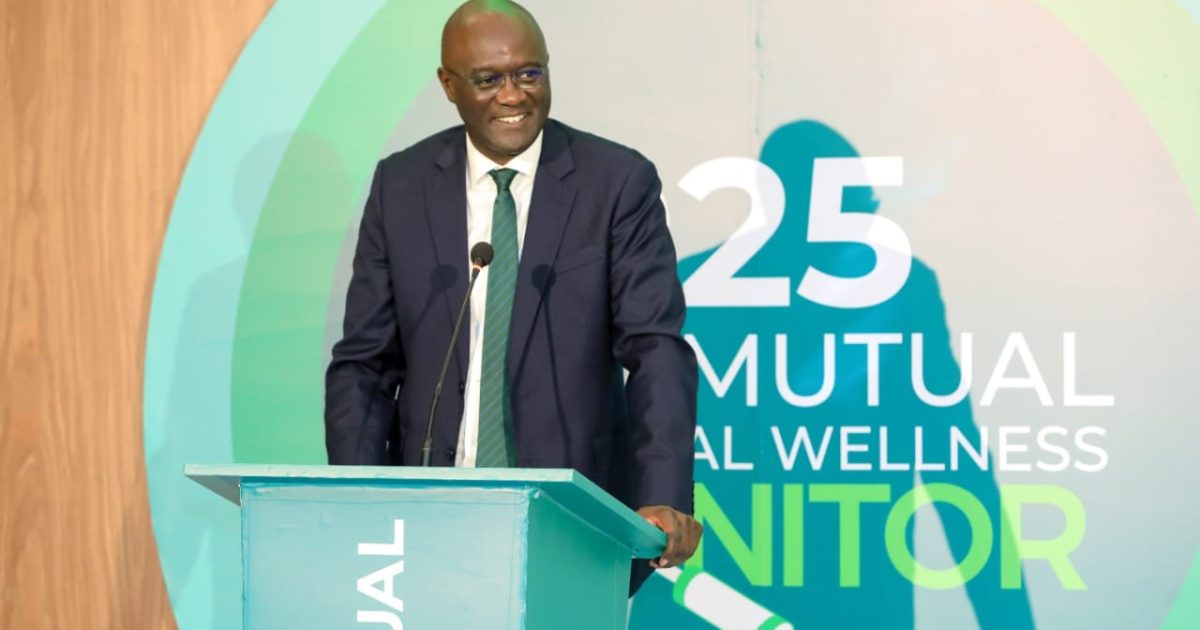
Arthur Oginga, Old Mutual Group Chief Executive Officer said that Kenyans are not waiting for the economy to improve but in the face of economic pressure, are actively engineering their own recovery, adapting, innovating, and finding new ways to improve their financial position
This progress, he, however, said, is unfolding alongside persistent financial strain, rising living costs, mounting debt, and expanding financial responsibilities continuing to weigh on households.
“Forty (40) percent of Kenyans are borrowing to meet everyday expenses, 54 percent carrying the same or higher debt than last year, and 46 percent regularly overspending their budgets”, Oginga said
Vuyokazi Mabude, Head of Knowledge & Insights at Old Mutual, said that the 2025 report paints a picture of a nation in transition.
“Kenyans are resilient and entrepreneurial. But without stronger support in financial literacy, savings discipline, retirement planning, and protection, this progress risks remaining short-term,” he added
The Old Mutual Financial Wellness Monitor offers detailed insight into behaviour and sentiment, from day-to-day money decisions and risk management to the pursuit of long-term financial goals, as individuals navigate their path towards financial well-being.
The latest study, focusing on employed Kenyans aged 20 to 59 earning Ksh 12,000 or more, finds that financial satisfaction has rebounded from its lower level in 2024.
The study found that 20 to 29-year-olds are even more satisfied than they were in 2023, even as the high cost of living continues to constrain overall satisfaction.
Key drivers of financial well-being include a sense of comfort with one’s financial position, prudent debt management, the ability to save, and improved business performance relative to the previous year.
“What we are seeing is a shift from passive financial behaviour to active financial intent. Kenyans are working harder and setting goals, but they need the right tools, advice, and protection to translate this resilience into long-term financial security,” said Dr. Tabitha Njuguna, Strathmore University Business School Faculty Member, during a panel session.
Those reporting financial dissatisfaction cited the high cost of living, incomes insufficient to meet expenses, difficulty in securing better-paying opportunities, and limited capital to expand their businesses.
The monitor further noted that income security continues to be the main financial priority for Kenyans and is even more important in 2025 than ever before.
The other priorities include cutting expenses; ensuring investments are safe and lower risk; being able to pay off debt; and building financial buffers or emergency funds, among others.
The study found that 26 percent are juggling multiple jobs or doing part-time jobs (poly-jobbers), which is an increase from the 20 percent reported in 2024. However, this was skewed towards more affluent consumers. 25 percent of polyjobbers say that the income from their side jobs is more than from their main job.
The study also found that 46 percent of working Kenyans are part of the sandwich generation, supporting children as well as adults. The financially supported adults mostly include parents (79%) and siblings (49%). Adult dependents have increased by 4 percentage points in 2025.
The study found that those who had fallen behind on rent increased from 17 percent to 25 percent, while those that dipped into savings to make ends meet increased from 35 percent to 40 percent. In addition, those that fell behind in house bills increased from 27 percent to 28 percent.
“Working Kenyans are actively adjusting to rising costs, trading down to more affordable housing, switching to lower-cost brands, and revising mobile plans to manage expenses. In some cases, households are also moving children to less expensive schools, reflecting the extent to which cost pressures are reshaping everyday financial decisions,” said Justina Vuku, investment analyst at Old Mutual Investment Group.
The monitor found that 40 percent of the population has taken out a loan for day-to-day expenses, with mobile loans continuing to be the most widely used form of credit, followed by personal loans from Chamas.
Over half (53%) of consumers have enough savings to last them for 3 months or more, and this has increased by 9 percentage points since 2024. However, this means that 4 in 10 are vulnerable to running out of funds in less than 3 months without an income.
“As a financial sector, we must shift from simply responding to loss to actively protecting progress. That means designing solutions that balance today’s financial pressures with future security while making financial education and advisory services more accessible to every Kenyan,” said Japheth Ogalloh, Managing Director, Old Mutual General Insurance Kenya.
The Old Mutual Financial Wellness Monitor is an annual study that tracks the financial attitudes, behaviours, and well-being of working Kenyans aged 20–59 earning KES 12,000 and above. The study was conducted in October 2025 using a nationally representative sample across formal and informal sectors.
By Wangari Ndirangu