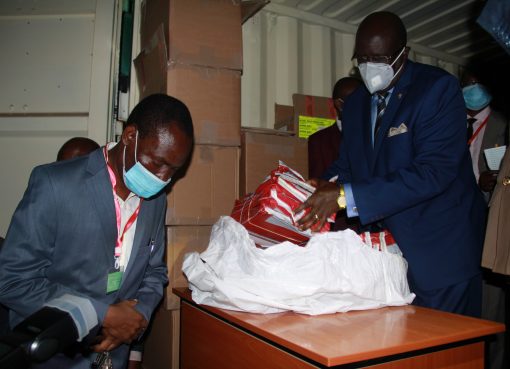
The National Government plans to distribute 12.5 million bags of planting and topdressing fertiliser to enhance crop yields during this financial year.
This heavy investment in agriculture is geared towards ensuring food security and reducing food prices.
The Cabinet Secretary, Ministry of Agriculture and Livestock Development Mutahi Kagwe said Agriculture remains the cornerstone of Kenya’s economy, contributing approximately 27 percent linkages to manufacturing, transport and trade while employing over 40 per cent of the total population and over 70 per cent of the rural workforce.
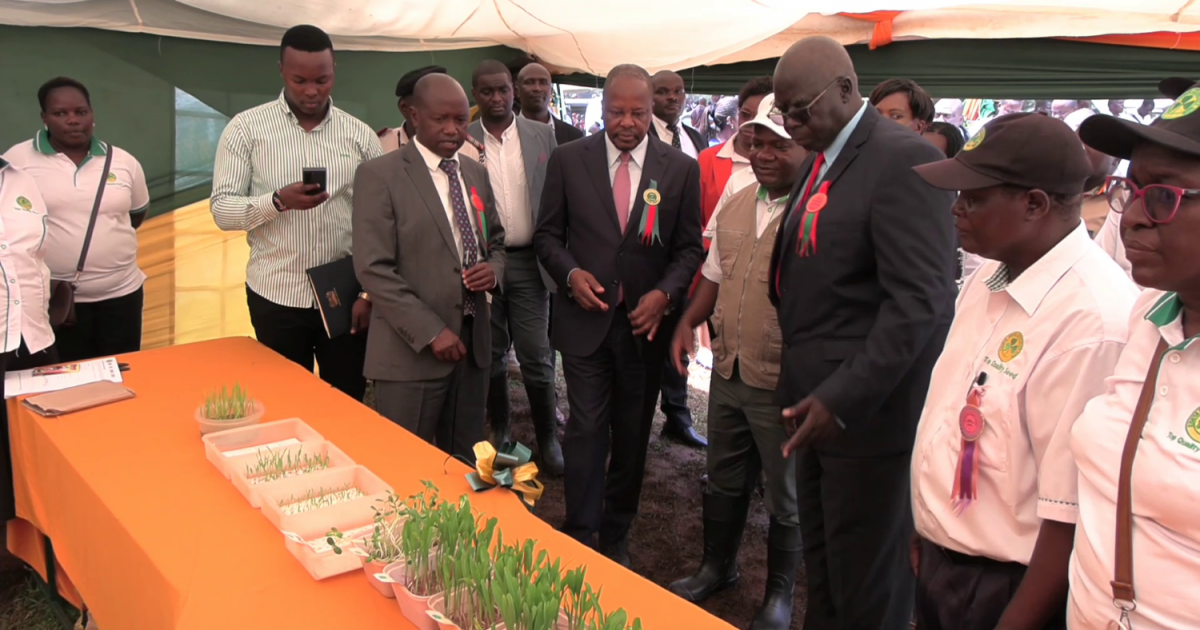
Speaking during the official opening of the Agriculture Society of Kenya(ASK) Kakamega Show, CS Kagwe noted that the Electronic Voucher(E-voucher) has enabled the government to register over 6.5 million farmers across the country.
The innovative E-voucher enabled the government to distribute over 14.7 million bags of subsidized fertiliser since 2022 and reduced fertiliser prices from Sh7,500 to Sh2,500 for a 50-kilogram bag.
He said the investment in agriculture has helped in reducing the price of a 2 kilogram packet of maize flour from Sh250 to the current Sh150 contributing to national food security while reducing maize imports by 66 per cent.
“We are hoping that this year we will make that gap narrow and probably ensure that there will be no maize imports,” he said.
In the livestock sector, the Cabinet Secretary noted that milk production in the country rose to 5.4million liters in 2024 with the export of livestock and livestock products including meat, dairy and live animals expanding to markets in Oman, Uganda, Seychelles, the United Arab Emirates and beyond.
He said the Ministry is scaling up comprehensive livestock production and productivity programmes such as Artificial Insemination(AI) services, pasture and fodder development.
“Our National Livestock Vaccination programme aims to inoculate 22million cattle, 50 million sheep and goats against diseases such as Foot and Mouth Disease(FMD) and Peste des Petits Ruminants (PPR) by 2028. Already 3.7million animals have been vaccinated using locally manufactured vaccines from our own Kenya Veterinary Vaccines Production Institute (KEVEVAPI),” he added.
In the tea value chain, the CS said the country has increased production from 535million Kilograms in 2022 to 598 million Kilograms in 2024 with total earnings rising from Sh138billion to Sh181billion.
“We are promoting climate resilient tea seedlings, value addition through cottage industries and especially tea production supported by Micro- Small and Medium Enterprises (MSMEs).
He noted that the sugar sector has also recorded a tremendous growth with tea factories recording an increase in production of sugar from 796 metric tons in 2022 to 832 metric tons in 2024.
“To further increase this productivity we have introduced 27 new sugarcane facilities. I have also committed to engaging with my energy counterpart to see that sugar factories in Kakamega and elsewhere in our republic can begin to sell power because they have enough capacity to help even feed the national grid,” the CS explained.
To support edible oil production, the CS explained that the government is distributing sunflower seeds and coconut seedlings to farmers across the country.
He said as a result, the land under oil crops production has increased from 60 000 hectares in 2022 to the current 114, 000 hectares moving the country closer to its goal of reducing edible oil imports by 50 per cent by 2027-2028.
The CS noted that the government is implementing various projects in western Kenya like the Kenya Livestock Commercialization Project(KeLCoP), the Food Systems Resilience Program (FSRP) among others.
“KeLCoP aims to increase income and nutrition for 110 000 poor households in Busia, Bungoma and Kakamega counties,” he pointed out.
He said ASK remains a key forum for youth engagement and information dissemination encouraging them to take advantage of the showcased knowledge and technologies.
“We want to make agriculture attractive and cool to the youth, we want to make agriculture something that teachers want to teach in their classrooms, I am encouraging parents to work with their children in farming so that their children can see that farming is good to do, If children understand agriculture then our nation will be food secure,” he added.
He called upon counties and the private sector to enhance support for agribusiness incubation and mentorship.
The CS challenged Agri-entrepreneurs and Agriculture extension officers to be technologically savvy to be able to utilize the digital tools that both the National and county governments will introduce in the various sectors, like interpreting crop diseases.
“As we look ahead, the Ministry of Agriculture will continue to promote digital agriculture. Crop disease in the future is going to be interpreted with technology therefore we want our agricultural colleges to ensure that they are ahead in the technology space in agriculture,” he added.
Kakamega Governor Fernandes Barasa said the county government is collaborating with the National government to promote agriculture initiatives.
He said the county government has set aside 15 stores to be used by the national government in distributing subsidized fertilizers to farmers.
“This year we have distributed fertiliser worth Sh200 million to peasant farmers in efforts to boost their incomes,” the governor added.
By Moses Wekesa