The United Democratic Alliance (UDA) intends to conduct grassroots elections in eighteen counties as part of a nationwide exercise to strengthen the party’s leadership structures at the polling station level.
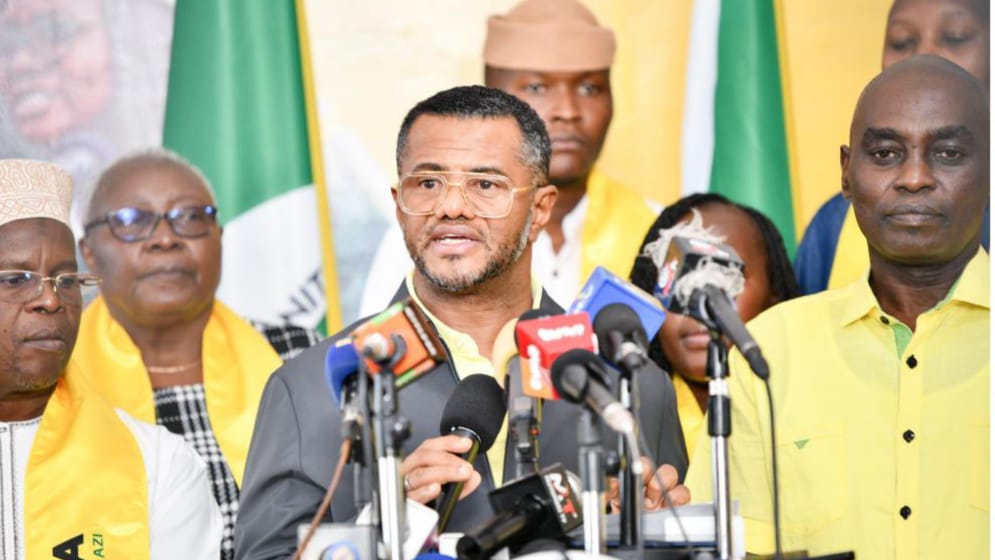
Speaking during a press briefing, UDA Secretary General (SG) Hassan Omar announced that the elections were deliberate to mobilize grassroots support and build a strong political network across the country.
“UDA is today Kenya’s biggest and most popular party. These elections are about creating popular leaders and ensuring we mobilize the grassroots,” Omar pronounced.
He noted that the party seeks to build an extensive national network of leaders and mobilizers through the exercise, saying strong party structures are key to electoral success.
“Elections are won through discipline, strategy and track record, and I think UDA encompasses all that,” he added.
Additionally, the SG expressed confidence that party members would turn out in large numbers to participate in the elections, noting that the exercise reflects the party’s commitment to strengthening internal democracy.
“Tomorrow we will see the membership of UDA coming out in large numbers to choose their leaders,” he said.
On his part, UDA National Elections Board Chairman Anthony Mwaura announced that the elections will begin at 8:00 a.m. and end at 5:00 p.m., with thousands of polling stations set up across the participating counties.
“Tomorrow, as you are aware, we are having elections in 18 counties around the country mainly in the North Kenya and Rift Valley regions,” Mwaura reiterated.
He disclosed that the elections were initially scheduled to take place in 20 counties but the exercise in Nakuru and Kakamega was postponed to allow better coordination.
According to Mwaura, the election in Nakuru was rescheduled to avoid clashing with the ongoing World Rally Championship (WRC) Safari Rally, while Kakamega’s exercise was deferred due to the high number of contestants.
“We skipped Nakuru because of the Safari Rally taking place this week, while Kakamega will vote later due to the massive registration where more than 40,000 contestants are involved,” he explained.
The elections in the two counties are now scheduled to take place on March 28.
Further, Mwaura affirmed that the polls will be conducted in 8,819 polling stations and will involve close to 19,000 election officials, including returning officers and clerks who have been trained ahead of the exercise.
“We will be having almost 19,000 election officials who will be stationed at polling centres to manage the process,” the Chairman assured.
He added that the officials were undergoing training before deployment to their respective polling stations to ensure smooth operations during the elections.
The party has also prepared 9,000 digital devices to facilitate the voting process and enable quick transmission of results.
“As you are aware, our election results come out immediately after voting. Within a maximum of 10 minutes we usually have the results,” Mwaura asserted.
Equally, he emphasized that the party expects the elections to be peaceful and transparent, urging members to avoid violence during the exercise.
“We believe our elections will be free, verifiable and without any violence. We are warning our party members to desist from violence, especially violence against women,” he cautioned.
In addition, Mwaura maintained that the grassroots polls are part of a broader internal election process that will see the party elect more than 580,000 officials across the country.
Meanwhile, the exercise has attracted nearly 500,000 contestants, with the party targeting at least 30 percent representation of women among the elected officials.
“After the elections we will have about 180,000 party officials and at least 30 percent of them will be women, which is something the party leader has emphasized must happen,” he reaffirmed.
He added that the entire election process will run in phases and is expected to conclude by June, culminating in a National Delegates Conference (NDC) where senior party leadership positions will be finalized.
By Naif Rashid