The local automotive industry is headed for a boom after the government announced plans to unveil a Sh13 billion affordable credit financing kitty for players in the sector.
To further bolster local manufacturing of automobile accessories, the State has introduced incentives and tax regulations such as the duty remission scheme to regulate the importation of some automotive parts such as batteries, radiators and brake fluids, among others.
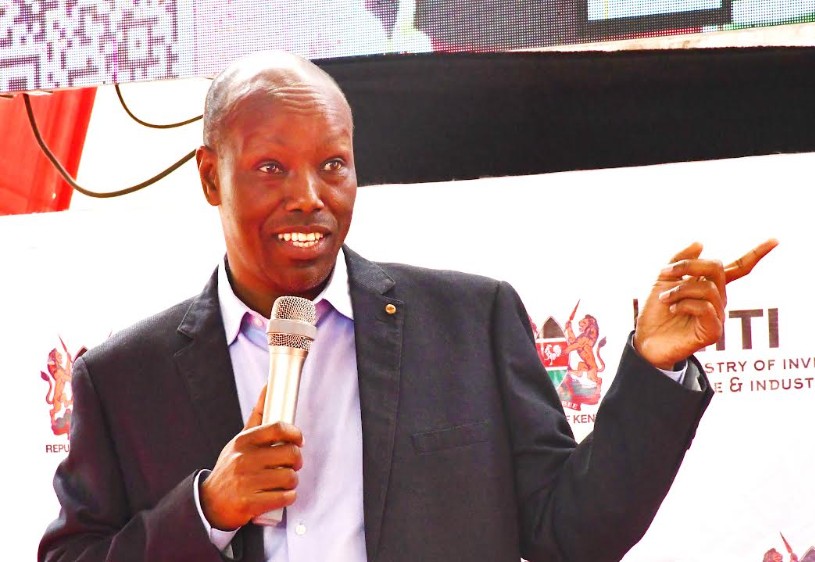
Cabinet Secretary for Investments, Trade and Industry Mr Lee Kinyanjui said the decision by the government was aimed at enhancing the use of locally manufactured parts, hence promoting the manufacturing sector in the country.
At the same time, the CS affirmed that the newly approved Kenya’s National Automotive Policy was a significant step towards transforming the country’s automotive industry.
By focusing on local manufacturing, promoting cleaner vehicles, and fostering a thriving ecosystem, the Cabinet Secretary argued that the policy would create a more sustainable and prosperous automotive sector.
He revealed that the Government was planning to raise a bond in Japan, which would be restructured so that at least Sh13 billion from the total amount would be used to promote growth of the local automobile industry by making available to local players in the industry affordable credit facilities.
Kinyanjui noted that players in the automobile industry in Kenya who have the capacity to locally manufacture tyres, tubes, batteries, windscreens, oil filters, gaskets, bushes, suspension springs, seats, seat belts, oil seals, air cleaner elements, shocks, spark plugs, bushes and mats, among other accessories, will be eligible for funding.
He said in order to establish a local robust automobile industry, the government was fostering a stable policy framework, endorsing business-friendly tax regimes, enhancing security of businesses and investors and investing in infrastructure such as roads, water supply networks and reliable power supply systems that will support long-term industrialisation.
The CS further said that the government interventions in shoring up the automobile industry were targeted at reaping significant dividends in areas of employment creation, technology transfer and contribution to the gross domestic product.
“The economy is expected to greatly benefit from government incentives in the sector through direct injection of cash and creation of additional employment for local automobile assembling firms and suppliers of parts and accessories to the assembly plants,” explained the CS.
Kinyanjui, who was the chief guest during the Nakuru County Investment Roundtable Forum, pointed out that local assemblers were also enjoying import and excise duty exemption for the semi-knockdown kits to promote local assembling.
The local automotive assembly has an installed capacity to assemble 46,000 units annually.
The Cabinet Secretary said that the automotive industry has been a pillar of industrialisation for many economies and a key driver of macroeconomic growth and technological advancement.
He noted that imported vehicles, including the second-hand ones, attracted between 25 per cent and 35 per cent duty.
Another upswing of this was the creation of additional employment for local suppliers of parts and accessories to the assembly plants.
Current official data shows that Kenya imports an average of 7,600 second-hand vehicles per month, with the average number of assembled units standing at about 430.
Kinyanjui stated that widespread use of second-hand spare parts in the country was mainly due to the non-availability of new parts locally and rampant use of counterfeit and substandard spare parts.
He indicated that the automotive industry has a long value chain creating both backward and forward linkages, where he explained that backward linkages included the design and manufacture of vehicle bodies and other components, not forgetting that the automotive industry consumes steel, iron, aluminium, plastic, glass, carpeting, textiles, computer chips, rubber, and much more.
Kinyanjui observed that the industry creates forward linkages through vehicle dealers, garages, leasing firms, insurance firms, and financial institutions, among others and urged local assemblers of automobiles to utilise locally assembled parts to spur growth in the sector and generate jobs.
Overreliance on imported spare parts, stated the Cabinet Secretary, had constantly diluted growth in the automotive sector, inhibiting the intended impact on the economy.
He, however, said the future was bright after the National Government approved the National Automotive Policy.
The policy is designed to support the growth and transformation of the automotive industry in Kenya into a significant contributor to the national GDP under manufacturing.
“Kenya’s automotive sector is experiencing a significant transformation as technology, environmental priorities and economic development intersect. To monitor, moderate and boost this transformation, the National Automotive Policy was proposed and approved to promote automotive manufacturing in Kenya,” the Cabinet Secretary elaborated.
The policy also aims to drive employment generation and skills development. Statistics from other countries show that local assemblies created more formal jobs on average compared to vehicle import trades, thereby increasing employment opportunities ten-fold across the industry value chains.
With the Automotive Policy, the CS explained that the automobile industry had the potential to create over 200,000 jobs in Kenya directly or indirectly if the right investment environment was put in place.
When we add the manufacture of spare parts to local assembly vehicles, we create formal, quality and meaningful jobs where employees can afford to pay taxes and technology transfer, added the CS.
The Kenya National Automotive Policy aims to revitalise the automotive industry by promoting local assembly and manufacturing, gradually reducing reliance on imported used vehicles.

This includes a shift towards Complete Knocked Down (CKD) assembly, with the goal of creating jobs and fostering economic growth. The policy also addresses environmental concerns, setting standards for emissions, promoting green initiatives and enhancing the adoption of environmentally friendly practices.
The policy further aims to support the development of infrastructure needed for the automotive industry, including parts manufacturing.
Kenya’s National Automotive Policy is a significant step towards transforming the country’s automotive industry. By focusing on local manufacturing, promoting cleaner vehicles, and fostering a thriving ecosystem, the policy aims to create a more sustainable and prosperous automotive sector.
Kenya is an advanced economy that could draw a niche in this sector given the level of technology advancement and years of experience in the sector.
As of now, Kenya is only involved in automotive assembly on behalf of Original Equipment Manufacturers (OEMs) such as Toyota, Volkswagen and Nissan.
Kinyanjui indicated that the government was in partnership with franchise holders such as Isuzu East Africa Ltd, Kenya Vehicle Manufacturers (KMV) and Associated Vehicle Assemblers (AVA) to boost the automotive sector through the local assembly of automobiles. This, he said, would reduce dependence on the importation of used vehicles.
He said Kenya’s automobile industry had the potential to significantly benefit from the African Continental Free Trade Area (AfCFTA) agreement through increased market access and trade opportunities.
The agreement, which aims to create a single market for goods and services across the continent, is expected to boost intra-African trade, reduce trade barriers, and foster regional value chains.
“Many African countries have a very low manufacturing base. Our local automobile industry players can specialise in exporting assembled units and spare parts into those countries,” he noted.
Nakuru Business Association Chairman Mr Wilson Githu said energy costs were a critical factor influencing the competitiveness of Kenyan products in global markets.
He pointed out that high electricity prices were a significant burden on manufacturers, compelling them to seek cost-effective energy alternatives.
“As manufacturers, we are looking for ways to reduce our operational costs, and electricity is a major contributor,” Githu said.
He said the government should continue focusing on expanding the country’s geothermal, hydro, and solar energy capacity, with an emphasis on geothermal, which currently contributes 985 megawatts (MW) to the national grid.
Kenya Private Sector Alliance (KEPSA) Chairman Mr Jaswinder Bedi said to foster a more competitive business environment in Kenya and enable it to compete on a global stage, the country needed to focus on diversifying its export portfolio, investing in human capital and technology, enhancing regulatory transparency, and leveraging regional trade frameworks like the African Continental Free Trade Area (AfCFTA).
Bedi noted that prioritising skill development initiatives, particularly in areas like ICT, is essential for producing a workforce that meets the demands of a rapidly evolving global market.
Kenya National Chamber of Commerce and Industry Nakuru Chapter Vice Chair Ms. Ruth Ndung’u urged both the National and the 47 County Governments to foster stable policy frameworks and invest in infrastructure that would support long-term industrialisation.
Such efforts, stated Ms. Ndung’u, would help transform the country into a robust manufacturing economy.
“We continue to urge both levels of government to entrench regulatory frameworks that will spur growth among manufacturers. Provision of tax incentives for startups and small-scale industries for instance, as well as relaxed compliance procedures, can make it easier for businesses to scale,” said Ms. Ndung’u.
By Esther Mwangi and Lucy Mukui