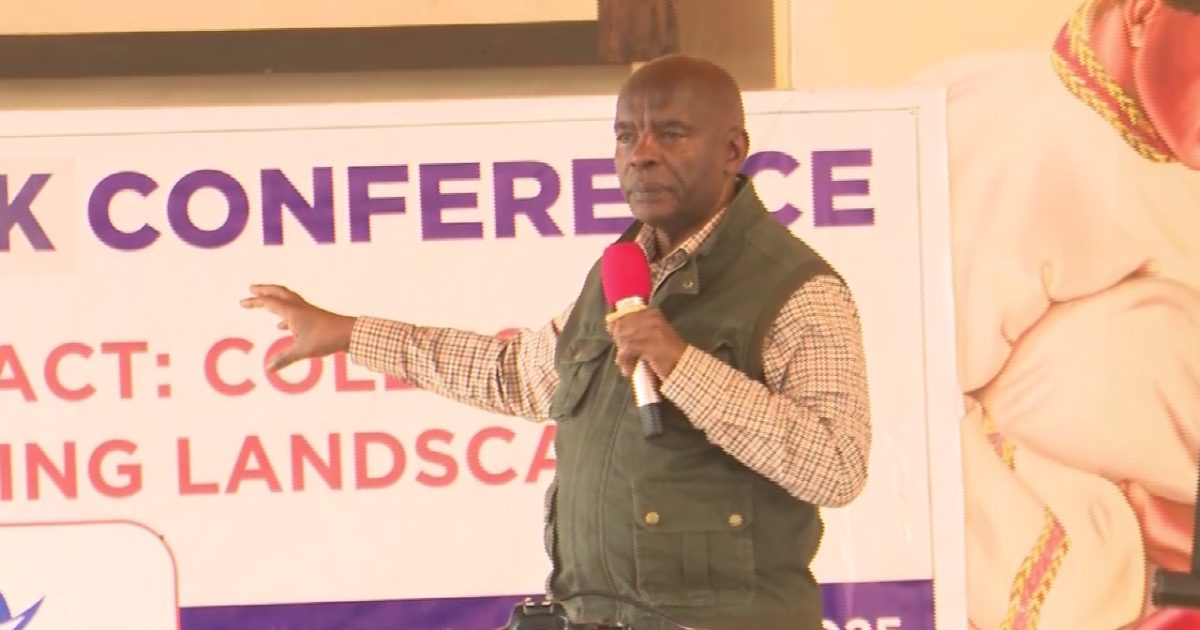
The national and county governments have been asked to respect and enable the networking needs of civil society organizations (CSOs) because they help strengthen the state’s collective power and influence in advocating for policies, thus improving governance and achieving sustainable development goals.
According to the former Makueni governor and Human rights Activist Prof. Kivutha Kibwana, the government should not see the civil societies as competitors on matters of development and community mobilization, but rather as a complement to what the regime is doing.
He noted that civil societies must have their space, so that they can do the work that they must do, speaking the truth to the government respectfully, while also speaking to each other in order to enhance accountability.
Prof. Kibwana was speaking during a press briefing, shortly after giving a keynote address during the Annual CSO Network Conference, hosted at Nyahururu’s St. Martin Catholic Social Apostolate Hall.
The conference had brought together community groups, faith-based organizations and Human rights groups from Nyandarua, Laikipia and Nakuru Counties.
Prof. Kibwana and the Director of St. Martin CSA Maurice Muthiga, among other key speakers, noted that such networking allows CSOs to amplify citizen voices, enhance their capacity, and foster democratic innovation by sharing resources and coordinating efforts.
However, they noted that financing of the CSO activities remains a common and major challenge, but observed that with such collaboration, they will be able to understand areas of collaboration, while also tackling duplication of activities and civil societies need to network to achieve goals beyond their individual capacity, such as advocating for policy changes and improving public services.
They added that without a conducive environment that permits networking and collaboration, CSOs face restrictions that hinder their ability to effectively serve communities and contribute to societal progress.
By Kimani Tirus