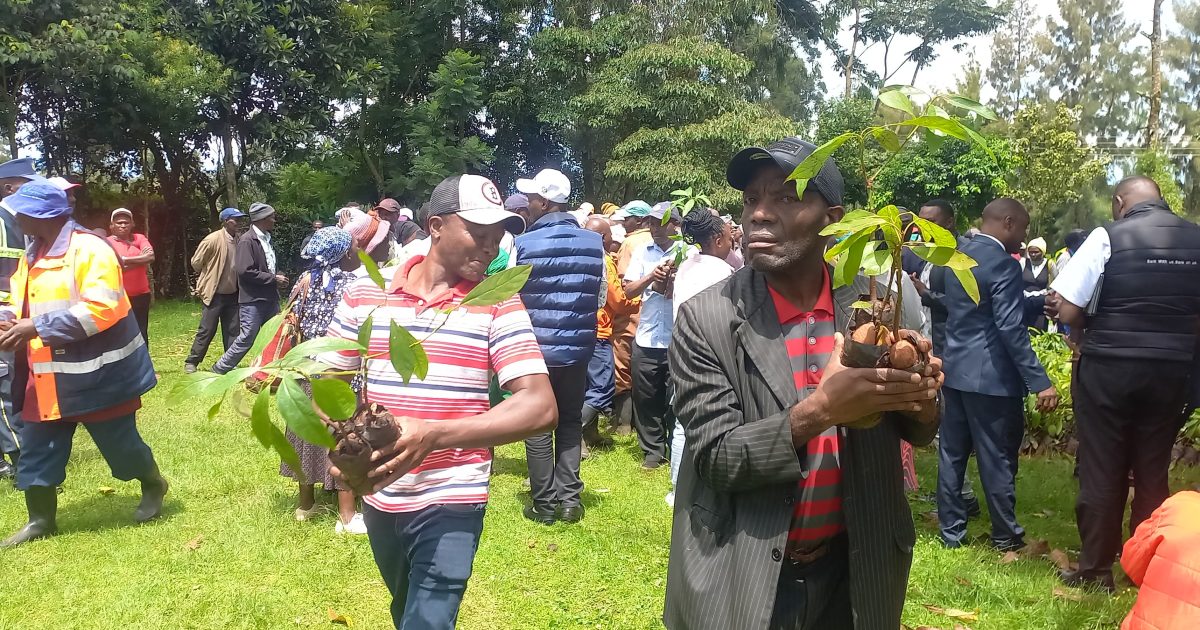
Farmers affiliated with Kangaita Tea Factory, Kirinyaga County have benefited from a major agricultural support programme, following the distribution of thousands of avocado seedlings, aimed at boosting income and improving environmental conservation.
The exercise saw 8,333 avocado seedlings distributed to farmers in the area as part of a wider national rollout targeting 158,331 seedlings across 23 tea factories in regions such as Murang’a, Kirinyaga, Kisii and other tea-growing zones.
The initiative reflects a growing shift in Kenya’s agricultural sector, where emphasis is being placed on diversification, sustainability and value addition.
Integrating high-value crops like avocados into traditional farming systems can significantly improve farmers’ earnings while reducing risks associated with overdependence on a single crop.
Speaking during the distribution exercise at Kangaita Tea Factory, Head of the Agriculture Sector at the Diamond Trust Bank, Lilian Kahiga, said the programme is designed to empower farmers economically while also addressing environmental challenges.
Kahiga noted that tea farmers have for a long time relied heavily on a single cash crop, making them vulnerable to fluctuating prices and unpredictable weather patterns.
She said introducing avocado farming provides an alternative income stream and strengthens household resilience.
“We will continue to work closely with farmers to support them in diversifying their sources of income. Agriculture remains a powerful driver of economic growth, and by equipping farmers with the right resources, we are ensuring they are better prepared for the future,” she said.

Kahiga added that the initiative not only increases farmers’ earnings but also contributes to soil improvement and climate change mitigation through increased tree cover.
The programme aligns with a broader goal of planting 10 million trees by the year 2030, reinforcing efforts towards environmental conservation.
The bank official emphasized that avocado farming has a ready market both locally and internationally, making it a viable option for smallholder farmers seeking to expand their income base.
In addition to seedling distribution, farmers also received training on proper planting, crop management, and sustainable farming practices to ensure maximum yields.
A tea farmer from Kangaita, Nancy Muthoni, expressed optimism about the programme, saying the avocado trees will significantly improve her financial situation.
She noted that relying solely on tea has often made it difficult to meet all her family’s needs, especially during periods of low returns.
“These avocado trees will help me increase my income. With time, I will be able to support my family better, educate my children, and meet daily needs without struggle,” she said.
Muthoni called on more stakeholders and well-wishers to invest in the agricultural sector, noting that empowering farmers directly translates to improved rural livelihoods and food security.
She added that modern agriculture requires partnerships, innovation, and continuous support to fully unlock its potential.
Antony Kinyua Muriithi, a farmer affiliated to Kangaita Tea Factory, welcomed the initiative, describing it as both timely and impactful for smallholder farmers in the region.
He noted that while many tea farmers have long expressed interest in diversifying their farming activities, progress has often been slowed by limited access to quality seedlings, inadequate training, and lack of technical support.
Muriithi explained that for years, most farmers have depended heavily on tea as their main source of income, leaving them vulnerable to price fluctuations and seasonal uncertainties.
By David Wandeto