Health experts and policymakers have renewed calls for urgent investment in health systems to contain maternal and newborn deaths in the country.
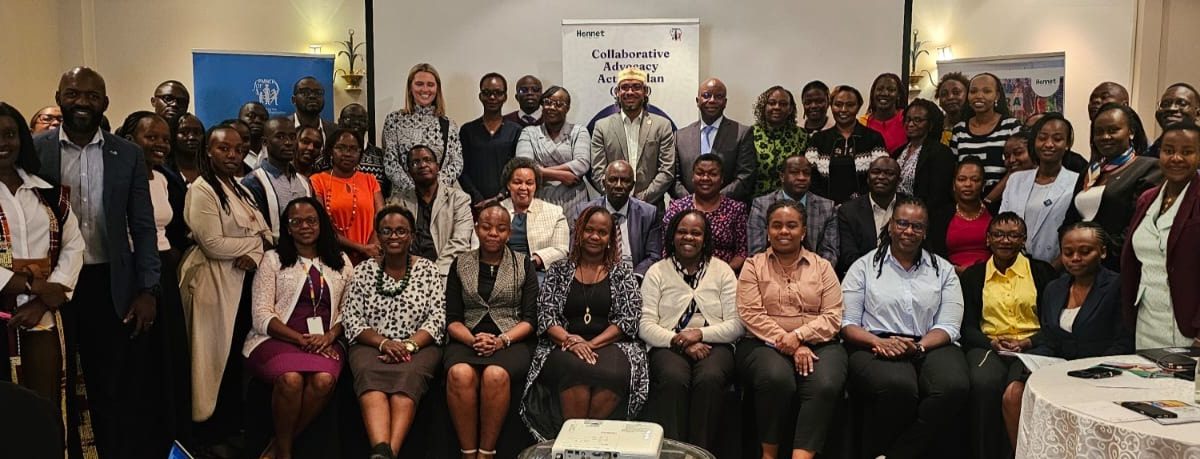
They told the national advocacy forum on reproductive, maternal, newborn, child, and adolescent health (RMNCAH) in Nairobi that it was time a more elaborate strategy was employed to ensure preventable fatalities were minimised as the country accelerates her journey toward Universal Health Coverage (UHC) and Vision 2030.
The forum, held under the theme “Accelerating Policy Reforms for RMNCAH+N”, was marked by a moving account of a 31-year-old mother who nearly lost her life during childbirth, underscoring the urgency of action.
“We checked everything. The uterus was well contracted, the tear was sutured, but the bleeding would not stop. We asked for a balloon tampon—none was available. So we improvised with a catheter and a condom. That is what saved her life,” recalled Dr Kireki Omwana, President of the Obstetrics and Gynaecology Association of Kenya.
He said the woman survived only because the hospital had what he described as the “five survival pillars”: skilled staff, essential medicines, blood, basic equipment, and ICU care. “Remove any one of those five, and she would not have lived. Sadly, in most hospitals across Kenya, these pillars do not exist together. That is why we continue to lose about 6,000 mothers every year,” he added.
According to the United Nations Population Fund (UNFPA), Kenya’s maternal mortality ratio stands at 355 deaths per 100,000 live births—equivalent to 20 women dying daily while giving life.
“Policy gaps are not the issue but rather weak systems. We do not lack policies. The real question is: why are our outcomes still lagging? Without strong governance, adequate human resources, functional referral systems, and accountability, no amount of money or strategies will succeed,” emphasised Dr James Nyikal, Chair of the Parliamentary Health Committee and member of Parliament, Seme Constituency.
“Advocacy brings everything else together. Training, commodities, infrastructure—none of it moves without leadership. And leadership is built through advocacy,” said Dr Edward Serem, Head of RMNCAH+N at the Ministry of Health.
Civil society leaders echoed the call, saying, “We already have the policies. The challenge is putting them into practice. Every mother counts, every child counts, and the future of our nation depends on them,” said Lisa Mshega, Project Lead for Maternal Health at HENNET.
From the counties, Dr Emmy Chesire Cheboi, First Lady of Baringo, outlined practical approaches being implemented to encourage facility-based deliveries, promote exclusive breastfeeding, expand immunisation, and address adolescent health challenges such as early pregnancy and female genital mutilation.
“If we want to save lives, we must ensure mothers deliver in health facilities. We must prioritise incentivising mothers to deliver in hospital. Things as simple as offering a basin or even drinking chocolate to carry home are key.But facilities must be adequately equipped, accessible, and welcoming. No mother should die while giving life, and no child should be lost to preventable causes,” she says.
The forum closed with leaders affirming a shared commitment to accelerate progress toward zero preventable maternal and newborn deaths by 2030, in line with the Sustainable Development Goals and Vision 2030 – just five years away from now.
“Women are not dying because of diseases we cannot treat. They are dying because we have not yet made the decision that their lives are worth saving. It is time to act,” concluded Dr Omwana.
By Violet Otindo