The government has highlighted the progress made in creating jobs across key sectors of the economy including agriculture, education, creative economy and the blue economy.
The deliberate focus on job creation is anchored on agricultural transformation, food security and lowering the cost of living in line with the election pledges made to Kenyans by the current administration.
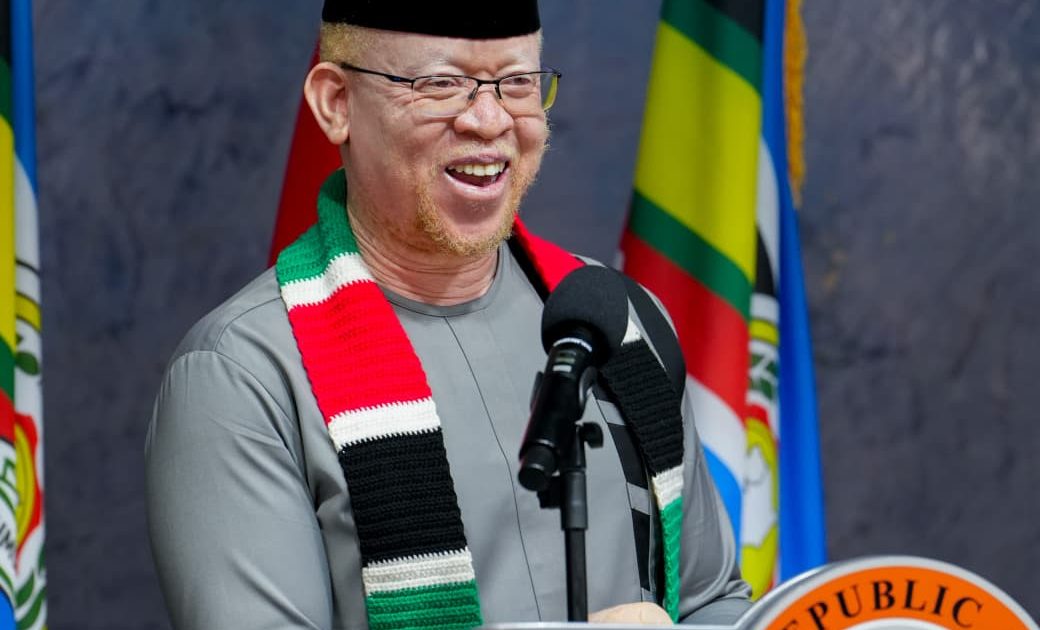
In his weekly press briefing in Nairobi, the government spokesperson Dr Isaac Mwaura affirmed that bold reforms in the agricultural sector, particularly in coffee, tea, sugar and cotton have unlocked new opportunities for farmers and their communities.
He revealed that the revival of six cotton ginneries alone has created 700 jobs in counties such as Busia, Bungoma, Kitui and Embu, whereas the distribution of 100 high-volume grain dryers is set to generate over 10,000 jobs in cooperatives and small enterprises.
Already, Dr Mwaura highlighted that cotton farming, ginning, and textile activities have supported more than 23,000 rural jobs.
Beyond agriculture, the government spokesperson noted that the Micro, Small and Medium Enterprises (MSMEs) subsector is driving new employment with the refurbishment of 31 County Aggregated Industrial Parks (CAIPS), projected to create 9,000 jobs.
“The Micro and Small Enterprise Authority (MSEA) has directly supported 2,001 youth jobs while linking enterprises to local and regional markets,” disclosed Dr Mwaura, adding that these reforms are making it easier for young entrepreneurs to access financing and formalise their businesses.
On the digital superhighway, ICT and the creative economy, he noted with satisfaction that Kenya is rapidly emerging as Africa’s digital hub, as 50,000 kilometres of fibre optic cable have been laid across the country, over the years, connecting schools, villages and businesses.
Further, Dr Mwaura announced that at Konza Technopolis, innovation was thriving, with more than 16 companies now established on-site.
“We are encouraging many more startups and entrepreneurs to set up there, where they will find significant opportunities,” he urged, hinting that an investor is also setting up a factory projected to employ more than 10,000 people by early next year.
To expand digital access, the government spokesperson stated that 1,500 Wi-Fi hotspots and 404 digital hubs water now operational, benefiting millions of Kenyans.
He highlighted that nearly 1.9 million young people have been trained in ICT, coding, cloud computing and AI technologies, creating close to 300,000 digital jobs in freelancing, e-commerce and the creative economy.
“Today, more than 40 million Kenyans transact businesses online, while over 21,500 government services are now available digitally,” he reported.
Addressing matters concerning education and human capital development, Dr Mwaura revealed that the government has employed 76,000 teachers since 2022, adding that through the Teachers Service Commission (TSC), 24,000 new teaching jobs have been advertised this year, creating opportunities for graduates and hope for communities.
“As promised in our manifesto, we are on track to employ 116,000 teachers by 2027. By January 2026, we will have hired 100,000, with the remaining positions scheduled for filling before the close of our term,” he pledged.
On labour mobility, the government spokesperson said Kenya has signed six bilateral labour agreements with the United Kingdom, Saudi Arabia, the UAE, Thailand, Germany, and Austria with the agreements creating more than 452,000 jobs abroad, up from only 14,000 in 2022.
In addition, he pointed out that employment opportunities now span technical fields, hospitality and healthcare, with 586 nurses already cleared for work overseas.
Further, he mentioned that the blue economy and investments in training and infrastructure are unlocking opportunities for the youth, as 875 young Kenyans have already been trained in modern fishing methods, giving them safer and more profitable livelihoods.
With the sector currently valued at Sh32 billion, Dr Mwaura insisted that its potential exceeds Sh250 billion if fully harnessed.
“That is why we are building capacity to end decades of exploitation by foreign trawlers, organising fisherfolk into cooperatives, and supporting women in coastal counties like Kilifi and Kwale through seaweed farming,” asserted Mwaura.
“We are also modernising the industry by working with the Kenya Shipyard to provide affordable, safer boats, moving away from wooden boats that have tragically contributed to the loss of lives,” he added.
On investments and industry, Dr Mwaura disclosed that Export Processing Zones (EPZs) have delivered 14,000 new jobs over the past three years, with four new EPZs under construction expected to add 5,000 more opportunities.
At the same time, Mwaura reported that special economic zones have created an additional 11,000 jobs, supported by partnerships with global investors.
For instance, at the Naivasha–Mai Mahiu SEZ, Japanese investors are setting up biscuit and milk powder processing plants, alongside an electric car manufacturing facility.
According to the government spokesperson, similar developments were underway in other zones, demonstrating Kenya’s growing appeal as a hub for manufacturing and innovation.
At the county level, Mwaura stressed that Aggregation and Industrial Parks are creating jobs by linking farmers directly to processors and markets with thirteen parks nearing completion including the flagship one in Sagana.
“Our target is to establish 47 parks across the devolved units, with a joint investment of Sh500 million each shared equally between the national and county governments. We commend the counties that have already partnered with us to make this vision a reality,” he remarked.
Similarly, he observed that tourism continues to be one of Kenya’s strongest job creators, where in the past year alone, millions of visitors arrived, while over five million Kenyans travelled locally.
This activity, he echoed, supports 1.6 million jobs, nearly 8 percent of all employment.
“The high season this year was especially strong and the introduction of the Electronic Travel Authorisation (ETA) has been vital in boosting cash inflows from international visitors,” he noted.
The government spokesperson also claimed that the creative economy is emerging as a powerful employer with investments in theatres, musicals and art galleries generating over 1,000 jobs, while new initiatives in film, music and gaming are opening up careers for young people.
Dr Mwaura also declared that more than 32,000 youth have been trained in entrepreneurship and supported with loans exceeding Sh400 million.
He divulged that the government has also launched the NYOTA programme, targeting 100,000 youth for training in entrepreneurship, with 70 Young people from each of the country’s 1,450 Wards receiving seed capital of Sh50,000 to start businesses.
In health service delivery, Dr Mwaura acknowledged that the Universal Health Coverage (UHC) is being anchored on community health, where to date 18,831 community health promoters (CHPs) have been trained and equipped with kits and smartphones, enabling them to reach households with preventive and promotive services.
“Over 107,000 CHPs are now receiving a government stipend of Sh2,500, ensuring continuity and motivation in their work,” he proclaimed, emphasising that these engagements are strengthening prevention, reducing disease burden and building a healthier, more productive workforce.
On the Affordable Housing Program, the government spokesperson attested that over 330,000 jobs have been created across construction, manufacturing, supply chains, professional services, transport and facility management.
“For instance, masons, carpenters, plumbers, electricians, architects, surveyors, cement and steel manufacturers, and logistics providers have all directly benefited from housing projects,” he said.
Beyond direct jobs, Dr Mwaura opined that housing estates are transforming communities as food vendors, shop owners, boda boda operators, and small suppliers are seeing new opportunities with the expansion of settlements.
He maintained that the benefits were not only economic but also social, citing the Mukuru estate, Nairobi scenario, where a resident, Mr Odhiambo, recently shared how the newly completed affordable housing project had led to cleaner surroundings, fewer diseases, and lower household medical expenses.
This, he reaffirmed, demonstrates how affordable housing is not just creating jobs but also improving quality of life and giving families more disposable income.
Meanwhile, the government spokesperson has announced that security forces including the Kenya Defence Forces and the National Police Service will be conducting their recruitment exercises in October 2025 and appealed to all eligible and qualified candidates across the country to visit the designated recruitment centers and even apply online.
However, Dr Mwaura cautioned against any attempts of engaging in bribery or other corrupt practices with the intent of influencing the recruitment process, saying this constitutes a criminal offence.
Meanwhile, the government remains committed to improving the welfare of all Kenyans without discrimination in adherence to the dictates of the country’s most progressive constitution, enacted in 2010.
Mwaura reaffirmed the government’s assurance towards fulfilling its promises to the citizenry under the Bottom-Up Economic Transformation Agenda (BETA), which is projected to create a better country for everyone.
By Michael Omondi