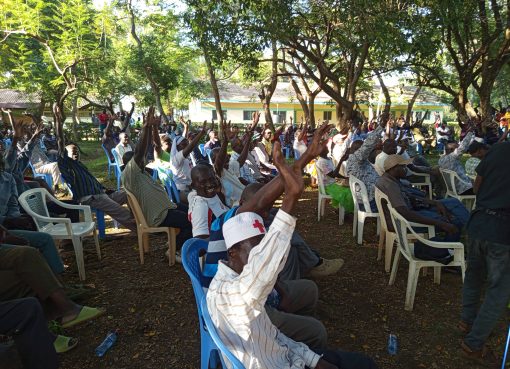
Stakeholders are calling for sweeping amendments to a proposed policy seeking to have the Nakuru county government collaborate with financial institutions to give incentives to the creative industry.
The Draft Nakuru Cultural and Creative Industry Policy-2024, which calls for the creation of an Art Fund and its management framework, seeks to enhance skills and resource capacity and improve market access for creative products and services. The draft is currently undergoing stakeholders’ review.
According to City Manager Gitau Thabanja, the draft policy has been crafted to provide tax breaks, protect intellectual property, facilitate access to funding and incubation, improve infrastructure, and promote Kenyan artists and creatives on a global stage, recognizing the creative sector as a significant contributor to economic growth, employment and national cohesion.
The policy outlines mechanisms for providing support through funding opportunities, grants, and mentorship for creative entrepreneurs and seeks to build collaborative partnerships with private organizations to bridge existing financial gaps and foster a robust arts ecosystem among other benefits.
Thabanja affirmed that review of the policy is focusing on developing a supportive legal and institutional framework for the sector.
“We are working towards promoting our creative sector with the formulation of this Cultural and Creative Industry Policy. The policy aims to identify and nurture local talent and create an enabling environment for artists,” he stated.
The draft policy addresses a raft of issues including copyright, access to finance, infrastructure development, and market access for local artists and creators.
“The goal was to refine and clarify the policy’s objectives to ensure they are clearly understood by the public. Kenya’s creative sectors, including film, music, and sports, are thriving, and the world is taking notice,” stated Thabanja.
“The session provided a platform for discussion on the draft’s contents and gathered feedback necessary for its refinement before advancing to the next legislative stage,” he added.
The move comes two years after Nakuru became the second country in East Africa to be placed on the United Nations Educational Scientific and Cultural Organization’s (UNESCO) list of Creative Cities Network.

Thabanja noted that by putting robust policies in place, Governor Susan Kihika’s administration was helping launch enormous economic benefits in the Creatives Cultural Industry that go beyond financial gains, driving industry growth that would reach Kenyan artists, entrepreneurs, and young people throughout the country.
He observed that as a UNESCO Creative City of Folk Arts, it is important for Nakuru to adopt evidence-based culture policymaking and a multi-stakeholder approach in designing programmes that foster creativity for sustainable development.
The proposed policy provides for building partnerships among stakeholders, developing infrastructure for the creative and cultural sector. The policy also aims to promote technology use and document Nakuru’s cultural heritage.
If approved, the City Board will oversee implementation of the policy and establish a Council for Arts, Culture and Creative Industries and an annual review would be conducted to track progress and maintain relevance.
Thabanja indicated that the policy was expected to provide a strong framework to support the growth, protection and promotion of Nakuru’s creative sector while preserving the city’s unique cultural identity and driving socio-economic development.
Port Louis in Mauritius and Nairobi in East Africa are among 15 cities in the continent recognized by UNESCO for their commitment to place culture and creativity at the heart of their development and for sharing knowledge and good practices.
Last year, Kenya National Commission for UNESCO (KNATCOM) and the Kenya National Bureau of Statistics (KNBS) selected Nakuru as a pilot city to map out existing cultural heritage and creative industries to determine the contribution of the industry to the local economy to leverage on the UNESCO 2030 Culture Indicators Framework.
According to Thabanja, the selection of Nakuru as a pilot City to spearhead the mapping initiative is an affirmation of the influence of culture in the multi-cultural city.
“The selection of Nakuru to pilot the project is an extra cap for the city, which takes pride in its cultural diversity, which earned it the recognition of UNESCO as a UNESCO Creative City under the folk and craft category,” he added.
The streets of Nakuru are a constant reminder of the vibrancy of culture, as seen on its streets and estates, which are adorned with vibrant murals, graffiti, and street art, adding a creative and visually appealing touch to the city.
The city occasionally showcases the cultural heritage and traditions of the region through exhibitions, performances, and interactive experiences.
The Nakuru Players Theatre is another contributor to the bustling cultural growth with a vibrant performing arts centre that hosts various plays, musicals, and cultural performances throughout the year, thereby promoting artistic expression in the city.
Another hallmark of the city is the popular Nakuru’s street food festival, which is a delight for food lovers. From mouthwatering samosas to delicious grilled meats, the city offers a wide range of delightful street food options from different communities at affordable rates.
Kenya’s creative sector is growing rapidly, contributing approximately five per cent to the national Gross Domestic Product (GDP).
From fashion, film, music, and design to digital art and photography, the industry provides jobs and serves as an important cultural and economic driver.
But despite its potential, structural challenges persist, including limited access to funding, fragmented support systems, and inadequate infrastructure.
The creative and cultural industries are recognized as significant contributors to Kenya’s GDP, offering substantial potential for job creation, innovation, and revenue generation.
By Jane Ngugi